Eyebrow Treatments in Delhi — Lift, Restore & Reshape by a Facial Plastic Surgeon
Eyebrows frame the entire upper face. They shape your expression, signal alertness or fatigue, define your eyes, and contribute enormously to how youthful and balanced your face appears — often more than people realise until they see a before-and-after. The good news: modern eyebrow treatment offers genuinely effective solutions whether your brows are too sparse, too low, or simply not the shape you want. The crucial thing most clinic pages skip: the RIGHT eyebrow treatment depends entirely on WHICH problem you actually have — and the two main eyebrow problems are completely different and need completely different treatments.
Here’s the central insight that organises everything on this page: eyebrow concerns fall into two fundamentally different categories. The first is a DENSITY problem — sparse, thin, over-plucked, or patchy eyebrows where there simply isn’t enough hair. This is solved by adding hair (eyebrow hair transplant) or simulating it (nano blading/microblading). The second is a POSITION problem — eyebrows that have drooped or sagged with age, sitting too low and crowding the eyes, making you look tired or older. This is solved by lifting the brow (surgical brow lift, thread lift, Botox brow lift, or HIFU). A sparse brow and a drooping brow are entirely different problems — and treating one with the other’s solution gives a poor result. The first step in eyebrow treatment is correctly identifying which problem (or combination) you actually have.
There’s a deeper diagnostic insight that distinguishes a facial plastic surgeon from an aesthetic clinic or brow bar, and it matters enormously: many people who think their eyebrows are ‘drooping’ actually have UPPER EYELID HOODING (excess eyelid skin, called dermatochalasis) — a different problem that needs blepharoplasty (eyelid surgery), not a brow lift. And some people have both. Lifting the brow when the real problem is the eyelid (or operating on the eyelid when the real problem is the brow) gives a disappointing, sometimes worse result. Assessing the whole upper-face relationship — brow position, eyelid skin, the distance between them, the forehead — is essential to getting it right. This is the daily work of a facial plastic surgeon, and it’s something brow bars and aesthetic-only clinics genuinely cannot offer.
Dr. Adarsh Tripathi is a Maxillofacial and Facial Plastic Surgeon with over 18 years of experience at Sarayu Clinics, Greater Kailash-1, New Delhi. He offers the full range of eyebrow treatments — surgical and non-surgical, density and position — with the diagnostic depth to identify which one you actually need and the facial-aesthetic eye to get the shape right. This page is your complete guide to eyebrow treatments in Delhi, covering every option with honest framing, and explaining how to choose the right doctor for eyebrow treatments in Delhi.
Quick Answer — What eyebrow treatments are available in Delhi and how do I choose?
Eyebrow treatments in Delhi address two different concerns. For SPARSE/THIN eyebrows: eyebrow hair transplant (permanent, your own hair) or nano blading/microblading (semi-permanent makeup). For DROOPING/LOW eyebrows: surgical brow lift (dramatic, long-lasting), thread lift (12-18 months), Botox brow lift (subtle, 3-4 months), or HIFU (non-invasive, gradual). For SHAPE/CONTOUR (fox eye, tail lift): combination approaches. The right choice depends on whether you have a density problem or a position problem — and whether upper eyelid hooding is also involved. Costs range from Rs. 15,000 (Botox brow lift) to Rs. 1,50,000+ (surgical brow lift). Dr. Adarsh Tripathi at Sarayu Clinics assesses the whole upper face to recommend the right treatment.
Why Eyebrows Matter — The Frame of the Upper Face ?
Eyebrows do far more aesthetic work than their size suggests. Understanding their role helps explain why getting eyebrow treatment right has such an outsized effect on appearance.
- Frame the eyes — well-positioned brows open and define the eyes; low brows crowd and shadow them
- Signal youth and alertness — a gently arched, lifted brow reads as youthful and awake; a low, flat brow reads as tired and aged
- Express emotion — brows are central to facial expression; their position and shape affect how approachable or severe you appear
- Balance facial proportions — brow position relative to the eyes, nose, and hairline contributes to overall facial harmony
- Define the brow-eye relationship — the space between brow and eyelid is a key marker of a youthful upper face
- Boost confidence — for many people, eyebrows are a significant part of how they feel about their appearance
As we age, eyebrows tend to descend (especially at the tail), thin out, and lose their defined arch — all of which contribute to a tired, older appearance. This is why eyebrow treatment, done well, can take years off the upper face and is often the most impactful single change in facial rejuvenation. The flip side: a poorly done brow treatment (over-lifted, surprised-looking, or wrongly shaped) is very noticeable, which is why the aesthetic eye of the practitioner matters so much.
Understanding Your Eyebrow Concern — Which Problem Do You Have?
Before choosing a treatment, identify which category your concern falls into. This is the foundation of effective eyebrow treatment.
Category 1: Density Problem (Sparse / Thin Eyebrows)
Your eyebrows lack enough hair. Causes include over-plucking (often from years of thin-brow trends), genetics (naturally sparse brows), ageing (brows thin with age), medical conditions (alopecia, thyroid disorders), trauma or scarring, and chemotherapy. The brow may be patchy, have gaps, be too thin overall, or be missing sections (especially the tail).
- Solution: ADD hair (eyebrow hair transplant) or SIMULATE hair (nano blading/microblading)
Category 2: Position Problem (Drooping / Low Eyebrows)
Your eyebrows have descended and sit too low — crowding the eyes, creating a heavy or tired look, sometimes pushing down on the upper eyelid. Causes are primarily ageing (gravity and loss of tissue support), genetics (naturally low-set brows), and loss of forehead/temple volume. The brow tail often drops first, creating a sad or tired expression.
- Solution: LIFT the brow (surgical brow lift, thread lift, Botox, or HIFU depending on severity)
Category 3: Shape / Contour Desire
Your eyebrows have adequate density and acceptable position, but you want a different shape — more arch, a lifted tail (fox eye look), better symmetry, or a more defined contour. Often a younger patient seeking enhancement rather than correction.
- Solution: shaping treatments — Botox for subtle arch lift, thread lift for tail elevation, combination fox-eye approaches
The Crucial Complication: Is It the Brow or the Eyelid?
Here’s where expert assessment matters most. A heavy, hooded upper-eye appearance can come from: (a) a drooping BROW pushing down, (b) excess upper EYELID skin (dermatochalasis), (c) drooping of the eyelid itself (ptosis), or (d) a combination. These need different treatments — brow lift for (a), blepharoplasty for (b), ptosis correction for (c). Getting this assessment wrong is the most common reason for disappointing upper-face results. A facial plastic surgeon evaluates all of these together.
Why this framework matters — matching treatment to the actual problem
A patient with sparse, over-plucked brows who gets a brow LIFT will still have sparse brows — just slightly higher. A patient with drooping brows who gets nano blading will have a simulated brow shape on a still-drooping brow. A patient with eyelid hooding who gets a brow lift may be disappointed because the real problem was the eyelid. Matching the treatment to the actual problem — density, position, shape, or eyelid — is everything. This is why Dr. Tripathi’s assessment looks at the whole upper face rather than just ‘treating the eyebrows’.
Benefits of Doctor-Led Eyebrow Treatment
- Accurate diagnosis — identifying whether you have a density, position, shape, or eyelid problem
- The full range of treatments available — surgical and non-surgical, not just one option
- Assessment of the whole upper-face relationship (brow-eyelid-forehead)
- Facial-aesthetic eye for brow shape, arch, and symmetry
- Honest recommendations — the right treatment for your concern, not the most profitable
- Recognition when blepharoplasty (not brow work) is the real answer
- Combination approaches where they genuinely help (e.g. transplant + Botox shaping)
- Surgical capability for significant drooping (the gold-standard brow lift)
- Natural-looking results — avoiding the over-lifted ‘surprised’ look
- Medical-grade safety and management of any complications
An honest framing: not every eyebrow concern needs an aggressive treatment, and the best result often comes from the most appropriate (sometimes the most conservative) option. A subtle Botox brow lift may be all a younger patient needs; significant age-related drooping may genuinely need surgery for a lasting result. The honest, diagnosis-first approach gives you the right option for your specific concern rather than a one-size-fits-all recommendation.
Areas Treated
Eyebrow Body and Arch
The main body of the eyebrow and its arch — addressed by transplant (density), nano blading (simulation), or lifting treatments (position). The arch is the key aesthetic feature defining brow shape.
Eyebrow Tail (Lateral Brow)
The outer third of the eyebrow — the first area to droop with age and the first to thin from over-plucking. Tail elevation (thread lift, Botox) and tail density restoration (transplant) are among the most requested treatments because the tail has such impact on expression.
Eyebrow Head (Medial Brow)
The inner part of the eyebrow near the nose. Important for symmetry and for avoiding an over-plucked gap. Addressed in density and shaping treatments.
Glabella (Between the Brows)
The area between the eyebrows where frown lines form. Botox here relaxes the muscles that pull the brows down and together — contributing to a subtle brow lift and reducing the ’11 lines’.
Forehead (Upper Brow Region)
The forehead above the brows — relevant to brow position. Surgical brow lift and HIFU address forehead and brow together; the forehead muscles control brow elevation and depression.
Brow-Eyelid Junction
The crucial transition zone between brow and upper eyelid. Assessment here determines whether the concern is a brow problem, an eyelid problem, or both.
The Complete Eyebrow Treatment Menu at Sarayu Clinics
Here’s the full range, organised by which problem each solves. For treatments with dedicated pages, follow the links for detailed information.
FOR SPARSE / THIN BROWS (Density Problem)
1. Eyebrow Hair Transplant
The permanent solution for sparse, thin, over-plucked, or patchy eyebrows. Fine hair follicles (usually from the scalp) are transplanted into the eyebrow area using FUE technique, where they grow as natural eyebrow hair. The most aesthetically demanding hair transplant application — each hair must be placed at the precise angle, direction, and density to look natural. Permanent (the transplanted hair grows for life), customisable in shape and density, and natural-looking when done by a skilled surgeon. Transplanted hairs grow at scalp rate, so periodic trimming is needed. Results develop over 6-12 months.
- Best for: permanent restoration of sparse/thin/patchy brows
2. Nano Blading / Microblading (Semi-Permanent Makeup)
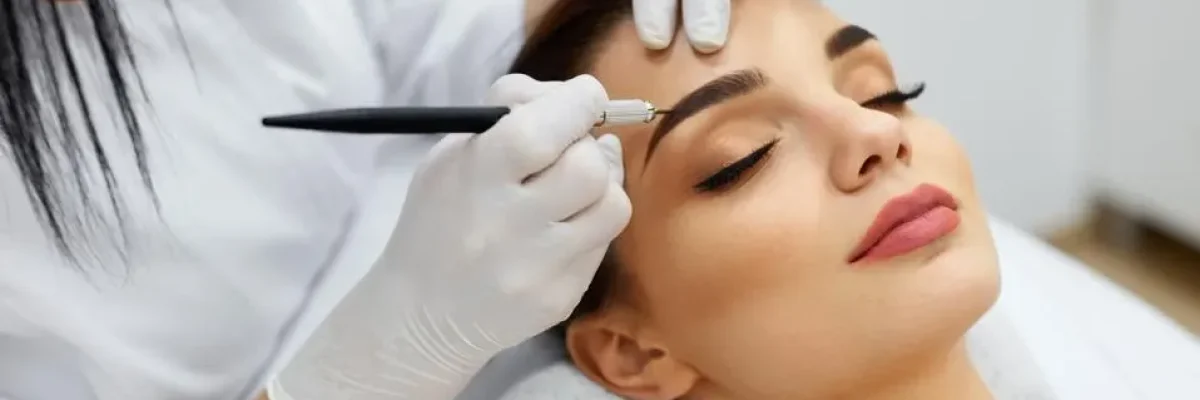
A cosmetic tattooing technique (semi-permanent makeup) where ultra-fine strokes of pigment are deposited in the skin to simulate the appearance of eyebrow hairs. Nano blading uses an even finer needle than traditional microblading for more delicate strokes. Creates fuller, defined brows that look natural from a normal distance. Semi-permanent (lasts 1-2 years), waterproof, saves daily makeup time. Important honest framing: this is a cosmetic tattooing procedure (not a medical/surgical treatment), typically performed by trained cosmetic technicians. It simulates hair rather than adding real hair, and requires periodic touch-ups as the pigment fades. A good option for those wanting immediate fuller brows without surgery.
- Best for: immediate semi-permanent brow enhancement without surgery
FOR DROOPING / LOW BROWS (Position Problem)
3. Surgical Brow Lift (Forehead Lift)
The gold-standard, long-lasting solution for significant brow drooping. Through incisions (typically hidden within the hairline or via endoscopic keyhole technique), the brow is repositioned to a more youthful height and the forehead is rejuvenated. Dramatic, long-lasting results (years), addresses significant drooping and forehead lines, and can be combined with blepharoplasty or facelift. Recovery 1-2 weeks. The right choice for significant age-related brow descent where non-surgical options would be insufficient. As a facial surgeon, this is Dr. Tripathi’s surgical specialty.
- Best for: significant brow drooping; long-lasting results; older patients
4. Thread Lift Brow Lift
A minimally invasive lift using fine absorbable threads inserted under the skin to lift and reposition the brow, also stimulating collagen. Immediate lifting effect, no incisions, results last 12-18 months, quick procedure with minimal downtime. Best for mild-to-moderate drooping and for those wanting a non-surgical option. A middle-ground between Botox (subtle, temporary) and surgery (dramatic, lasting).
- Best for: mild-to-moderate drooping; non-surgical lift
5. Botox Brow Lift
Strategic Botox injections relax the muscles that pull the brow DOWN, allowing the muscles that lift the brow to elevate it — creating a subtle lift and a more open, alert look. Quick (15-20 minutes), no downtime, subtle natural results, also addresses forehead lines and frown lines, can correct mild asymmetry. Results last 3-4 months. Best for mild drooping, subtle enhancement, and younger patients. The most accessible entry-point brow treatment.
- Best for: subtle lift; mild drooping; younger patients; forehead lines too
6. HIFU Brow Lift
High-Intensity Focused Ultrasound delivers energy beneath the skin to stimulate collagen and tighten tissue, producing a gradual lifting and tightening of the brow and forehead. Non-invasive (no needles or incisions), no downtime, gradual natural results developing over 2-3 months, lasts up to a year or more. Best for mild-to-moderate skin laxity and those preferring a completely non-invasive option with gradual results.
- Best for: mild-to-moderate laxity; non-invasive; gradual results
FOR SHAPE / CONTOUR (Enhancement)
7. Fox Eye Treatment
A combination treatment creating the elongated, lifted, almond-shaped ‘fox eye’ look popularised on social media. Combines techniques — typically thread lifting to elevate the brow tail and outer eye area, sometimes with strategic Botox. Creates an upward tilt to the brow tail and outer eye. Honest framing: non-surgical fox eye results are modest and temporary (6-12 months) — the dramatic ‘Instagram fox eye’ often involves makeup, camera angles, or more aggressive intervention. Realistic non-surgical fox eye gives a subtle tail elevation. For dramatic permanent change, surgical approaches (brow lift, canthoplasty) are needed. Best for those wanting subtle tail elevation and an exotic eye shape.
- Best for: subtle tail elevation; trend-driven enhancement (with realistic expectations)
8. Combination Approaches
Often the best eyebrow result combines treatments addressing different aspects. Examples: eyebrow transplant (density) + Botox (subtle shaping); thread lift (position) + nano blading (definition); surgical brow lift + blepharoplasty (for combined brow descent and eyelid hooding). Dr. Tripathi designs combination plans matched to your specific combination of concerns.
- Best for: multiple concerns; comprehensive upper-face rejuvenation
The Brow-Eyelid Relationship — The Assessment That Changes Everything
This section deserves its own space because it’s the single most important diagnostic point in upper-face aesthetics, and it’s something brow bars and aesthetic-only clinics genuinely cannot offer.
Why a Heavy Upper Eye Has Multiple Possible Causes
When the upper eye area looks heavy, hooded, or tired, the cause could be any of these — or a combination:
- Brow descent (ptosis of the brow) — the brow has dropped, pushing tissue down over the eye
- Excess upper eyelid skin (dermatochalasis) — loose eyelid skin hooding over the eye, independent of brow position
- Drooping of the eyelid itself (ptosis) — the eyelid margin sits too low, sometimes affecting vision
- A combination of two or all three
Why Getting This Right Is Crucial
Each cause needs a different treatment:
- Brow descent → brow lift (surgical, thread, Botox, or HIFU)
- Excess eyelid skin → upper blepharoplasty (eyelid surgery)
- Eyelid ptosis → ptosis correction surgery
- Combination → combined procedure (e.g. brow lift + blepharoplasty)
Treating the wrong structure gives a disappointing or worse result. The classic error: doing a blepharoplasty (removing eyelid skin) when the real problem is a drooping brow — this can pull the brow even lower and worsen the appearance. Or doing a brow lift when the real problem is excess eyelid skin — leaving the hooding unaddressed. The assessment of which structure is actually responsible is the difference between a great result and a poor one.
How the Assessment Is Done
Dr. Tripathi evaluates: the resting position of the brow relative to the bony rim; the amount and position of upper eyelid skin; the eyelid margin position; the distance between brow and eyelid; the action of the forehead and brow muscles; and how these change with brow elevation. This comprehensive assessment determines whether your treatment should target the brow, the eyelid, or both — and is the foundation of a natural, effective result.
Treatment-Matching Framework — Which Eyebrow Treatment for You
Here’s how treatments map to concerns — the framework Dr. Tripathi uses to build your plan.
Your Concern | Best Treatment(s) | Duration | Notes |
Sparse/thin brows (permanent fix) | Eyebrow Hair Transplant | Permanent | Your own hair; 6-12mo results |
Sparse brows (immediate, non-surgical) | Nano Blading/Microblading | 1-2 years | Cosmetic tattooing |
Mild brow drooping (subtle lift) | Botox Brow Lift | 3-4 months | Quick, no downtime |
Mild-moderate drooping (non-surgical) | Thread Lift or HIFU | 12-18mo / ~1yr | No surgery |
Significant drooping (lasting fix) | Surgical Brow Lift | Years | Gold standard for severe |
Drooping + eyelid hooding | Brow Lift + Blepharoplasty | Years | Combined assessment essential |
Eyelid hooding (not brow) | Blepharoplasty | Years | NOT a brow lift |
Tail elevation / fox eye | Thread Lift / combination | 6-18 months | Realistic expectations |
Shape/arch enhancement | Botox + shaping | 3-4 months | Subtle |
Multiple concerns | Combination plan | Varies | Comprehensive approach |
This framework shows why diagnosis comes first — ‘I want better eyebrows’ could mean a transplant, a lift, eyelid surgery, or shaping depending on the actual concern. The consultation determines which path is right.
The Eyebrow Treatment Process — Step by Step
Step 1: Consultation & Upper-Face Assessment
Dr. Tripathi assesses your eyebrows in the context of your whole upper face — brow density, brow position, the brow-eyelid relationship, forehead, facial proportions, and symmetry. The CATEGORY of your concern (density, position, shape, or eyelid) is identified. Your aesthetic goals are discussed. The right treatment (or combination) is recommended. Photos are taken for baseline and planning.
Step 2: Treatment Planning
Based on the assessment, a treatment plan is built — matched to your specific concern, goals, downtime tolerance, and budget. For surgical options, pre-operative planning and preparation are arranged. For non-surgical options, the session plan is set. Realistic expectations and timeline are discussed.
Step 3: Treatment Delivery
Depending on the plan: eyebrow transplant is an outpatient surgical procedure (a few hours); Botox brow lift takes 15-20 minutes; thread lift under an hour; HIFU 30-60 minutes; surgical brow lift is a surgical procedure under anaesthesia; nano blading takes about 2 hours. Each treatment has its own protocol detailed on its respective page.
Step 4: Recovery & Follow-Up
Recovery varies by treatment — from no downtime (Botox, HIFU) to 1-2 weeks (surgical brow lift). Follow-up visits track results and plan any touch-ups or maintenance. Combination plans are sequenced appropriately.
Downtime by Treatment
Treatment | Discomfort | Downtime | Back to Routine |
Botox Brow Lift | Minimal | None | Same day |
HIFU Brow Lift | Mild | None | Same day |
Thread Lift | Mild (numbed) | 2-3 days | Next day |
Nano Blading | Minimal | 2-5 days (healing strokes) | Same/next day |
Eyebrow Hair Transplant | Numbed | 5-7 days | Next day (with care) |
Fox Eye (threads) | Mild (numbed) | 2-3 days | Next day |
Surgical Brow Lift | Numbed/GA | 1-2 weeks | 1-2 weeks |
Most non-surgical eyebrow treatments have minimal-to-no downtime. The surgical brow lift requires the most recovery but gives the most dramatic, lasting result. Eyebrow transplant has modest downtime but the results take 6-12 months to develop as the transplanted hair grows.
Eyebrow Treatment Cost in Delhi — Overview
Costs vary across the treatment range. Here’s a transparent overview; detailed pricing for treatments with dedicated pages is provided there or at consultation.
Treatment | Approx. Cost | Duration of Result |
Botox Brow Lift | Rs. 15,000–30,000 | 3-4 months |
HIFU Brow Lift | Rs. 20,000–50,000 | Up to 1 year+ |
Thread Lift (brow) | Rs. 30,000–70,000 | 12-18 months |
Nano Blading/Microblading | Rs. 15,000–40,000 | 1-2 years |
Eyebrow Hair Transplant | Rs. 40,000–1,20,000 | Permanent |
Fox Eye Treatment | Rs. 35,000–80,000 | 6-12 months |
Surgical Brow Lift | Rs. 80,000–2,00,000 | Years (long-lasting) |
Brow Lift + Blepharoplasty | Customised | Years |
Cost-vs-longevity — matching investment to result
Eyebrow treatments range from Rs. 15,000 (Botox, lasting months) to Rs. 2,00,000 (surgical brow lift, lasting years). The ‘right’ cost depends on what you want: a subtle temporary lift (Botox) is inexpensive but needs repeating; a permanent density fix (transplant) is a one-time investment; a lasting position fix (surgical brow lift) costs more upfront but lasts years. Matching your investment to the longevity and type of result you want — rather than just choosing the cheapest or most expensive — is what the consultation helps determine.
Results Timeline by Treatment
Botox Brow Lift
Subtle lift visible within 3-7 days as the Botox takes effect. Full effect by 2 weeks. Lasts 3-4 months, then repeat.
HIFU Brow Lift
Gradual lifting develops over 2-3 months as collagen regenerates. Results last up to a year or more.
Thread Lift
Immediate lifting effect visible at the procedure. Continues improving as collagen forms. Lasts 12-18 months.
Nano Blading
Immediate fuller brows after the session (with initial intensity that softens). Touch-up at 4-6 weeks. Lasts 1-2 years.
Eyebrow Hair Transplant
Transplanted hair sheds at 2-4 weeks (normal). New growth from 3-4 months. Full natural results at 6-12 months. Permanent thereafter.
Fox Eye Treatment
Immediate tail elevation visible. Continues improving over weeks. Lasts 6-12 months (thread-based).
Surgical Brow Lift
Immediate repositioning visible (under swelling). Swelling resolves over 2-4 weeks. Final natural result at 2-3 months. Lasts years.
Comparing Eyebrow Treatments
Treatment | Type | Problem Solved | Permanence |
Eyebrow Transplant | Surgical | Density (sparse) | Permanent |
Nano Blading | Cosmetic tattoo | Density (simulated) | 1-2 years |
Surgical Brow Lift | Surgical | Position (drooping) | Years |
Thread Lift | Minimally invasive | Position (mild-moderate) | 12-18 months |
Botox Brow Lift | Injectable | Position (mild) | 3-4 months |
HIFU | Energy device | Position (mild-moderate) | ~1 year |
Fox Eye | Combination | Shape/contour | 6-12 months |
Surgical vs Non-Surgical Brow Lift
Surgical brow lift gives dramatic, long-lasting results (years) for significant drooping — the gold standard when the descent is substantial. Non-surgical options (Botox, thread lift, HIFU) give more modest, temporary results suited to mild-to-moderate drooping or those not ready for surgery. The choice depends on the severity of drooping, the longevity you want, and your downtime tolerance. Many patients start with non-surgical options and consider surgery later if drooping progresses.
Transplant vs Nano Blading for Sparse Brows
Eyebrow transplant adds REAL hair permanently — the definitive solution, but surgical, with results developing over 6-12 months and requiring periodic trimming. Nano blading SIMULATES hair with pigment — immediate, non-surgical, but semi-permanent (1-2 years) and a cosmetic tattoo rather than real hair. Transplant for a permanent real-hair solution; nano blading for immediate non-surgical enhancement. Some patients do both — transplant for density plus nano blading for definition between growth.
Why a Facial Plastic Surgeon for Eyebrow Treatment?
Eyebrow treatment spans cosmetic, injectable, energy-based, and surgical domains — and crucially involves the brow-eyelid-forehead relationship. A facial plastic surgeon brings: the diagnostic depth to identify whether your concern is density, position, shape, or eyelid; the surgical skill for brow lift and transplant; the assessment of whether blepharoplasty is the real answer; and the facial-aesthetic eye for natural brow shape. For comprehensive eyebrow treatment — especially where the brow-eyelid relationship or surgery is involved — this combination is genuinely valuable and something aesthetic-only clinics cannot match.
Why Dr. Adarsh Tripathi Is a Trusted Doctor for Eyebrow Treatments in Delhi ?
Choosing an eyebrow treatment doctor is about finding someone who diagnoses the actual concern, assesses the whole upper face, offers the full range of options, and has the aesthetic eye to get the shape right. Here’s how to choose, and why patients choose Dr. Tripathi:
What to Look For in an Eyebrow Treatment Doctor
- Medical qualification — facial plastic, plastic, or oculoplastic surgeon for surgical options
- Assessment of the whole upper face (brow-eyelid-forehead), not just the eyebrows
- Recognition of when blepharoplasty (not brow work) is the real answer
- The full range of treatments — surgical and non-surgical, density and position
- Facial-aesthetic eye for brow shape, arch, and symmetry
- Honest recommendations matched to your specific concern
- Avoidance of the over-lifted ‘surprised’ look
- Combination-treatment capability where genuinely beneficial
- Personal consultation by the doctor; clinical facilities
Dr. Tripathi’s Approach
- Maxillofacial and Facial Plastic Surgeon with 18+ years of experience
- Whole-upper-face assessment including the crucial brow-eyelid relationship
- Full treatment range — transplant, surgical brow lift, thread lift, Botox, HIFU, fox eye, combinations
- Surgical capability for significant drooping (gold-standard brow lift)
- Recognises when blepharoplasty is the real answer
- Facial-aesthetic eye for natural brow shape and symmetry
- Honest, diagnosis-first recommendations
- Consultations personally conducted by Dr. Tripathi
The Whole-Upper-Face Philosophy
Dr. Tripathi’s approach to eyebrow treatment is built on assessing the whole upper face rather than treating eyebrows in isolation. The brow position, eyelid skin, forehead, and their relationships all determine the right treatment. This means sometimes recommending blepharoplasty when patients came asking about brows, sometimes recommending a simple Botox lift when patients feared they needed surgery, and always getting the brow shape right for the individual face. The diagnosis-first, whole-upper-face approach is what distinguishes proper eyebrow treatment from isolated procedures.
Frequently Asked Questions — Eyebrow Treatments in Delhi
Q: Who is the best doctor for eyebrow treatments in Delhi?
A: The best doctor for eyebrow treatments in Delhi for you is a medically qualified specialist — ideally a facial plastic surgeon — who assesses the whole upper face (brow, eyelid, forehead), recognises when blepharoplasty rather than brow work is the real answer, offers the full range of surgical and non-surgical options, and has the aesthetic eye for natural brow shape. Dr. Adarsh Tripathi is a Maxillofacial and Facial Plastic Surgeon with 18+ years of experience offering comprehensive, diagnosis-first eyebrow treatment at Sarayu Clinics, Greater Kailash.
Q: What eyebrow treatments are available in Delhi?
A: Eyebrow treatments in Delhi address two main concerns. For sparse/thin brows: eyebrow hair transplant (permanent real hair) or nano blading/microblading (semi-permanent makeup). For drooping/low brows: surgical brow lift (dramatic, lasting), thread lift (12-18 months), Botox brow lift (subtle, 3-4 months), or HIFU (non-invasive, gradual). For shape enhancement: fox eye and combination approaches. The right treatment depends on whether you have a density problem, a position problem, or a shape goal — and whether eyelid hooding is also involved.
Q: How do I know if I need a brow lift or eyelid surgery?
A: Whether you need a brow lift or eyelid surgery (blepharoplasty) depends on what’s actually causing your heavy upper-eye appearance — and this requires expert assessment. A drooping brow needs a brow lift; excess upper eyelid skin (dermatochalasis) needs blepharoplasty; drooping of the eyelid itself (ptosis) needs ptosis correction; and many people have a combination. Treating the wrong structure gives a poor result. A facial plastic surgeon assesses the brow position, eyelid skin, eyelid margin, and their relationships to determine which treatment (or combination) you actually need.
Q: How much do eyebrow treatments cost in Delhi?
A: Eyebrow treatments in Delhi range from Rs. 15,000–30,000 for a Botox brow lift, Rs. 20,000–50,000 for HIFU, Rs. 30,000–70,000 for a thread lift, Rs. 15,000–40,000 for nano blading, Rs. 40,000–1,20,000 for eyebrow hair transplant, to Rs. 80,000–2,00,000 for a surgical brow lift. The cost depends on the treatment type, which depends on your specific concern. A consultation provides personalised pricing based on your assessment and chosen treatment.
Q: What is the best treatment for thin or over-plucked eyebrows?
A: The best treatment for thin or over-plucked eyebrows is either eyebrow hair transplant (for a permanent solution using your own hair) or nano blading/microblading (for an immediate semi-permanent solution using cosmetic tattooing). Eyebrow transplant adds real hair that grows permanently but takes 6-12 months to develop and needs periodic trimming. Nano blading simulates hair immediately and lasts 1-2 years. The choice depends on whether you want a permanent real-hair solution or an immediate non-surgical enhancement — some patients do both.
Q: Is a Botox brow lift better than a surgical brow lift?
A: A Botox brow lift and surgical brow lift suit different situations — neither is universally better. Botox brow lift gives a subtle lift, takes 15-20 minutes, has no downtime, but lasts only 3-4 months and only addresses mild drooping. Surgical brow lift gives dramatic, long-lasting results (years) for significant drooping but requires surgery and 1-2 weeks recovery. Botox is ideal for mild drooping, subtle enhancement, and younger patients; surgery is ideal for significant age-related drooping where a lasting result is wanted. The right choice depends on the severity of your drooping and the longevity you want.
Q: Is eyebrow hair transplant permanent?
A: Yes — eyebrow hair transplant is permanent because the transplanted hair follicles (usually taken from the scalp) continue to grow for life in their new location. The transplanted hairs grow at scalp rate, so they require periodic trimming to maintain eyebrow length. Results develop gradually over 6-12 months as the transplanted hair grows in. Because eyebrow transplant is the most aesthetically demanding hair transplant application — requiring precise angle, direction, and density for each hair — it should be performed by a skilled surgeon for natural-looking results.
Q: What is nano blading and how is it different from microblading?
A: Nano blading is an advanced semi-permanent makeup technique that uses an ultra-fine needle to deposit pigment in hair-like strokes, simulating natural eyebrow hairs. It’s similar to microblading but uses an even finer needle for more delicate, natural-looking strokes. Both are cosmetic tattooing procedures (not medical/surgical treatments) that last 1-2 years and require periodic touch-ups. Nano blading is best for those wanting immediate fuller, defined brows without surgery — though it simulates hair with pigment rather than adding real hair like a transplant does.
Q: Does the fox eye treatment really work?
A: The fox eye treatment produces a subtle, temporary elevation of the brow tail and outer eye area — but honest expectations matter. Non-surgical fox eye (using thread lifts and sometimes Botox) gives a modest tail elevation lasting 6-12 months. The dramatic ‘Instagram fox eye’ look often involves makeup, camera angles, or more aggressive intervention than non-surgical treatment delivers. For a subtle exotic eye-shape enhancement, non-surgical fox eye works; for dramatic permanent change, surgical approaches (brow lift, canthoplasty) would be needed. Realistic expectations are important.
Q: How long do eyebrow treatment results last?
A: Eyebrow treatment results vary by treatment. Botox brow lift lasts 3-4 months; HIFU up to a year or more; thread lift 12-18 months; nano blading 1-2 years; fox eye (thread-based) 6-12 months; surgical brow lift lasts years; and eyebrow hair transplant is permanent. The longevity depends on the treatment type — generally, non-surgical treatments need repeating while surgical treatments (transplant, brow lift) give lasting results. Your choice balances longevity against invasiveness and cost.
Q: Can eyebrow treatments be combined?
A: Yes — combining eyebrow treatments often gives the best result for multiple concerns. Common combinations include eyebrow transplant (density) plus Botox (subtle shaping); thread lift (position) plus nano blading (definition); and surgical brow lift plus blepharoplasty (for combined brow drooping and eyelid hooding). A facial plastic surgeon assesses your full set of concerns and designs a combination plan that sequences treatments appropriately for a comprehensive, natural-looking upper-face result.
Q: How do I choose an eyebrow treatment clinic in Delhi?
A: Choose a clinic where a qualified doctor (ideally a facial plastic surgeon) assesses your whole upper face — brow, eyelid, and forehead — rather than treating eyebrows in isolation, where the full range of treatments is available, where you’re told honestly which concern you actually have (density, position, shape, or eyelid), and where the consultation is personally conducted by the doctor in clinical facilities. Be cautious of clinics that recommend a single treatment without assessing whether eyelid hooding or another factor is the real issue.
How to Reach Us:
Phone:+91 9289111083 ,+91 9289111084
Email: sarayuinquiries@gmail.com
Dr Adarsh’s website: https://dradarshtripathi.com/
Facebook: https://www.facebook.com/DrAdarshTripathi3011
Instagram: https://www.instagram.com/dr_adarsh_tripathi/
Youtube: https://www.youtube.com/@dr_adarsh_tripathi
Linkedin: https://www.linkedin.com/in/dr-adarsh-tripathi-a43005b8/
Online Booking: https://dradarshtripathi.com/contact-us/ to schedule appointments conveniently.