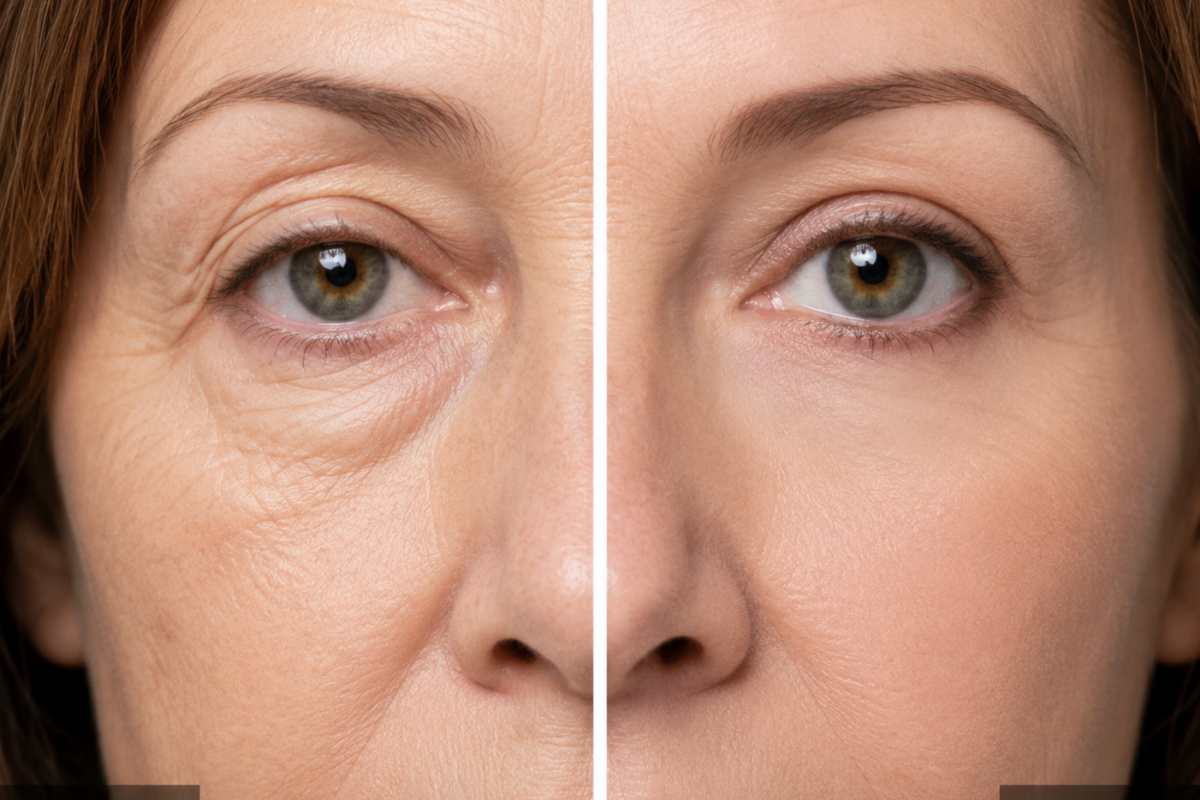
Blepharoplasty Surgery in Delhi — Choosing the Right Eyelid Surgeon Matters Most
Your eyes are the first thing anyone notices about you. When the eyelids begin to droop, hood, or carry puffy bags underneath, your whole face can start to read as tired, older, or unwell — even on the days you feel perfectly energetic. And here’s the frustrating part: no cream, no amount of sleep, and no concealer truly fixes what is actually a structural change in the eyelid skin, muscle, and fat.
Blepharoplasty — eyelid surgery — is the procedure that genuinely corrects this. It removes or repositions the excess skin and fat that creates the heavy, aged look, restoring eyes that appear naturally open and refreshed. But of every cosmetic procedure on the face, blepharoplasty is the one where the choice of surgeon matters most. The eyelid is one of the most unforgiving areas of the body to operate on — the difference between a beautiful, natural result and an over-operated, hollow, or asymmetric one comes down to millimetres of judgement. This is not a procedure to choose on price alone.
Dr. Adarsh Tripathi is a Maxillofacial and Facial Plastic Surgeon with over 18 years of experience, practising at Sarayu Clinics, Greater Kailash-1, New Delhi. Because his entire practice is focused on the face — not divided across body procedures — eyelid surgery is core, everyday work for him rather than an occasional add-on. This page covers everything: the surgery itself, who it suits, recovery, cost, and just as importantly, how to judge whether a blepharoplasty surgeon in Delhi is the right one for you.
Benefits of Blepharoplasty — What Eyelid Surgery Actually Delivers
People come for eyelid surgery for different reasons — some cosmetic, some functional, often both. Here’s an honest picture of what blepharoplasty achieves:
- A naturally refreshed, more awake appearance — the single most consistent result patients describe
- Elimination or significant reduction of under-eye bags caused by herniated fat
- Correction of drooping or hooded upper eyelids that make the eyes look small or heavy
- Removal of excess loose upper-eyelid skin that creates a tired, aged look
- Smoother lower-eyelid skin with reduced fine crepe-like wrinkling
- Restored peripheral and upper vision when excess skin was obstructing the visual field
- Better symmetry between the two eyes when one eyelid sits lower or heavier than the other
- A defined upper-eyelid crease for those choosing Asian (double eyelid) blepharoplasty
- Long-lasting results — upper eyelid surgery typically lasts 8–12 years or more; lower-eyelid fat removal is essentially permanent
- Improved confidence in photos, video calls, and social settings
What it does not do: blepharoplasty does not lift the eyebrows (that’s a brow lift), erase crow’s-feet wrinkles (Botox handles those), or remove pigment-based dark circles (a separate treatment). A proper consultation clarifies which concern needs which solution — and a good surgeon will tell you honestly when surgery isn’t the answer.
Areas of the Eye That Blepharoplasty Treats
The eyelid region is layered — skin, orbicularis muscle, orbital septum, and fat compartments all interact. Different parts produce different visible concerns, and matching the concern to the right anatomical cause is what separates an experienced eyelid surgeon from a general one.
Upper Eyelid
Mostly affected by excess skin that builds up as elasticity declines with age (younger patients may have genetic hooding). The skin falls over the natural crease and in advanced cases rests on the lashes, visually closing the eye or even obstructing vision. Upper blepharoplasty removes the redundant skin along the natural crease, hiding the scar in the fold, and reduces any fat herniation near the inner corner.
Lower Eyelid
Develops three concerns: fat herniation (the bag or puffiness below the eye), excess loose skin with crepey texture, and a hollow tear-trough groove between the eyelid and cheek. Lower blepharoplasty addresses the fat, the skin, and where appropriate the tear trough — often all together for a smooth eyelid-to-cheek transition.
Tear Trough / Nasojugal Groove
The curved groove from the inner eye corner toward the cheek. When hollow and shadowed it creates structural dark circles unrelated to pigment. It can be corrected surgically (repositioning lower-eyelid fat into the groove) or non-surgically (hyaluronic acid filler). Dr. Tripathi assesses which approach gives the most natural result for each patient.
Eyelid Crease (Asian / Double Eyelid Surgery)
Roughly half of people of East and South-East Asian heritage are born without a defined upper-eyelid crease. Asian blepharoplasty creates a natural crease appropriate to the patient’s anatomy and aesthetic preference — the goal is definition that respects ethnic features, never Westernisation.
Brow-Eyelid Interaction
Sometimes what looks like excess upper-eyelid skin is actually a descended brow pushing skin downward. Removing eyelid skin in that situation can pull the brow lower and worsen things. A skilled eyelid surgeon distinguishes between the two before operating — and may recommend a brow lift alone or alongside blepharoplasty.
Conditions Blepharoplasty Addresses
Age-Related Changes
- Dermatochalasis — excess, redundant upper-eyelid skin that hoods over the fold
- Steatoblepharon — herniated orbital fat causing upper or lower eyelid bags
- Lax lower-eyelid skin with fine wrinkling
- Tear-trough hollowing creating under-eye shadows
- Brow descent contributing to apparent eyelid heaviness
Genetic / Inherited Concerns
- Under-eye bags present since youth — from a weak orbital septum, regardless of age
- Single eyelids (monolids) in patients seeking a natural crease
- Deep-set tear trough present from a young age
- Uneven creases — one eye with a defined fold, one without
- Mild ptosis (drooping eyelid margin) — distinct from skin excess, may need ptosis repair
Functional Concerns
- Visual field obstruction from excess upper-eyelid skin falling onto the lashes
- Ectropion — lower eyelid turning outward (usually reconstructive)
- Entropion — lower eyelid turning inward, lashes rubbing the eye
- Post-traumatic eyelid deformity from injury, burns, or scarring
Revision / Secondary Blepharoplasty
Correcting a previous eyelid surgery that left residual skin, asymmetric creases, visible scarring, or an over-operated look. Revision is more complex due to scar tissue and altered tissue planes — a minimum of 6–12 months after the original surgery is required before revision is considered. This is precisely the kind of case where surgeon experience is decisive.
Types of Blepharoplasty Offered at Sarayu Clinics, Delhi
1. Upper Eyelid Blepharoplasty
An incision precisely within the natural upper-eyelid crease; excess skin is removed and herniated fat reduced or repositioned. The scar sits inside the crease and is essentially invisible once healed. Usually 45–75 minutes under local anaesthesia with sedation, as a day case.
2. Lower Eyelid Blepharoplasty
Technically more demanding. Two approaches:
- Transconjunctival (scarless) — incision inside the eyelid, no external scar; ideal for fat bags with minimal excess skin
- Transcutaneous (subciliary) — incision just below the lash line; preferred when significant excess skin must also be removed
3. Combined Upper & Lower (Quad Blepharoplasty)
All four eyelids in one procedure — one anaesthetic, one recovery — allowing the surgeon to balance the upper and lower result together for a more harmonious outcome.
4. Asian Blepharoplasty (Double Eyelid Surgery)
Creates a defined upper-eyelid crease. Suture (non-incisional) methods leave minimal scarring and are slightly less permanent; incision methods are more reliable and permanent, better for thicker eyelids or excess skin.
5. Ptosis Repair with Blepharoplasty
When genuine levator-muscle ptosis accompanies excess skin, both are corrected together — the muscle is tightened or advanced, and the skin removed — for the most complete result.
6. Revision / Secondary Blepharoplasty
Correcting outcomes from a prior eyelid surgery, sometimes requiring careful management of scar tissue and limited remaining skin.
7. Non-Surgical Periorbital Options
Not every concern needs surgery. Dr. Tripathi also offers tear-trough filler (for hollowing and shadows), Botox (for crow’s feet and a subtle brow lift effect), and RF microneedling / Morpheus8 (for mild lower-eyelid skin laxity).
Are You a Good Candidate for Eyelid Surgery?
Blepharoplasty suits a wide age range — from patients in their 30s with hereditary under-eye bags to those in their 60s–70s seeking functional vision correction. The right candidate is defined by anatomy and goals, not age alone.
You are likely a suitable candidate if:
- You have excess upper-eyelid skin creating hooding or heaviness
- You have persistent under-eye bags regardless of sleep or skincare
- Excess upper-eyelid skin is beginning to obstruct your vision
- You have a tear-trough hollow causing structural shadows
- You’re in good general health with no active eye disease
- You have realistic expectations — a refreshed version of you, not a different face
- You’re a non-smoker or willing to stop for 4–6 weeks around surgery
Discuss carefully if you have:
- Active eye conditions — glaucoma, severe dry eye, or thyroid eye disease (need ophthalmology input first)
- Significant dry eye — surgery can temporarily worsen it; careful planning required
- Blood-thinning or healing-affecting medications
- Dark circles caused mainly by pigment — not a surgical problem
- Significant brow descent — a brow lift may be needed first or alongside
The Blepharoplasty Procedure — Step by Step
Step 1: Consultation & Assessment
Dr. Tripathi examines your eyelids from multiple angles, assesses brow position (separating brow descent from eyelid excess), evaluates skin quality and fat distribution, reviews any eye conditions, and discusses exactly what bothers you and what you want. Photographs and digital simulation are used where helpful; pre-operative blood tests and any ophthalmology checks are arranged before a date is confirmed.
Step 2: Pre-Operative Preparation
- Stop aspirin, ibuprofen, and blood-thinning supplements (fish oil, vitamin E) for 2 weeks
- Stop smoking, ideally 4–6 weeks before and after
- Arrange someone to drive you home and stay the first night
- Prepare cold compresses, prescribed eye drops, and dark sunglasses
- Remove contact lenses and avoid them for 2–3 weeks post-op
Step 3: Anaesthesia
Most blepharoplasty is performed under local anaesthesia with sedation (twilight) — comfortable and drowsy but not fully asleep. Combined or more extensive cases may use general anaesthesia. The right choice is discussed at consultation.
Step 4: The Surgery — Upper Eyelid
- Conservative markings drawn in the natural crease, indicating exactly how much skin to remove
- Local anaesthetic injected; the eyelid goes numb
- Marked skin excised along the crease line
- Herniated fat near the inner corner reduced or repositioned
- Orbicularis muscle conservatively trimmed if needed
- Incision closed with very fine (6-0) sutures sitting within the crease
Step 5: The Surgery — Lower Eyelid
Transconjunctival: incision inside the eyelid, fat removed or repositioned, no external scar. Transcutaneous: incision below the lash line, skin and muscle elevated, fat addressed, excess skin conservatively trimmed, closure along the lash line.
Step 6: Duration
Upper alone 45–75 minutes; lower alone 60–90 minutes; combined (all four eyelids) 1.5–2.5 hours.
Step 7: Immediate Recovery
Cold packs applied; discharge typically 1–2 hours after a local-anaesthesia procedure. Antibiotic drops and ointment prescribed. Vision may be briefly blurry from ointment.
Recovery and Downtime — Week by Week
Day 1–2
Swelling and bruising peak; eyelids feel tight and slightly sore; vision is unaffected. Cold compresses (10 min on, 10 off) and head-elevated sleep reduce swelling.
Days 3–5
Bruising may deepen before fading — normal. Swelling begins to settle. Upper-eyelid sutures usually removed around day 5–7. Mild tearing or light sensitivity is common.
Days 6–10
Sutures out at the one-week visit. Eyelids look dramatically better, though residual yellow-green bruising remains. Most patients are comfortable in public with sunglasses and return to desk work.
Weeks 2–4
Bruising resolved for most. Some firm swelling remains and the scar may look slightly pink — normal maturation. Eyes already look more open and refreshed.
Month 2–3
Scar softens and settles into the crease. The refreshed look is clearly visible; patients often start getting comments that they look well-rested.
Month 6 onwards
Scar essentially invisible within the crease. Final, stable result; improvement is long-lasting until natural aging slowly continues over years.
What to Avoid During Recovery ?
- Contact lenses for 2–3 weeks; eye makeup for 2 weeks (mascara 3 weeks)
- Rubbing or pressing the eyes at any point during healing
- Sun without UV-protective sunglasses; strenuous exercise for 2–3 weeks
- Swimming or submerging the face for 3–4 weeks
- Smoking throughout recovery — it impairs healing and worsens scarring
- Driving until vision is fully clear — typically 3–5 days
Blepharoplasty Cost in Delhi — Transparent Pricing
Pricing depends on which eyelids are treated, the technique, anaesthesia type, and whether other procedures are combined. Any clinic quoting a fixed price without examining you should be treated cautiously.
Factors That Affect Cost
- Upper only, lower only, or combined
- Transconjunctival vs transcutaneous lower-lid approach
- Whether ptosis repair is also needed
- Whether tear-trough fat repositioning or filler is included
- Local + sedation vs general anaesthesia
- Primary vs revision (revision is more complex and costs more)
Approximate Cost at Sarayu Clinics, Delhi
Procedure | Approx. Cost | Duration | Anaesthesia |
Upper Blepharoplasty (both eyes) | Rs. 50,000–90,000 | 45–75 mins | Local + sedation |
Lower Blepharoplasty (both eyes) | Rs. 60,000–1,10,000 | 60–90 mins | Local + sedation |
Combined Upper + Lower (all 4) | Rs. 90,000–1,60,000 | 1.5–2.5 hrs | GA or sedation |
Asian / Double Eyelid Surgery | Rs. 55,000–95,000 | 60–90 mins | Local + sedation |
Ptosis Repair (with Blepharoplasty) | Rs. 80,000–1,40,000 | 1.5–2 hrs | GA or sedation |
Revision Blepharoplasty | Rs. 70,000–1,50,000 | 1–2.5 hrs | Local/GA |
Tear-Trough Filler (non-surgical) | Rs. 20,000–45,000 | 20–30 mins | Topical |
When Will You See Your Final Result?
Eyelid skin is thin and heals relatively fast, so blepharoplasty has one of the quicker result timelines in facial surgery — though the final outcome still takes months to fully settle.
Upper Eyelid
- Day 1–5: swollen and bruised (looks worse than before — expected)
- Week 1–2: sutures out, bruising fading, result emerging
- Month 1: 70–80% of final result; eyes open and refreshed, scar slightly pink
- Month 3: ~90%; scar fading, eyelids settling
- Month 6: final result; scar virtually invisible in the crease
Lower Eyelid
- Week 1–2: significant swelling — area may look fuller than before
- Month 1: bags markedly reduced, some residual swelling
- Month 3: 85–90% of final result
- Month 6: final smooth lower-eyelid contour
How Long Do Results Last?
Upper-eyelid results typically last 8–12 years or more before further excess skin develops. Lower-eyelid fat removal/repositioning is essentially permanent — the bags don’t reform. Skin keeps aging naturally, so a minor touch-up may be wanted a decade or more later, but it’s a long window of improvement.
Surgical vs Non-Surgical Eyelid Rejuvenation — Which Is Right?
Not everyone who wants to improve their eye area needs surgery, and non-surgical options can’t fix everything. Here’s where the line falls:
Concern | Surgical Blepharoplasty | Non-Surgical Option | Best For |
Excess upper-eyelid skin | Yes — definitive | No effective option | Surgery |
Under-eye fat bags | Yes — removes/repositions | Filler can camouflage mildly | Surgery (moderate/severe) |
Tear-trough hollowing | Yes (fat repositioning) | Tear-trough filler — excellent | Filler (mild); surgery (severe) |
Lower-eyelid skin laxity | Yes — skin excision | RF/Morpheus8 (mild only) | Surgery (significant laxity) |
Crow’s feet wrinkles | No | Botox — excellent | Botox |
Dark circles (pigment) | No | Peels / laser / brightening | Non-surgical |
Asian double-eyelid crease | Yes — surgical crease | Suture method (less permanent) | Surgery for permanence |
Eyelid ptosis (muscle) | Ptosis repair — surgical | No non-surgical fix | Surgery |
Why a Facial Plastic Surgeon, Not a General Cosmetic Surgeon?
The eyelid is uniquely complex. A surgeon who works on the face exclusively — rather than performing eyelid surgery among breast, body, and other procedures — develops the precise feel for eyelid anatomy, fat behaviour, skin thickness, and millimetre-level proportion that this procedure demands. Dr. Tripathi’s dual training as a Maxillofacial and Facial Plastic Surgeon means the face is his entire practice. When you search for a blepharoplasty surgeon in Delhi, this degree of focus is exactly what distinguishes a safe, natural result from an over-operated one.
Why Dr. Adarsh Tripathi Is a Trusted Blepharoplasty Surgeon in Delhi ?
Choosing the right surgeon is the most important decision in eyelid surgery. Here’s how to judge a blepharoplasty surgeon in Delhi — and why patients choose Dr. Adarsh Tripathi:
What to Look For in an Eyelid Surgeon ?
- Specialisation in the face — not a general surgeon who occasionally does eyelids
- A clear volume of eyelid procedures performed each year
- Before-and-after photos of patients with similar anatomy to yours
- Honest discussion of risks, recovery, and what surgery can and cannot achieve
- A consultation conducted by the surgeon personally, not a coordinator
- Genuine patient reviews on Google and Practo
- A conservative philosophy — natural results over dramatic over-correction
Dr. Tripathi’s Credentials
- Maxillofacial and Facial Plastic Surgeon with 18+ years of experience
- Practice focused exclusively on the face and neck — eyelid surgery is core, daily work
- Experience across upper, lower, combined, Asian, ptosis-repair, and revision blepharoplasty
- Member of recognised facial and maxillofacial surgery societies
- Consultations personally conducted by Dr. Tripathi
- Known for natural, undetectable results — including work with public figures in the Indian entertainment industry who are regularly photographed
A Conservative, Natural-Result Philosophy
The most common giveaway of poor eyelid surgery is an over-operated look — hollowed upper lids, a startled or pulled-down appearance, or visible asymmetry. These almost always come from removing too much tissue. Dr. Tripathi’s approach is deliberately conservative: preserve more, sculpt precisely, and aim for eyes that simply look rested and natural. It’s always possible to refine a little more later; it’s far harder to restore tissue that was over-removed.
Frequently Asked Questions — Blepharoplasty in Delhi
Q: Who is the best blepharoplasty surgeon in Delhi?
A: The best blepharoplasty surgeon in Delhi for you is one who specialises in the face, performs eyelid surgery regularly, shows relevant before-and-after results, and conducts the consultation personally. Dr. Adarsh Tripathi is a Maxillofacial and Facial Plastic Surgeon with 18+ years of experience whose practice is focused exclusively on the face, performing upper, lower, Asian, ptosis-repair, and revision blepharoplasty at Sarayu Clinics, Greater Kailash.
Q: What is blepharoplasty and what does it treat?
A: Blepharoplasty is eyelid surgery that removes or repositions excess skin, fat, and sometimes muscle from the upper eyelids, lower eyelids, or both. It treats drooping upper eyelids, under-eye bags, loose lower-eyelid skin, tear-trough hollowing, and, in some cases, vision obstructed by excess upper-eyelid skin.
Q: How much does blepharoplasty cost in Delhi?
A: Upper eyelid surgery in Delhi costs approximately Rs. 50,000–90,000, lower eyelid surgery Rs. 60,000–1,10,000, and combined upper + lower Rs. 90,000–1,60,000. Cost varies with complexity, anaesthesia, and whether procedures like ptosis repair are added. A personalised quote is given after consultation at Sarayu Clinics.
Q: Is blepharoplasty painful?
A: Blepharoplasty is performed under anaesthesia, so the procedure is painless. Afterwards most patients describe tightness and mild soreness rather than real pain, easily managed with prescribed medication. Recovery is generally more uncomfortable than painful.
Q: How long does blepharoplasty recovery take?
A: Most patients are comfortable in public (with sunglasses) within 7–10 days. Sutures come out around day 5–7, bruising resolves by 2–3 weeks, the eyes look clearly refreshed by month 1, and the final result with full scar maturation appears by month 3–6.
Q: Will blepharoplasty leave visible scars?
A: Upper-eyelid scars sit within the natural crease and are essentially invisible once healed. Lower-eyelid scars (external approach) sit just beneath the lash line and fade to near-invisible. Transconjunctival lower blepharoplasty leaves no external scar at all.
Q: Is blepharoplasty permanent?
A: Blepharoplasty results are long-lasting. Upper-eyelid results typically last 8–12 years or more, and lower-eyelid fat removal is essentially permanent. The skin continues to age naturally over time, so some patients seek a minor touch-up a decade or more later.
Q: Can blepharoplasty improve vision?
A: Yes. When excess upper-eyelid skin droops over the lashes and blocks the upper or peripheral visual field, upper blepharoplasty restores that field by removing the redundant skin. This functional benefit is sometimes partly covered by insurance when documented with a visual field test.
Q: What is the difference between upper and lower blepharoplasty?
A: Upper blepharoplasty removes excess skin and fat from the upper eyelids to correct hooding and heaviness. Lower blepharoplasty addresses under-eye bags, excess lower-lid skin, and tear-trough hollowing. They can be done individually or combined in a single procedure.
Q: What is Asian (double eyelid) blepharoplasty?
A: Asian blepharoplasty creates a defined upper-eyelid crease in patients born without one — a trait in roughly half of people of East and South-East Asian heritage. It uses either a suture (non-incisional) method or an incision method depending on eyelid anatomy and the desire for permanence, always respecting the patient’s ethnic features.
Q: How do I choose a blepharoplasty surgeon in Delhi?
A: Choose a Facial Plastic Surgeon or Plastic Surgeon with dedicated eyelid-surgery experience rather than a general surgeon. Ask how many eyelid procedures they perform annually, review before-and-after photos, read Google and Practo reviews, and ensure the consultation is with the surgeon personally. Be cautious of clinics that quote a price before examining you.
Q: Is blepharoplasty safe for patients with dry eye?
A: Blepharoplasty can be performed safely with mild dry eye, but needs careful planning, as removing too much upper-eyelid skin can impair full eye closure and temporarily worsen dry eye. The surgical plan is adjusted conservatively, and severe dry eye is assessed by ophthalmology before proceeding.
How to Reach Us:
Phone:+91 9289111083 ,+91 9289111084
Email: sarayuinquiries@gmail.com
Dr Adarsh’s website: https://dradarshtripathi.com/
Facebook: https://www.facebook.com/DrAdarshTripathi3011
Instagram: https://www.instagram.com/dr_adarsh_tripathi/
Youtube: https://www.youtube.com/@dr_adarsh_tripathi
Linkedin: https://www.linkedin.com/in/dr-adarsh-tripathi-a43005b8/
Online Booking: https://dradarshtripathi.com/contact-us/ to schedule appointments conveniently.