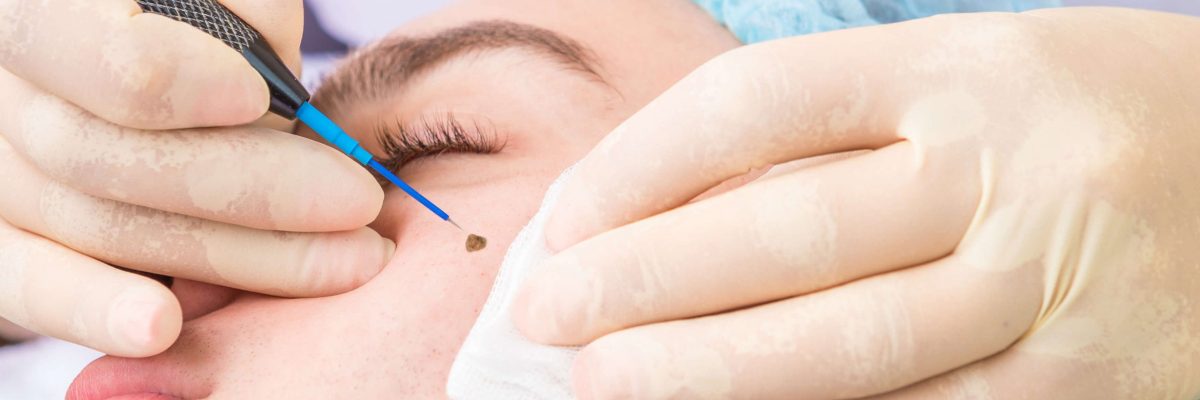
Mole Removal in Delhi — Done Safely, With Your Health and Your Skin in Mind
Most moles are completely harmless, and many people simply want one removed because it bothers them — it catches on clothing, sits awkwardly on the face, or they’d just prefer smoother skin. That’s a perfectly good reason, and mole removal is a quick, straightforward procedure. But there’s a more important point that a lot of cosmetic clinics quietly skip over, and it deserves to be said plainly at the top of this page: before any mole is removed, it should be properly assessed to make sure it isn’t a skin cancer in disguise.
This matters more than it might sound. Some clinics will laser off any mole you point at — but lasering a mole vaporises the tissue, which means it can never be examined under a microscope. If that mole happened to be an early melanoma (the most serious skin cancer), the chance to catch it would be destroyed along with the mole. A responsible approach is different: assess the mole first, and if there’s any doubt, remove it surgically so the tissue can be sent for biopsy. Getting this right is the difference between a purely cosmetic service and genuinely safe medical care.
Dr. Adarsh Tripathi is a Maxillofacial and Facial Plastic Surgeon with over 18 years of experience at Sarayu Clinics, Greater Kailash-1, New Delhi. As a facial surgeon, he combines two things that matter for mole removal — careful medical assessment of whether a mole is safe to remove cosmetically, and the surgical precision to remove it with the least possible scarring, especially on the face. This page explains the methods, when biopsy matters, the warning signs to watch for, recovery, cost, and how to choose the right mole removal surgeon in Delhi.
Benefits of Professional Mole Removal
Professional mole removal offers both cosmetic and genuine health benefits. Here’s an honest picture:
- Smoother, clearer skin where an unwanted mole was — especially valuable on the face
- Minimal, well-managed scarring when done by a surgeon skilled in facial closure
- Peace of mind — a suspicious mole is assessed and, if removed surgically, biopsied to rule out cancer
- Relief from physical irritation — moles that catch on clothing, razors, or jewellery
- Early detection of skin cancer in the rare cases where a mole turns out to be abnormal
- A confidence boost from removing a feature that bothered you
- Quick procedure (often 15–30 minutes) with mostly minimal downtime
- Permanent removal — a properly removed mole does not grow back (though incomplete removal can recur)
The honest framing: for most people this is a simple cosmetic improvement. But the real value of having it done professionally — rather than at a salon or with at-home kits — is the medical safety net. A qualified surgeon looks at the mole first, knows which ones need biopsy, and removes it in a way that protects both your health and your appearance.
Areas of the Body Where Moles Are Removed
Moles can appear anywhere, and the location affects both the best removal method and the scarring considerations. Dr. Tripathi removes moles across the body, with particular care for visible and delicate areas.
Face
Facial moles are the most common reason people seek removal, and the area where scarring matters most. As a facial plastic surgeon, Dr. Tripathi pays particular attention to placing and closing facial mole removals so any mark is as inconspicuous as possible — using fine sutures and techniques that respect the face’s natural lines. The nose, cheeks, chin, around the eyes, and upper lip are all commonly treated.
Neck
Neck moles frequently catch on collars, necklaces, and during shaving, causing irritation. They’re commonly removed both for comfort and appearance, and the neck generally heals well.
Scalp
Moles on the scalp can catch on combs and during hair styling, and are hard to monitor yourself. Removal is straightforward and the hair conceals any mark.
Back and Shoulders
Common sites, often sun-exposed, and difficult to self-examine — which makes professional assessment valuable. Larger or changing moles on the back warrant particular attention for biopsy.
Chest and Torso
Frequently removed for cosmetic reasons or where they rub against clothing. The torso heals reliably, though scar care matters as skin here can occasionally form thicker scars.
Arms, Hands, and Legs
Sun-exposed limb moles are common and easily removed. Hand and finger moles that catch on things are often removed for comfort.
Underarms, Groin, and Skin Folds
Moles in friction-prone areas (underarms, groin, under the breasts) become irritated by constant rubbing and are commonly removed for comfort as well as appearance.
Types of Moles — and Which Ones Need Closer Attention
Understanding the type of mole you have matters, because while most are harmless, a few warrant careful assessment before removal. This is information most cosmetic clinic pages don’t give you.
Common Acquired Moles
The ordinary moles most people have — small, round, even in colour, developing through childhood and early adulthood, often linked to sun exposure. These are almost always harmless and removed purely for cosmetic or comfort reasons.
Congenital Moles (Present from Birth)
Moles you’re born with. Small ones are usually harmless; large congenital moles carry a slightly higher lifetime risk of change and benefit from periodic monitoring or assessment before removal.
Raised (Dermal) Moles
Moles elevated above the skin, often flesh-coloured or light brown. Usually harmless, frequently removed because they catch on things or for appearance. Shave excision often suits these well.
Atypical (Dysplastic) Moles
Irregular moles — uneven shape, mixed colours, larger size, or blurred borders. These are not cancer, but they look different from ordinary moles and have a higher chance of change. Atypical moles should be assessed carefully and, if removed, surgically excised and biopsied rather than lasered.
Changing or Suspicious Moles
Any mole that is changing — growing, changing colour, itching, bleeding, or developing an irregular outline — needs proper medical assessment before anything else. These are the moles where biopsy is essential, because a changing mole is the classic warning sign that demands ruling out melanoma.

Why People Have Moles Removed ?
Cosmetic Reasons
By far the most common motivation — a mole on the face or a visible area that the person would simply prefer not to have. A perfectly valid reason, and these straightforward removals make up most cases.
Physical Irritation and Comfort
Moles that catch on clothing, razors during shaving, jewellery, or rub in skin folds become sore and irritated. Removal solves the ongoing discomfort.
Medical Concern / Suspicious Changes
A mole that has changed, or that looks atypical, removed and biopsied to rule out skin cancer. This is the medically important category where surgical excision with histopathology is the correct approach.
Peace of Mind
Some people have a mole they’ve worried about for years. Professional assessment — and removal with biopsy if appropriate — provides genuine reassurance.
Multiple Mole Removal
Some patients have several moles removed in one or more sessions, for cosmetic reasons or because they have many atypical moles needing attention. This is planned individually.
Are You a Good Candidate for Mole Removal?
Almost anyone with an unwanted, irritating, or suspicious mole is a candidate — the key first step is proper assessment of the mole itself.
You are a good candidate if:
- You have a mole that bothers you cosmetically or catches and irritates
- You have a mole you’re concerned about or that has changed (assessment is especially important here)
- You’re in good general health with no active skin infection at the site
- You have realistic expectations about scarring (minimal, but rarely zero for surgical methods)
- You’re willing to follow aftercare, including sun protection of the healing site
Important assessment-first principle
Before choosing a removal method, the mole is assessed. If it looks entirely benign and removal is purely cosmetic, gentler methods (laser, shave, radiofrequency) may be appropriate. If there is any suspicion at all, surgical excision with biopsy is the right choice — and this assessment is exactly why a qualified surgeon, not a salon, should remove moles.
Discuss carefully if you:
- Have a mole with any ABCDE warning signs — needs assessment and biopsy, not cosmetic lasering
- Have a tendency to keloid or thick scarring — technique and aftercare are planned accordingly
- Have a bleeding disorder or take blood thinners that can’t be paused
- Are pregnant — non-urgent cosmetic removal is usually deferred (moles can change in pregnancy and are reassessed after)
Mole Removal Methods at Sarayu Clinics, Delhi
The right method depends on the mole’s type, size, depth, location, and — crucially — whether it needs biopsy. Here are the options, with honest guidance on when each is appropriate.
1. Surgical Excision (with Biopsy)
The mole is cut out completely with a small margin of surrounding tissue, and the wound closed with fine sutures. Its key advantage is that the removed tissue can be sent for histopathology (biopsy) to confirm it’s benign or detect any abnormality. This is the correct method for any suspicious, atypical, changing, or larger mole, and the gold standard when complete removal and diagnosis matter. Facial excisions are closed with particular care for a fine scar.
- Best for: suspicious/atypical moles, larger or deep moles, anywhere biopsy is needed
- Allows biopsy; complete removal; fine-suture closure for minimal scarring
2. Shave Excision
The raised part of the mole is shaved flush with the skin using a fine blade, usually without stitches. Quick, simple, and good for raised benign moles. The shaved tissue can still be sent for biopsy if needed. May leave a flat mark, and deep moles can occasionally recur as only the surface is removed.
- Best for: raised, benign moles where biopsy of the shaved tissue is still possible
3. Laser Mole Removal (CO2 / Er:YAG)
Focused laser energy precisely vaporises the mole, with excellent cosmetic results and minimal scarring — particularly good for small, flat, clearly benign moles, especially on the face. The important caveat: because laser destroys the tissue, it cannot be biopsied. For this reason laser should only be used on moles confidently assessed as benign — never on anything suspicious.
- Best for: small, flat, clearly benign cosmetic moles; great cosmetic result
- Limitation: no tissue for biopsy — not for suspicious moles
4. Radiofrequency Removal
Radio waves precisely remove the mole with minimal heat damage to surrounding skin, giving refined results and minimal scarring. Like laser, best reserved for moles assessed as benign, as it doesn’t preserve tissue for biopsy in the same way as excision.
- Best for: benign raised or surface moles; precise, minimal-scar cosmetic removal
5. Electrocautery
Heat from an electrical current removes the mole tissue, with minimal bleeding. Quick and effective for certain benign moles, often used for smaller lesions. Again, best for moles assessed as benign.
- Best for: small benign moles; quick, minimal bleeding
Choosing the Right Method — The Honest Principle
The single rule that protects you: if there’s any doubt about a mole, it’s surgically excised and biopsied — never lasered. Cosmetic methods (laser, radiofrequency, cautery) are reserved for moles confidently assessed as harmless. This assessment-led approach is what distinguishes safe mole removal from a purely cosmetic service that could miss something serious.
The Mole Removal Procedure — Step by Step
Step 1: Consultation & Assessment
Dr. Tripathi examines the mole — its size, depth, colour, border, and any changes — often with a dermatoscope, and asks about its history. This determines whether it’s safe for cosmetic removal or needs surgical excision with biopsy, and which method gives the best cosmetic result for its location. Your medical history and any scarring tendency are reviewed.
Step 2: Preparation
- Avoid blood-thinning medications/supplements for a few days if advised
- Stop smoking for a few days before to aid healing
- Arrive with the area clean, free of makeup or creams
Step 3: Anaesthesia
The area is numbed with a local anaesthetic injection — a brief sting, then complete numbness. The procedure itself is painless; you may feel pressure or tugging but no pain.
Step 4: The Removal
- The numbed mole is removed by the chosen method (excision, shave, laser, radiofrequency, or cautery)
- For surgical excision, the tissue is preserved and sent for biopsy if indicated
- The wound is closed — with fine sutures for excision, or left to heal with dressing for shave/laser methods
- A dressing and aftercare instructions are applied
Most single mole removals take 15–30 minutes.
Step 5: Biopsy Results (When Applicable)
If tissue was sent for histopathology, results typically return within about a week. The overwhelming majority confirm a benign mole; in the rare event of an abnormal result, Dr. Tripathi discusses the findings and any further steps needed — which is exactly the safety value of biopsy.
Step 6: Aftercare
- Keep the area clean and dry; apply prescribed ointment as directed
- Avoid sun exposure on the site (use SPF once healed) to minimise scar darkening
- Don’t pick at scabs — let them heal naturally
- Sutures (if used) removed at 5–7 days for the face, 10–14 days for the body
Recovery and Downtime — What to Expect
First Few Days
Mild redness, slight swelling, or tenderness at the site is normal. Laser and shave sites form a small scab; excision sites have fine sutures. There’s essentially no social downtime — most people carry on normally straight away, keeping the small site clean and protected.
Week 1–2
Scabs from laser/shave sites naturally flake off, revealing pink new skin. Excision sutures are removed (face 5–7 days, body 10–14 days). The site continues to heal and settle.
Weeks 3–4
The new skin matures; any pinkness gradually fades. The site looks increasingly normal.
Months 1–6
Any scar continues to soften and fade over several months. Sun protection during this period is the most important factor in a good final cosmetic result, as UV exposure can darken a healing scar.
Recovery by Method
- Laser / radiofrequency / cautery: small scab, heals in about a week, minimal scarring
- Shave excision: heals in about a week, may leave a small flat mark
- Surgical excision: sutures for 5–14 days, fuller healing over 2–4 weeks, scar fades over months
Aftercare Essentials
- Keep clean and dry; apply prescribed ointment
- Strict sun protection of the site (SPF 30+) until fully healed and beyond
- Don’t pick at scabs or scratch the area
- Avoid swimming and saunas until healed
- Attend any follow-up and collect biopsy results if applicable
Mole Removal Cost in Delhi — Transparent Pricing
Cost depends on the method, the mole’s size and location, whether biopsy is needed, and how many moles are removed. Here’s a clear breakdown:
Approximate Cost at Sarayu Clinics, Delhi
Method | Approx. Cost (per mole) | Biopsy Possible? | Best For | Downtime |
Laser Removal | Rs. 3,000–10,000 | No | Small, flat, benign | ~1 week |
Shave Excision | Rs. 2,500–7,000 | Yes (shaved tissue) | Raised benign moles | ~1 week |
Radiofrequency | Rs. 3,000–10,000 | Limited | Benign surface moles | ~1 week |
Electrocautery | Rs. 2,500–7,000 | Limited | Small benign moles | ~1 week |
Surgical Excision | Rs. 5,000–25,000 | Yes (full biopsy) | Suspicious/larger moles | 1–2 weeks |
Biopsy / Histopathology (add-on) | Rs. 1,000–3,000 | — | Confirming diagnosis | — |
Results Timeline — When Will the Site Heal and Look Normal?
Mole removal results are visible immediately — the mole is gone at once — but the site takes time to heal and settle cosmetically.
- Immediately: the mole is removed; a small wound or scab remains
- Week 1: laser/shave scabs flake off; excision sutures still in place
- Week 1–2: sutures removed; pink new skin at the site
- Weeks 3–4: pinkness fading, site looking increasingly normal
- Months 1–6: any scar softens and fades to its final, inconspicuous appearance
Will It Come Back?
A completely removed mole does not return. Occasionally, with shave or surface methods, a deep mole’s roots can remain and the mole may partly recur — in which case it can be re-treated, usually by excision. Complete surgical excision has the lowest recurrence. This is another reason method choice matters and is decided based on the individual mole.
Scarring — An Honest Word
Every removal method leaves some mark, though modern techniques keep it minimal. Laser and radiofrequency on small facial moles often heal almost invisibly. Surgical excision leaves a fine line that fades over months. A facial plastic surgeon’s skill in closure and placement is what keeps scarring as inconspicuous as possible — particularly important on the face.
Comparison — Which Mole Removal Method Is Right?
If Your Mole Is… | Best Method | Why | Biopsy? |
Small, flat, clearly benign (face) | Laser / radiofrequency | Best cosmetic result, minimal scar | No |
Raised and benign | Shave excision | Quick, flattens the mole | Yes (shaved) |
Suspicious / changing / atypical | Surgical excision | Complete removal + diagnosis | Yes (full) |
Large or deep | Surgical excision | Complete removal, proper closure | Yes |
In a friction area (benign) | Shave or excision | Removes irritation | If indicated |
Multiple benign cosmetic moles | Laser / cautery | Efficient for several at once | No |
Cosmetic Clinic / Salon vs Qualified Surgeon — The Honest Comparison
Salons and some cosmetic centres offer cheap, fast mole ‘zapping’ with no assessment. A qualified surgeon does three things differently that genuinely matter: assesses whether the mole is safe to remove cosmetically at all, chooses biopsy when there’s any doubt, and removes it with surgical precision for the least scarring. For a clearly trivial mole the outcome might be similar — but you don’t always know in advance which moles are trivial, and that’s precisely the point. The assessment is the value.
Why a Facial Plastic Surgeon for Mole Removal?
On the face especially, mole removal is as much about the scar you’re left with as about removing the mole. A facial plastic surgeon like Dr. Adarsh Tripathi combines medical assessment (is this mole safe? does it need biopsy?) with refined surgical closure that respects the face’s natural lines for the most inconspicuous result. When you search for a mole removal surgeon in Delhi, this combination of safety judgement and aesthetic precision is exactly what to look for.
Why Dr. Adarsh Tripathi Is a Trusted Mole Removal Surgeon in Delhi ?
Mole removal seems simple, but the right surgeon brings two things a salon can’t: the medical judgement to keep you safe, and the surgical skill to keep your skin looking good. Here’s how to choose, and why patients choose Dr. Tripathi:
What to Look For in a Mole Removal Surgeon ?
- Medical qualification to assess moles and recognise warning signs
- Willingness to biopsy suspicious moles rather than simply lasering everything
- Surgical skill for minimal, well-placed scarring — especially on the face
- A choice of methods, matched to your specific mole
- A consultation conducted personally by the surgeon
- Genuine reviews and proper sterile, clinical conditions
Dr. Tripathi’s Credentials
- Maxillofacial and Facial Plastic Surgeon with 18+ years of experience
- Practice focused on the face — expert in minimal-scar removal of facial moles
- Assessment-first, safety-led approach — biopsy when there’s any doubt, never blind lasering of suspicious moles
- Full range of methods (excision, shave, laser, radiofrequency, cautery) matched to each mole
- Surgical closure skill for fine, inconspicuous scars
- Consultations personally conducted by Dr. Tripathi; known for natural, careful results
A Safety-First, Scar-Conscious Philosophy
Dr. Tripathi’s approach to mole removal is built on two principles: never remove a mole cosmetically without first being sure it’s safe to do so, and when removing it, do so with the precision that leaves the least possible mark. It’s the combination of a doctor’s caution and a surgeon’s hands — exactly what mole removal should be, especially on the face.
Frequently Asked Questions — Mole Removal in Delhi
Q: Who is the best mole removal surgeon in Delhi?
A: The best mole removal surgeon in Delhi for you is a medically qualified surgeon who assesses the mole first, biopsies it when there’s any doubt, and removes it with minimal scarring. Dr. Adarsh Tripathi is a Maxillofacial and Facial Plastic Surgeon with 18+ years of experience who takes an assessment-first, scar-conscious approach to mole removal at Sarayu Clinics, Greater Kailash.
Q: How much does mole removal cost in Delhi?
A: Mole removal in Delhi costs approximately Rs. 3,000–10,000 per mole for laser, shave, or radiofrequency methods, and Rs. 5,000–25,000 for surgical excision with biopsy. Histopathology, if needed, adds about Rs. 1,000–3,000. The exact cost depends on the mole’s size, location, method, and whether biopsy is required, confirmed after consultation.
Q: Is mole removal safe?
A: Mole removal is very safe when performed by a qualified professional who first assesses the mole. The key safety point is that any suspicious mole should be surgically removed and biopsied — not lasered — so it can be examined for skin cancer. Choosing a medically qualified surgeon rather than a salon ensures this assessment is done properly.
Q: Does mole removal leave a scar?
A: Mole removal leaves minimal scarring with modern techniques. Laser and radiofrequency on small facial moles often heal almost invisibly, while surgical excision leaves a fine line that fades over several months. A facial plastic surgeon’s skill in closure and sun protection during healing keep any scar as inconspicuous as possible, which matters most on the face.
Q: Should a suspicious mole be lasered off?
A: No. A suspicious or changing mole should never simply be lasered off, because laser destroys the tissue and makes biopsy impossible — meaning a potential skin cancer could go undetected. Suspicious moles should be surgically excised so the tissue can be sent for biopsy to rule out melanoma. This is the most important safety rule in mole removal.
Q: What are the warning signs that a mole could be dangerous?
A: The warning signs are summed up by ABCDE: Asymmetry, irregular Borders, uneven Colour, Diameter larger than about 6mm, and Evolving (any change in size, shape, colour, or new itching or bleeding). A mole with any of these features should be assessed by a doctor and, if removed, biopsied rather than lasered cosmetically.
Q: Is mole removal painful?
A: Mole removal is not painful because the area is numbed with a local anaesthetic first. The numbing injection causes a brief sting, after which you feel only pressure or mild tugging during removal, not pain. Any tenderness afterwards is mild and short-lived.
Q: How long does mole removal take to heal?
A: Mole removal healing depends on the method. Laser, shave, and radiofrequency sites usually heal within about a week as the small scab flakes off. Surgical excision takes longer — sutures stay 5–7 days on the face and 10–14 days on the body, with fuller healing over 2–4 weeks and the scar fading over several months.
Q: Can a removed mole grow back?
A: A completely removed mole does not grow back. However, with shave or surface methods, a deep mole’s roots can occasionally remain and the mole may partly recur — in which case it can be re-treated, usually by surgical excision. Complete excision has the lowest chance of recurrence.
Q: Will insurance cover mole removal in Delhi?
A: Mole removal done purely for cosmetic reasons is generally not covered by health insurance. However, medically necessary removal — for a suspicious, changing, or symptomatic mole — may be partly covered, especially when biopsy is involved. Check your individual policy terms and ask the clinic for the documentation your insurer requires.
Q: Can I remove a mole at home?
A: Home mole removal is strongly discouraged. At-home kits, creams, and DIY methods can cause infection, scarring, incomplete removal, and — most importantly — they bypass the medical assessment that could detect a skin cancer. A mole should always be removed by a qualified professional who can assess it and biopsy it if needed.
Q: How do I choose a mole removal surgeon in Delhi?
A: Choose a medically qualified surgeon — ideally a facial plastic or dermatological surgeon — who assesses the mole before removing it, offers biopsy when there’s any doubt, and is skilled in minimal-scar closure. Look for a consultation conducted by the surgeon personally, genuine reviews, and proper clinical facilities. Avoid salons or any provider who lasers moles without assessment.
Schedule a consultation with Dr. Adarsh Tripathi at Sarayu Clinics.
- Phone: +91-9990333300,+91 8882870882
- Email: sarayuinquiries@gmail.com
- Sarayu Clinics website: https://sarayuclinics.com/
- Facebook: https://www.facebook.com/sarayuclinics/
- Instagram: https://www.instagram.com/sarayuclinics/
- Youtube: https://www.youtube.com/channel/UCnHOtwgrzMKAPQthvVShftg
- Adarsh Tripathi’s profile: https://sarayuclinics.com/luxury/about-us/
- Adarsh Tripathi’s Linkedin profile: https://in.linkedin.com/in/dr-adarsh-tripathi-a43005b8
- Online Booking: Visit our website at https://sarayuclinics.com/beauty/appointment/to schedule appointments conveniently.