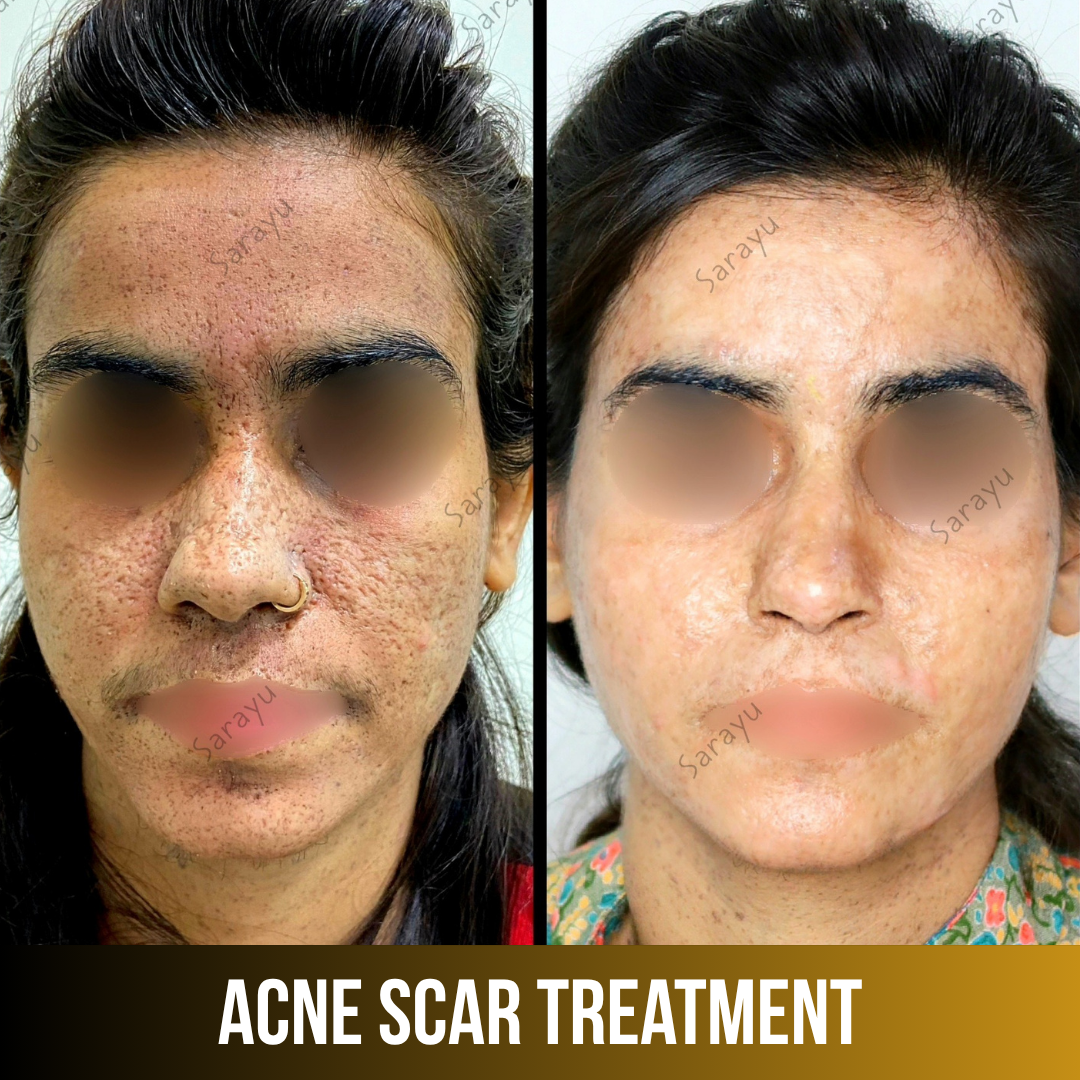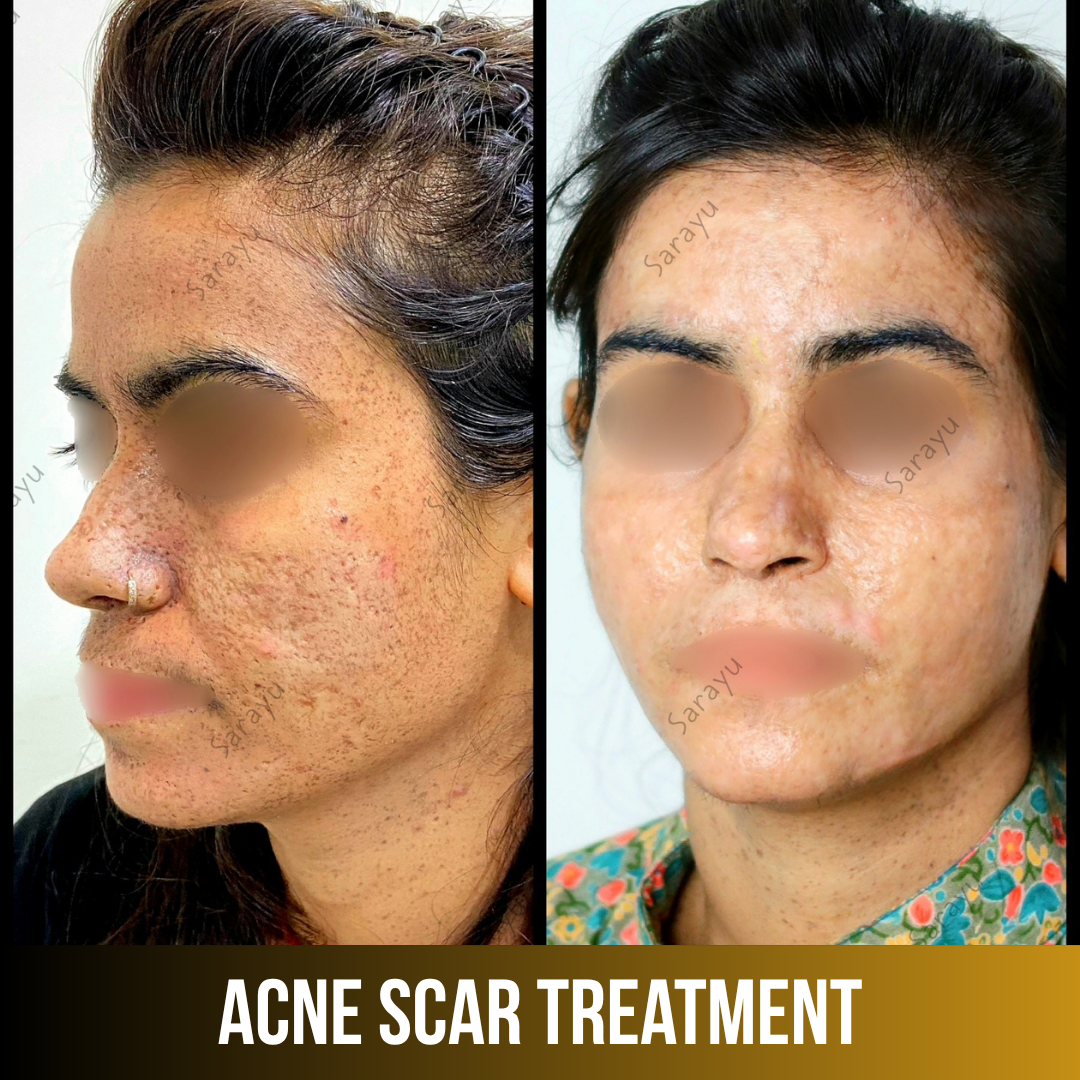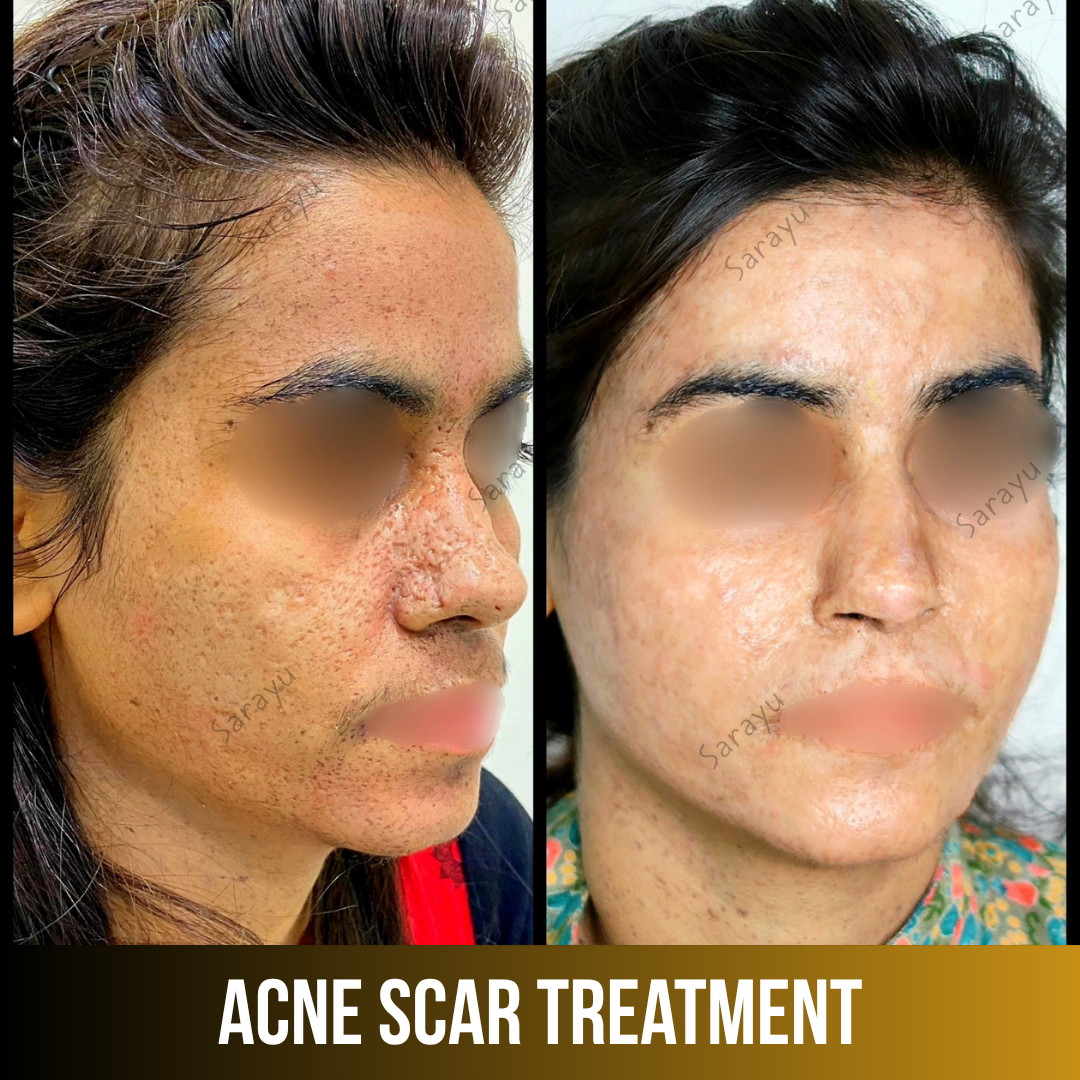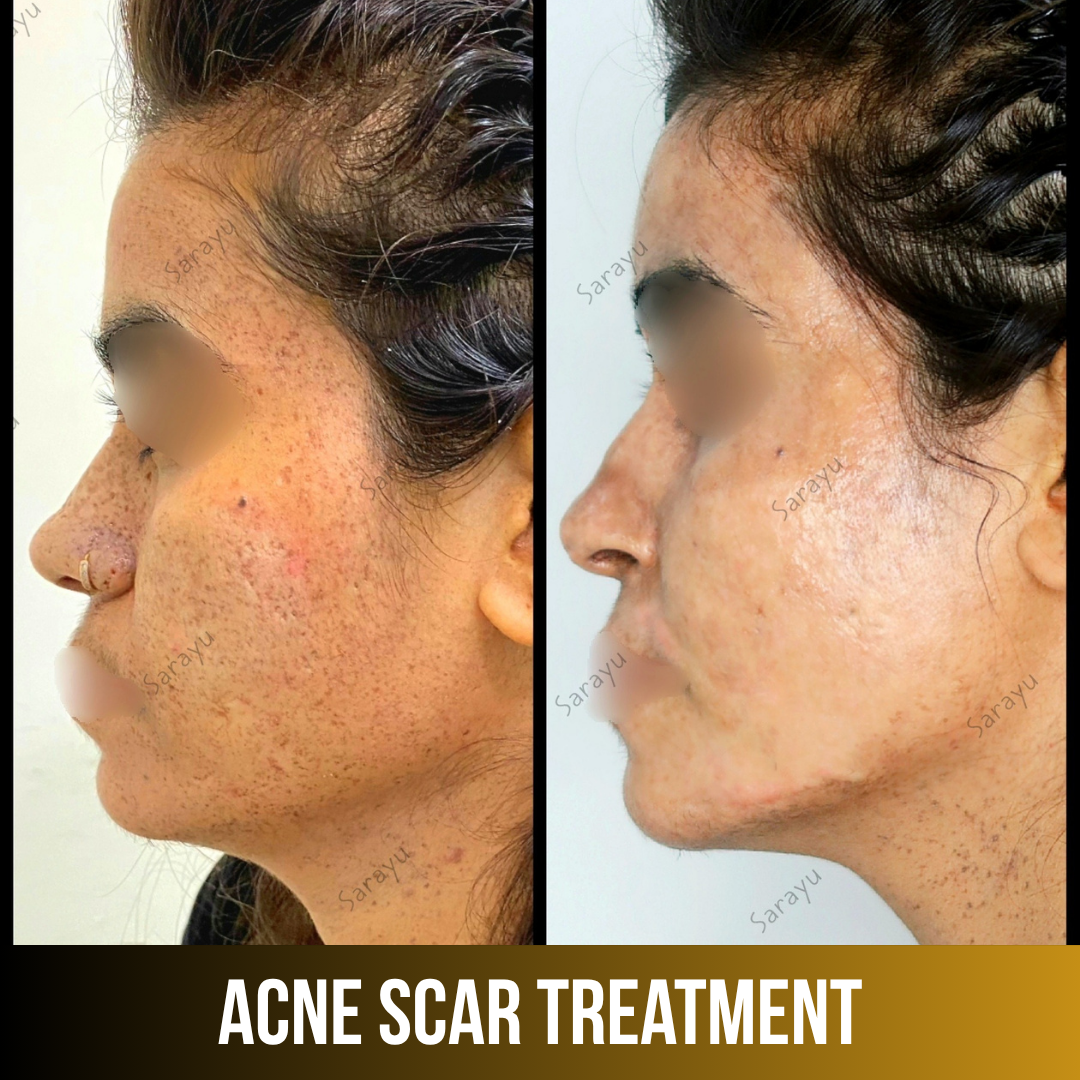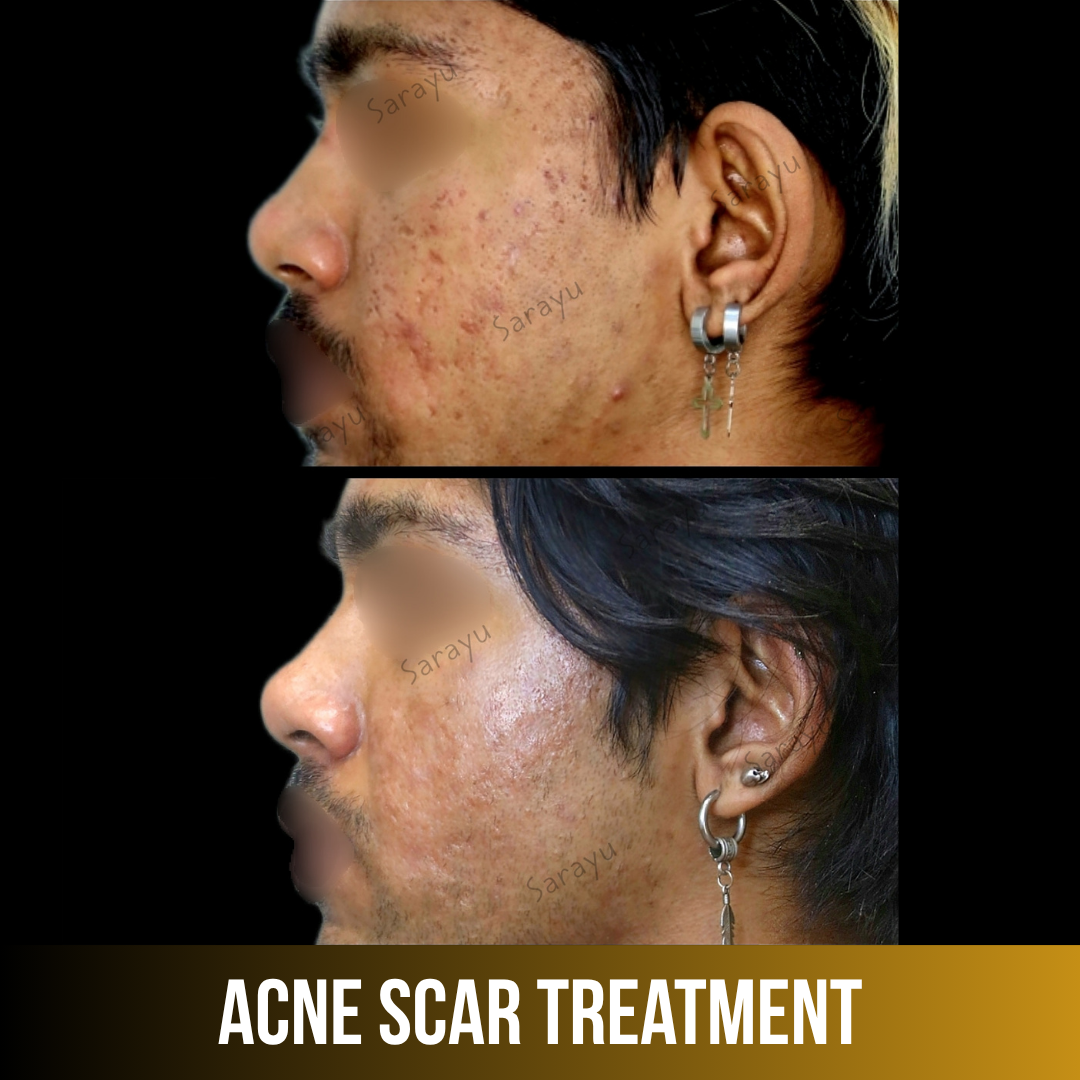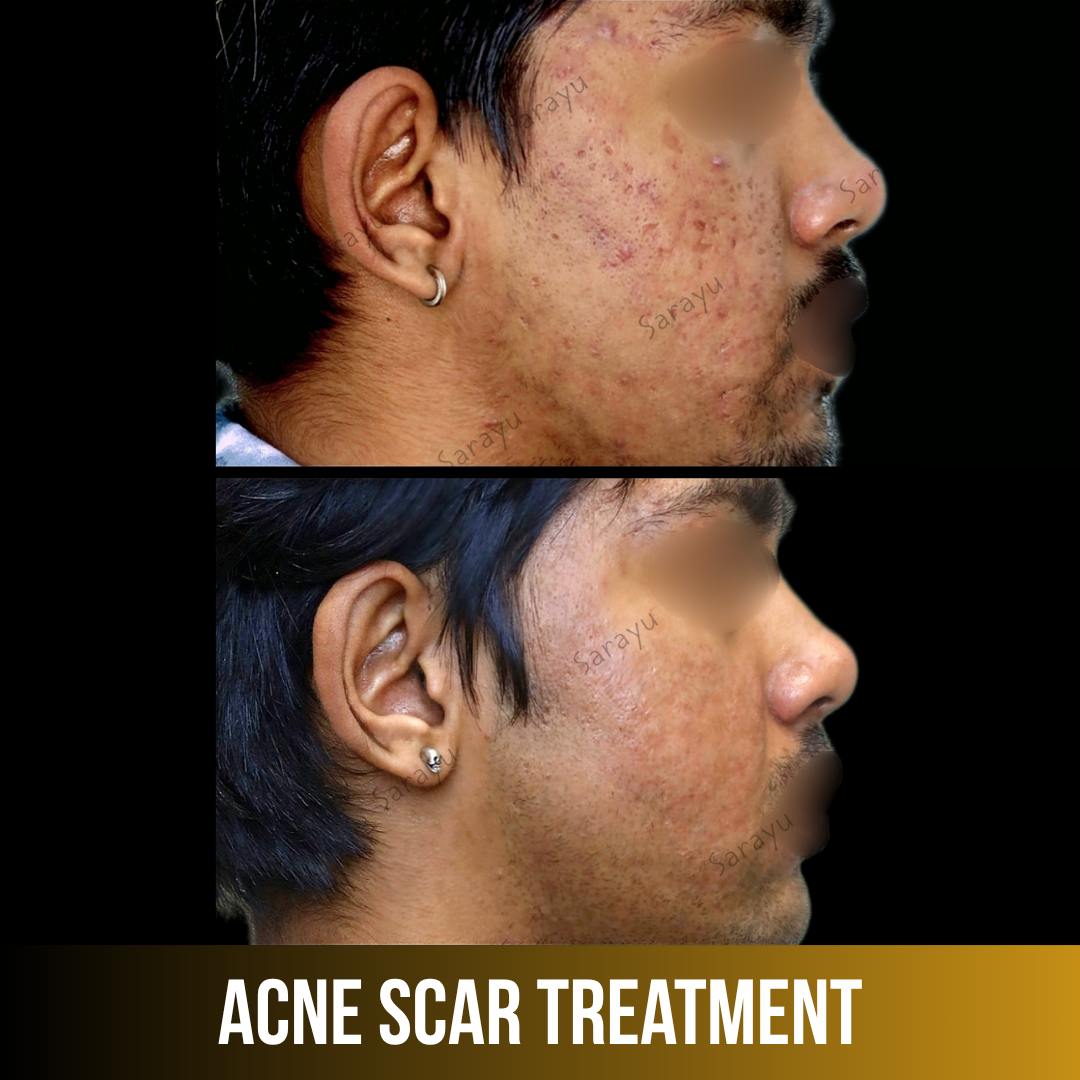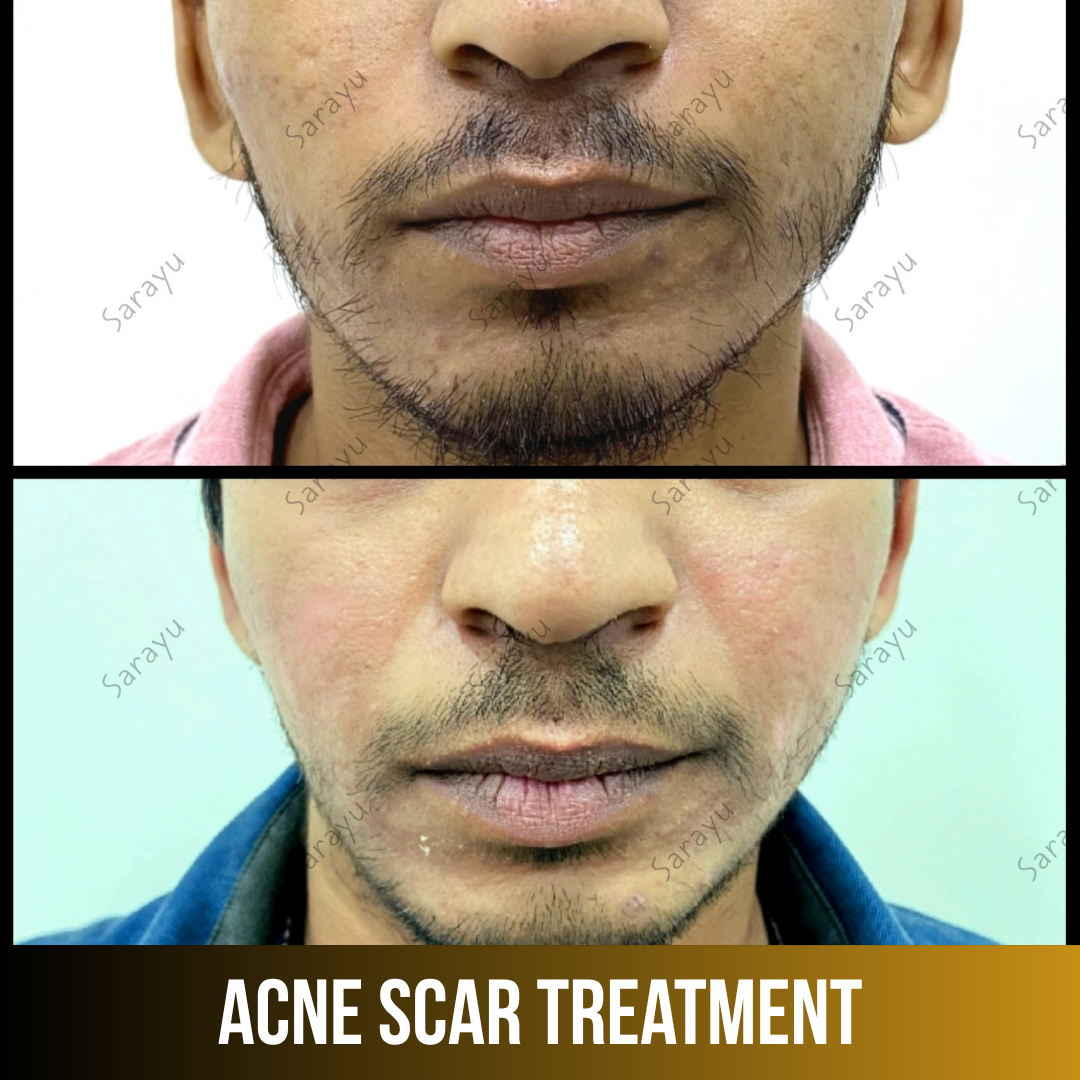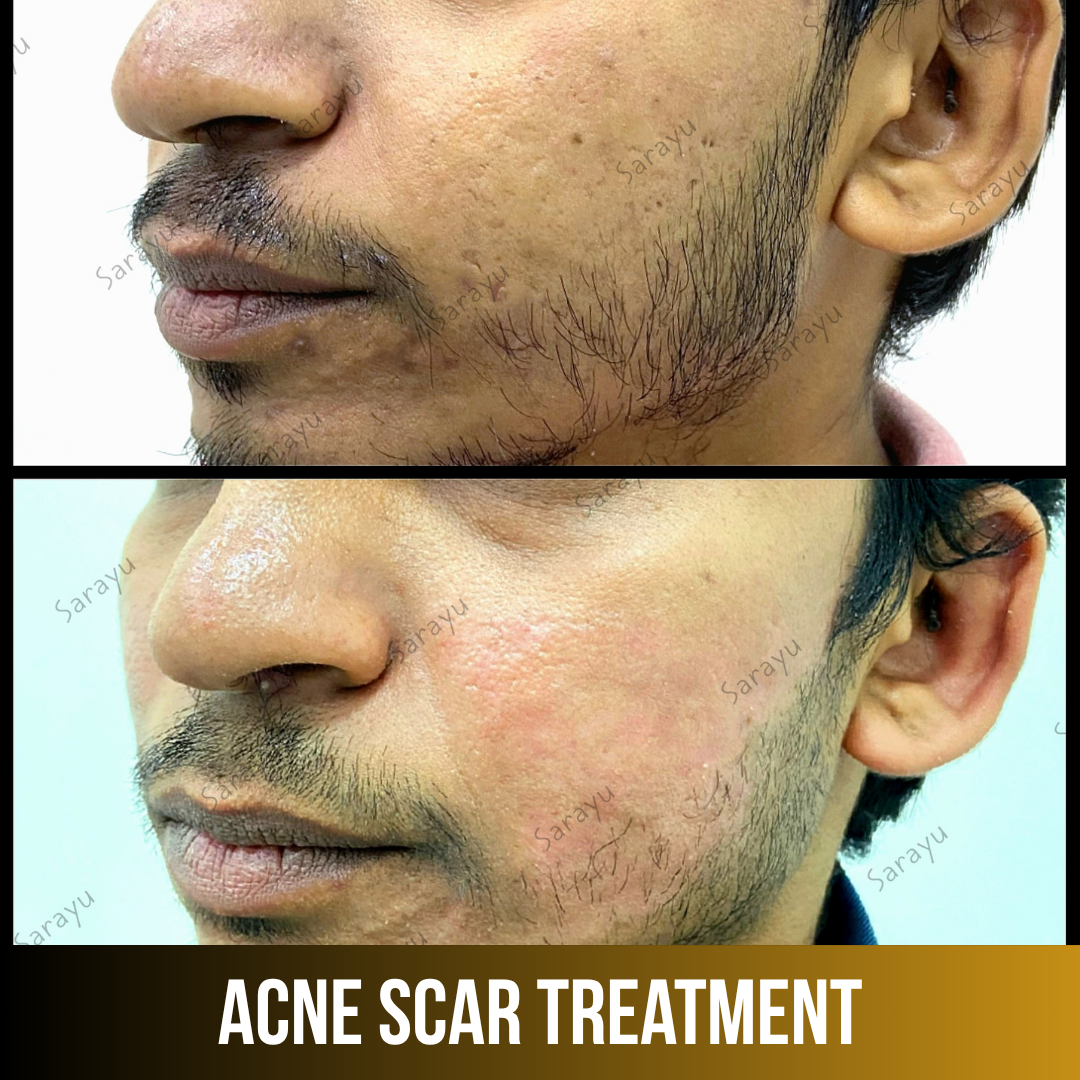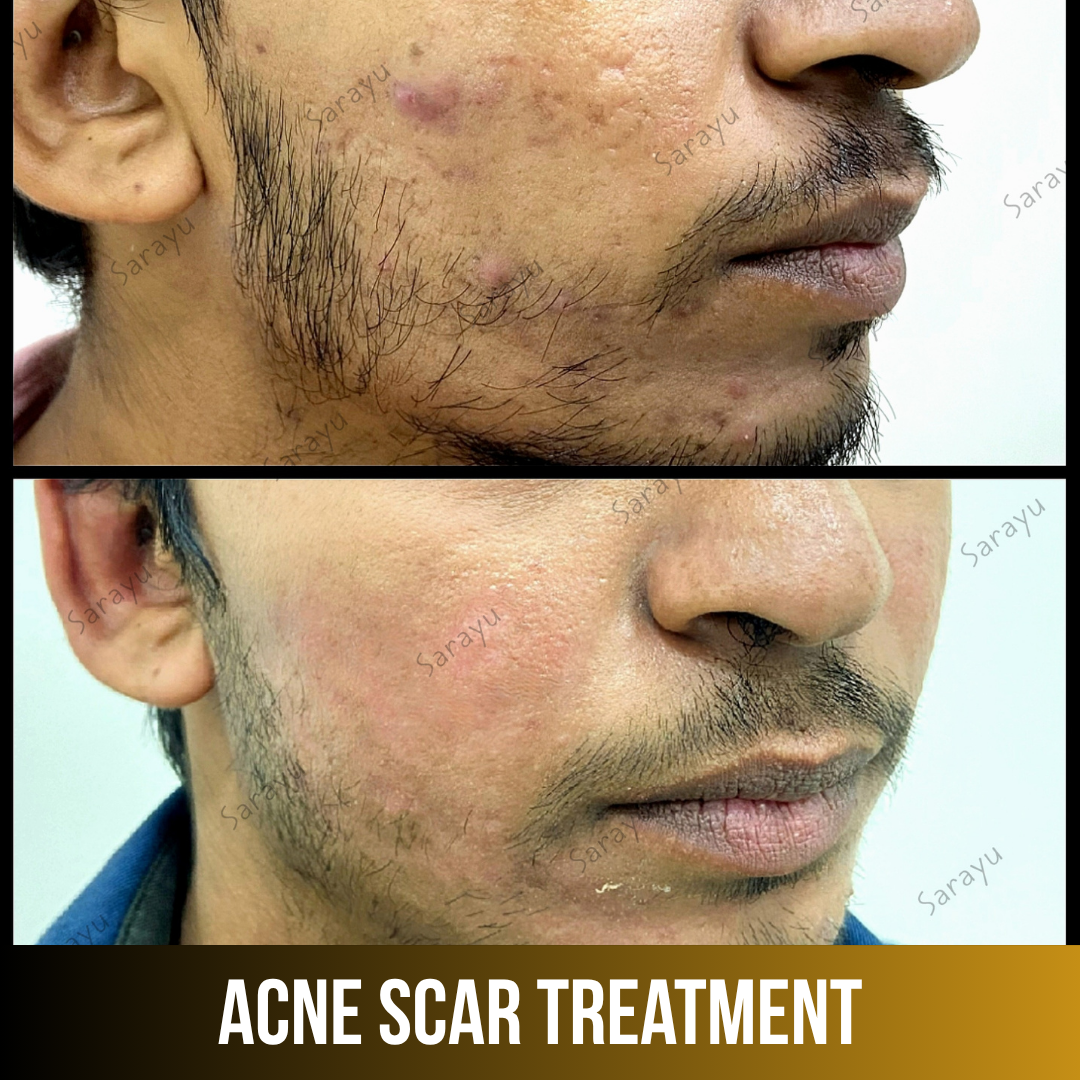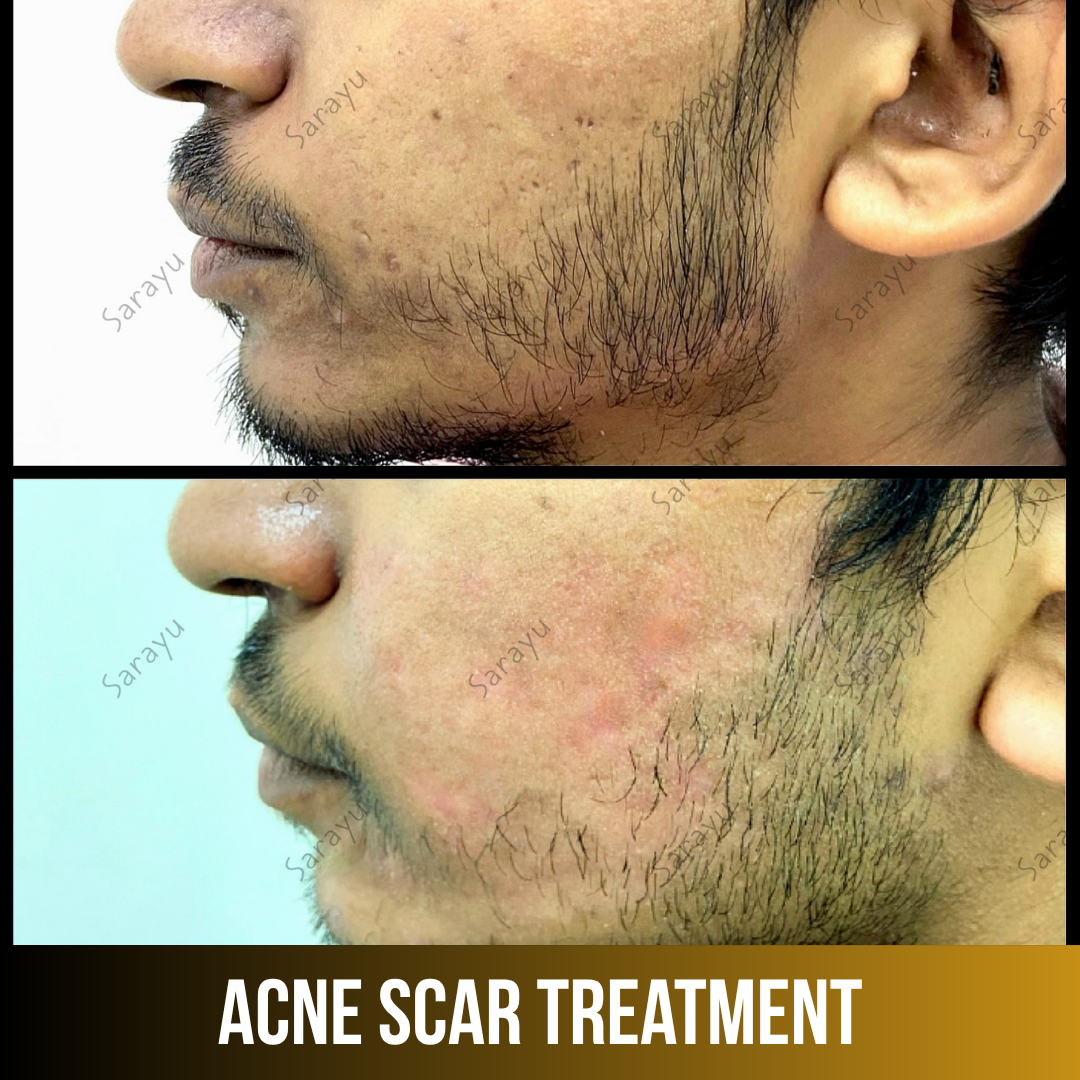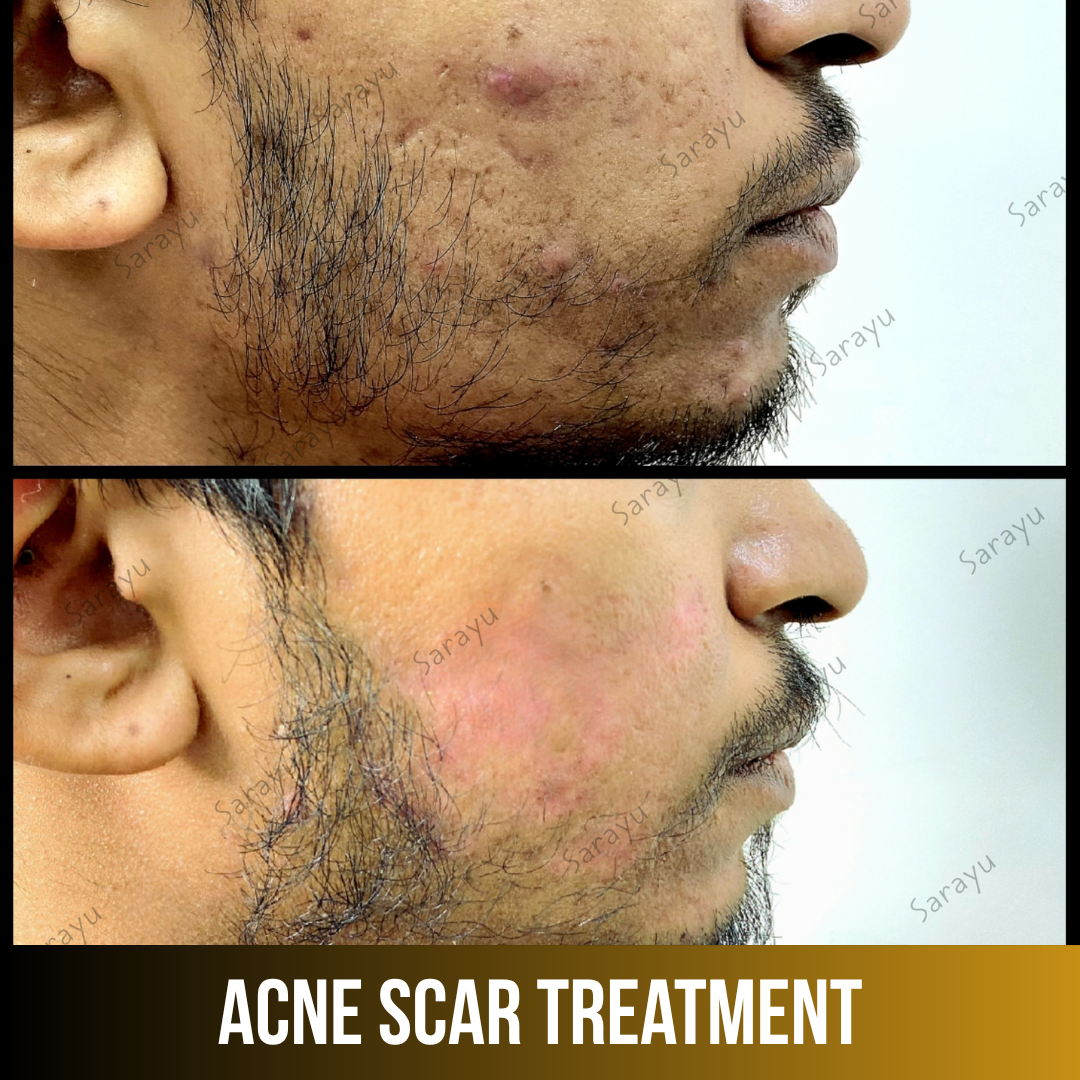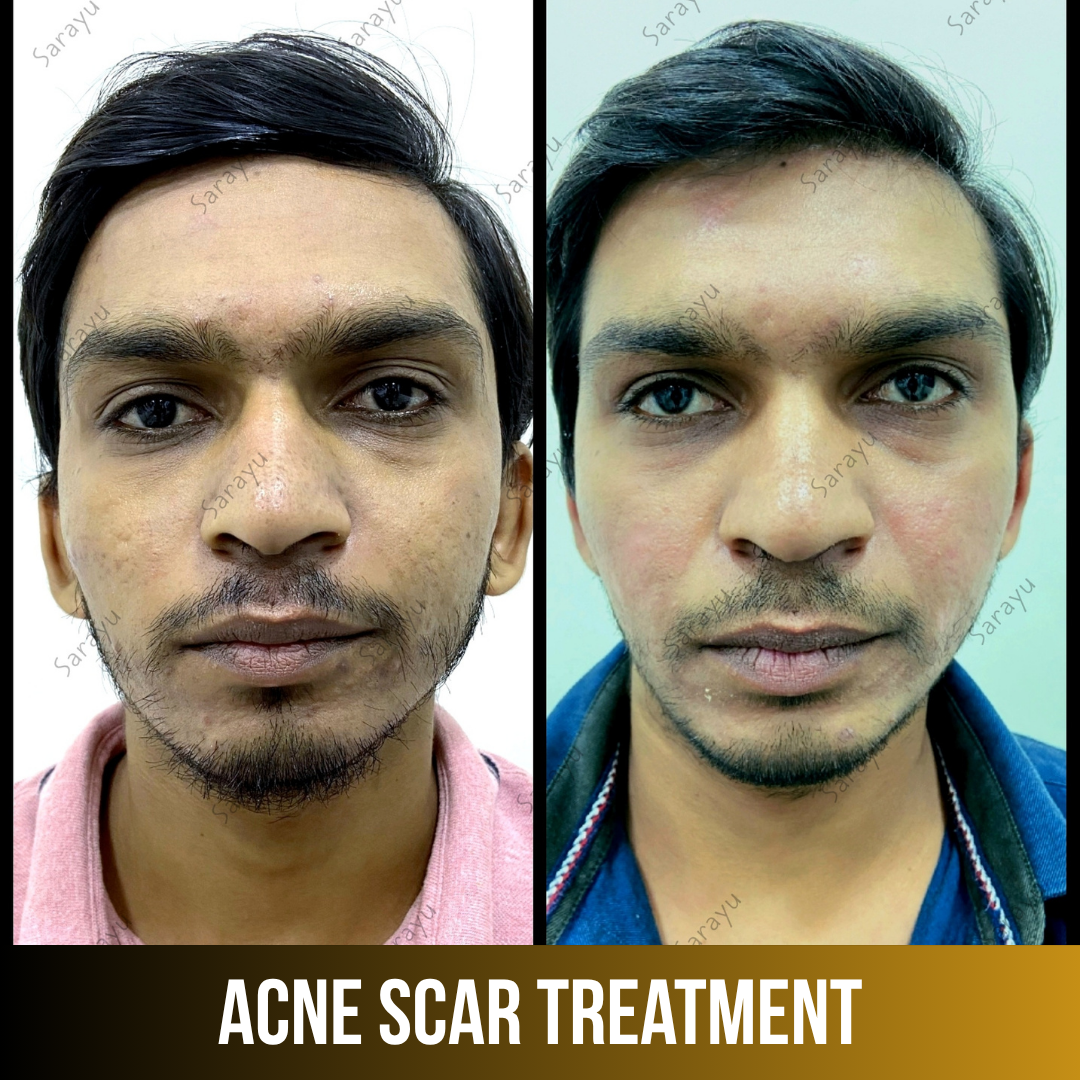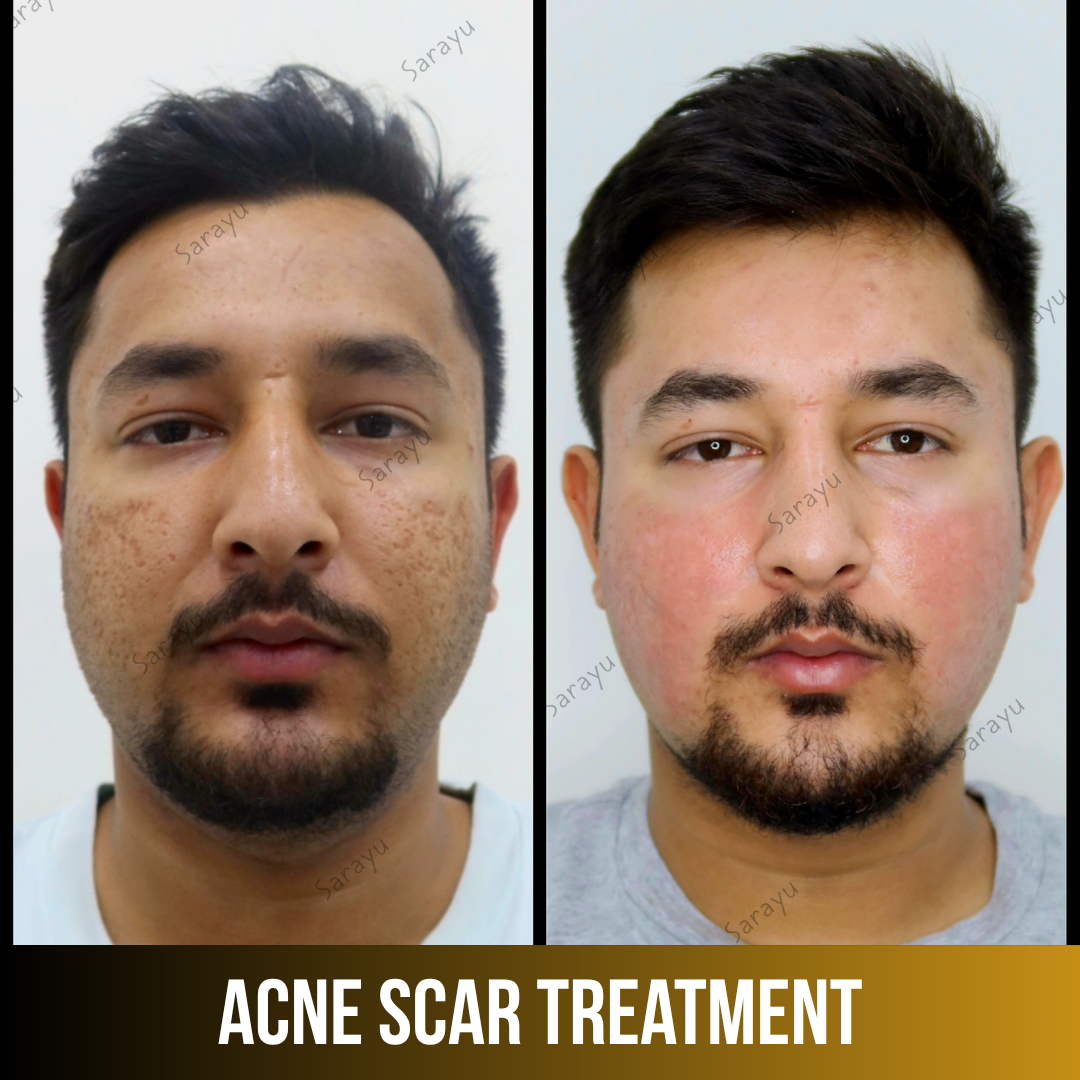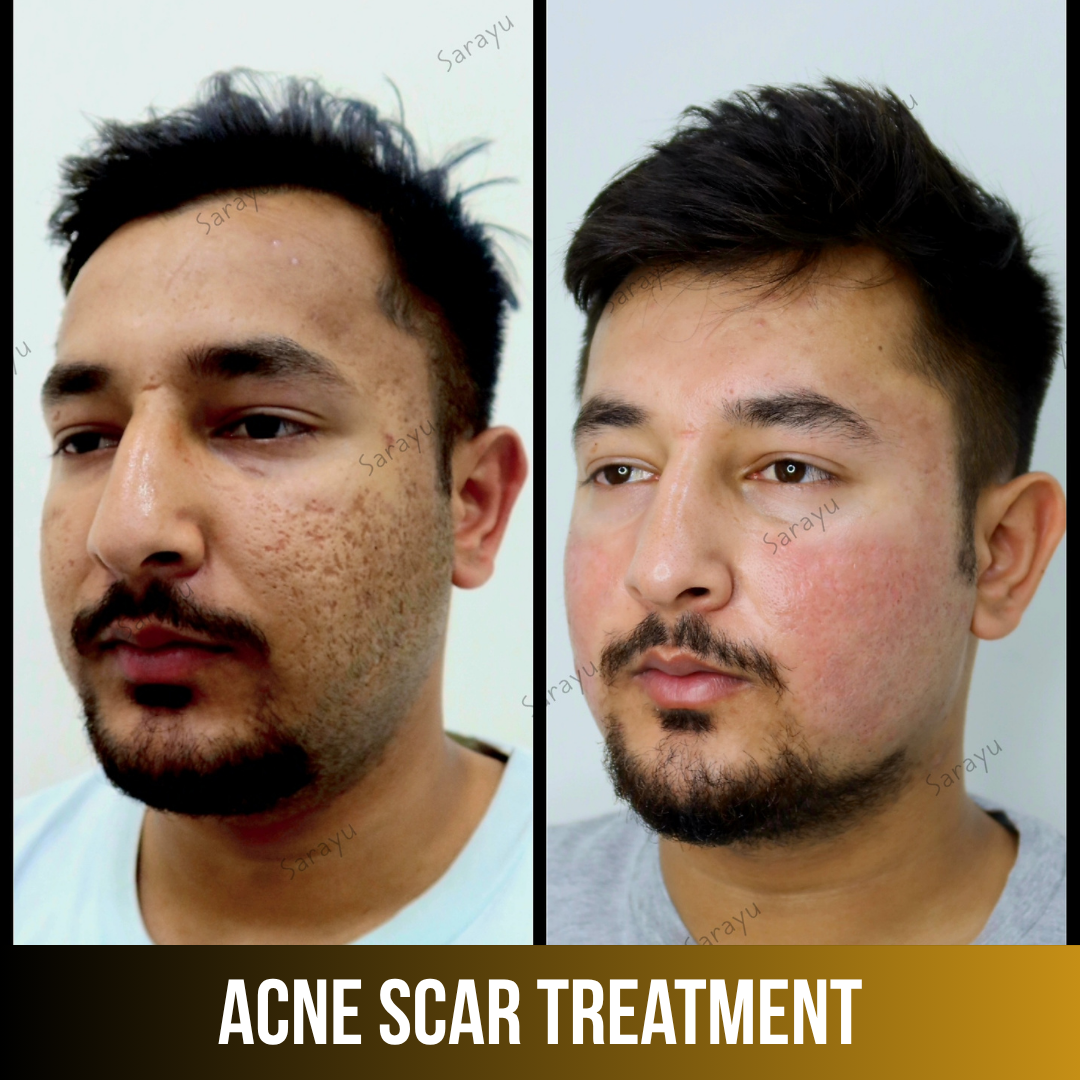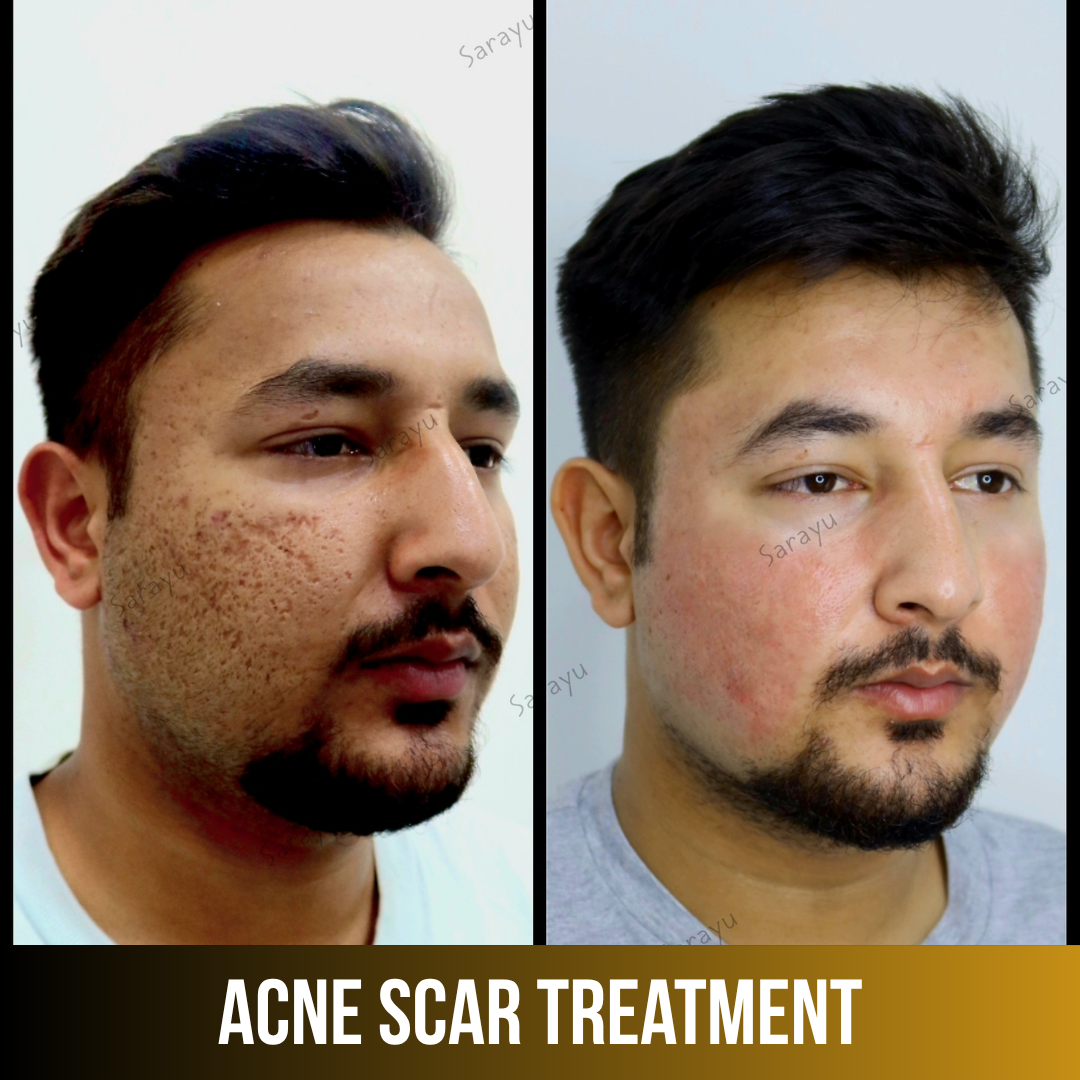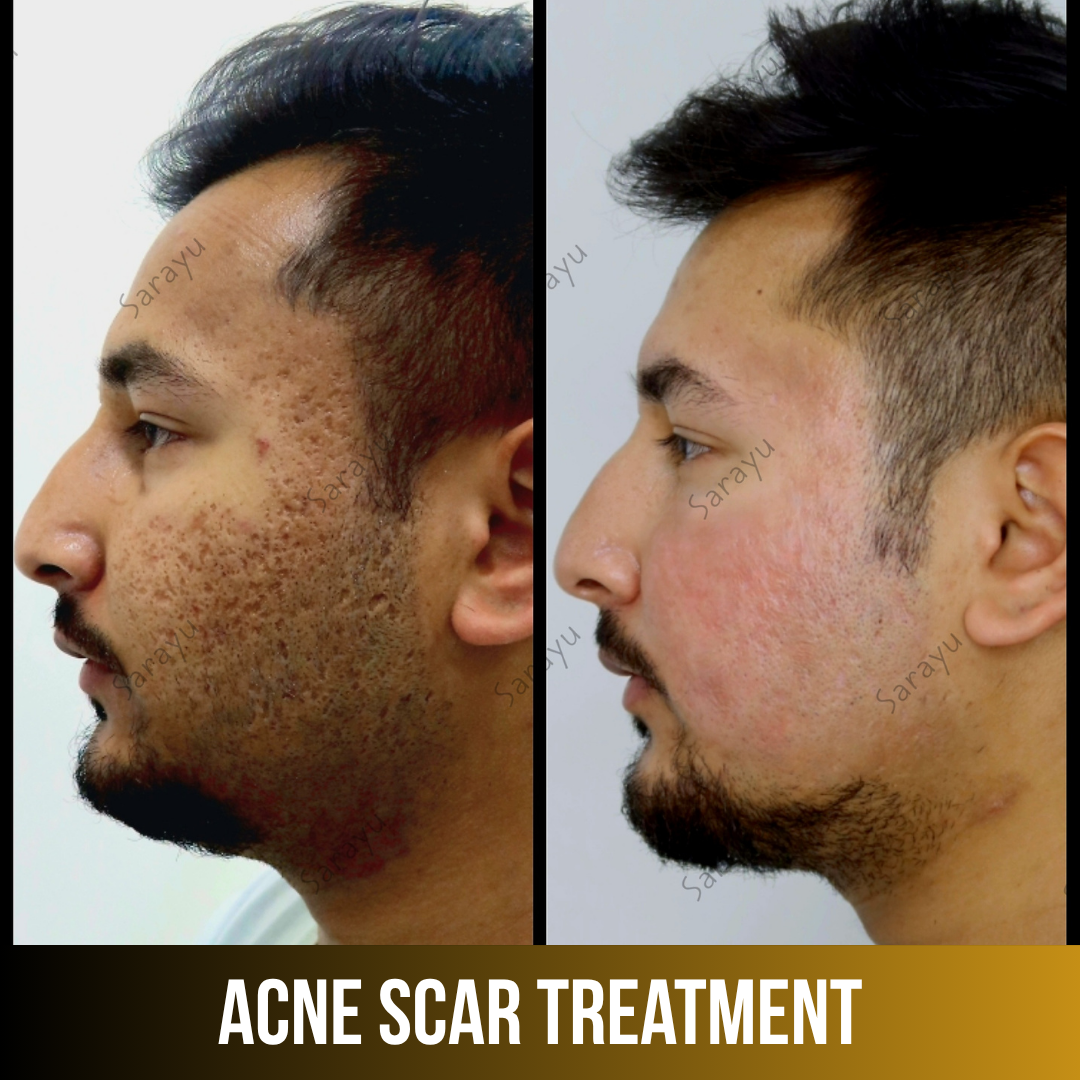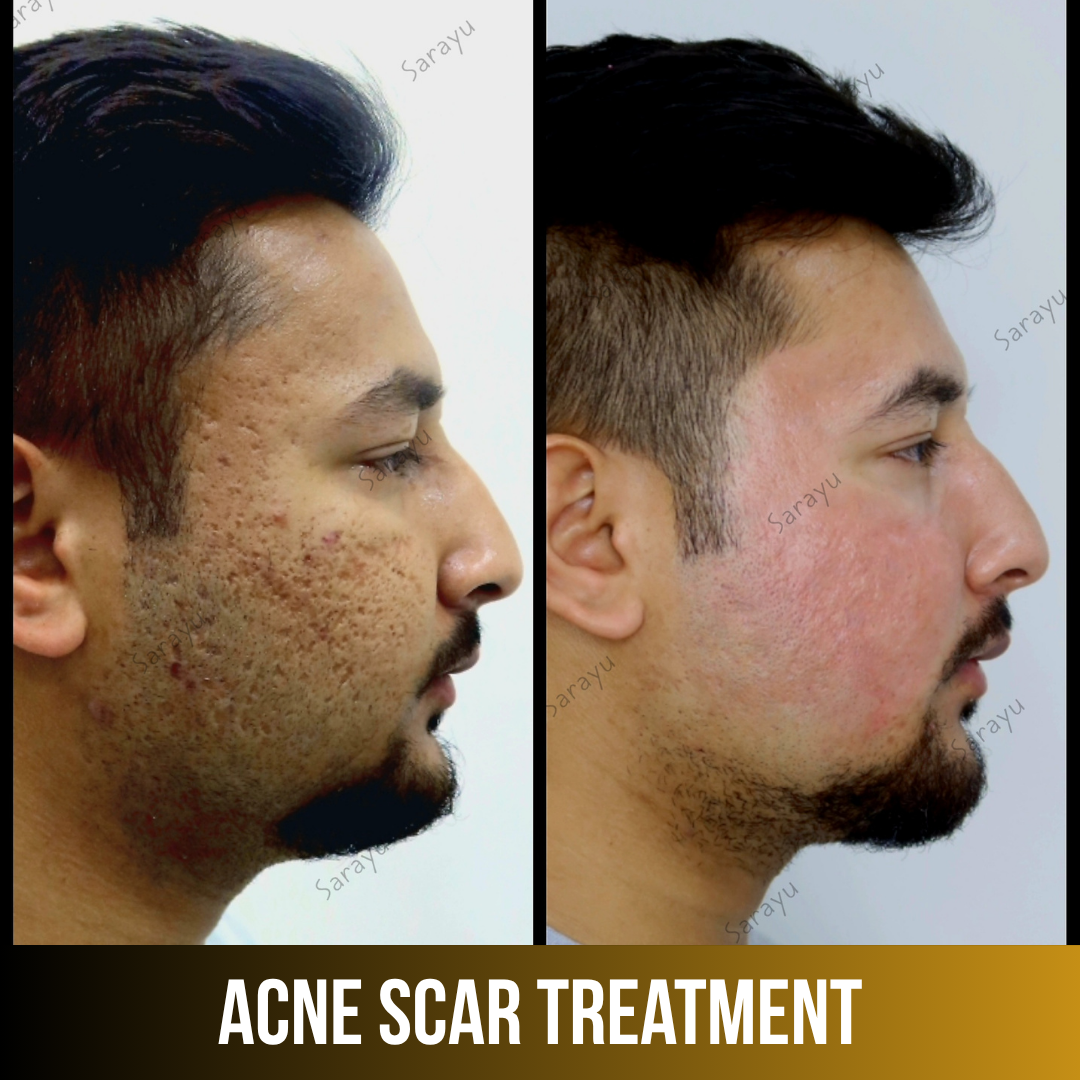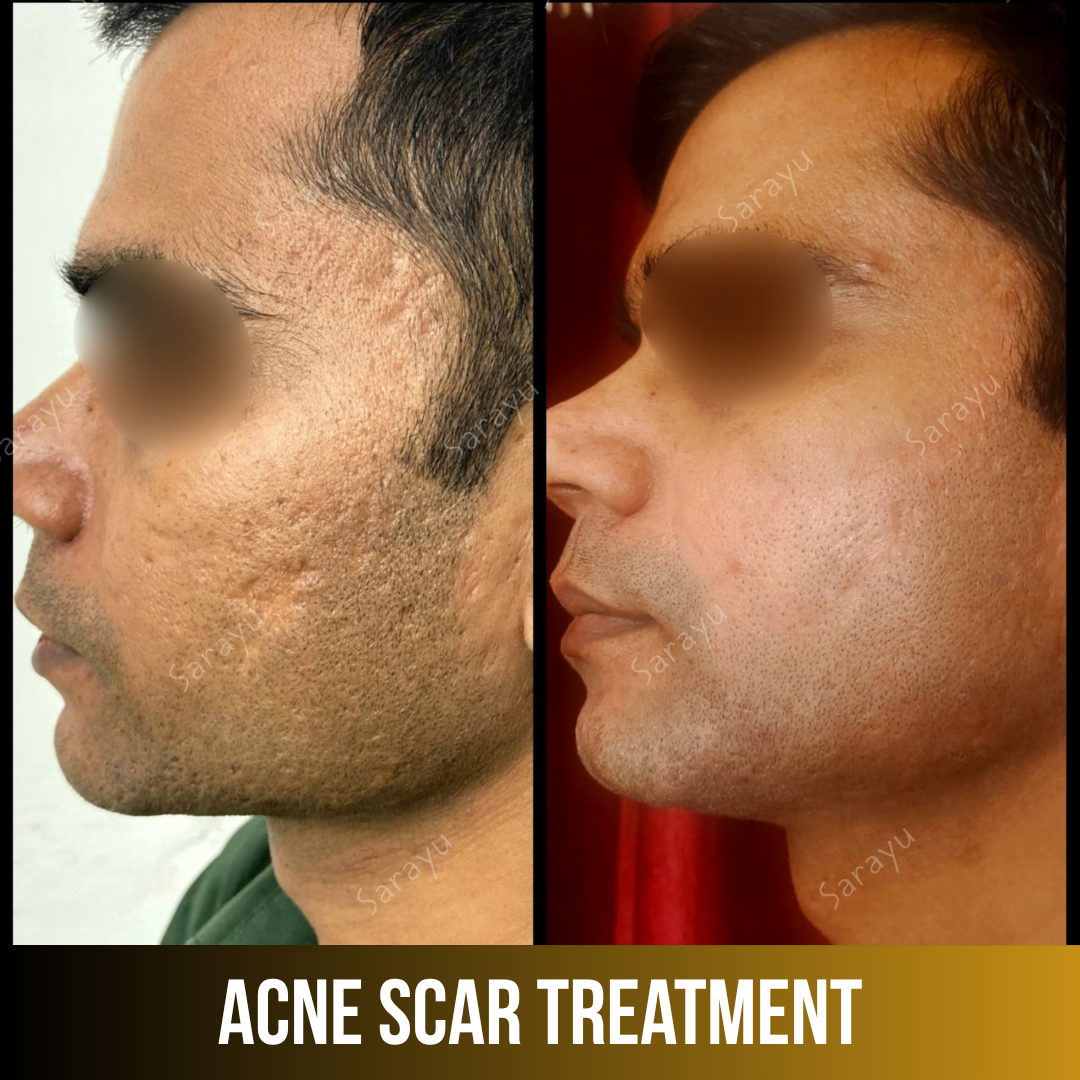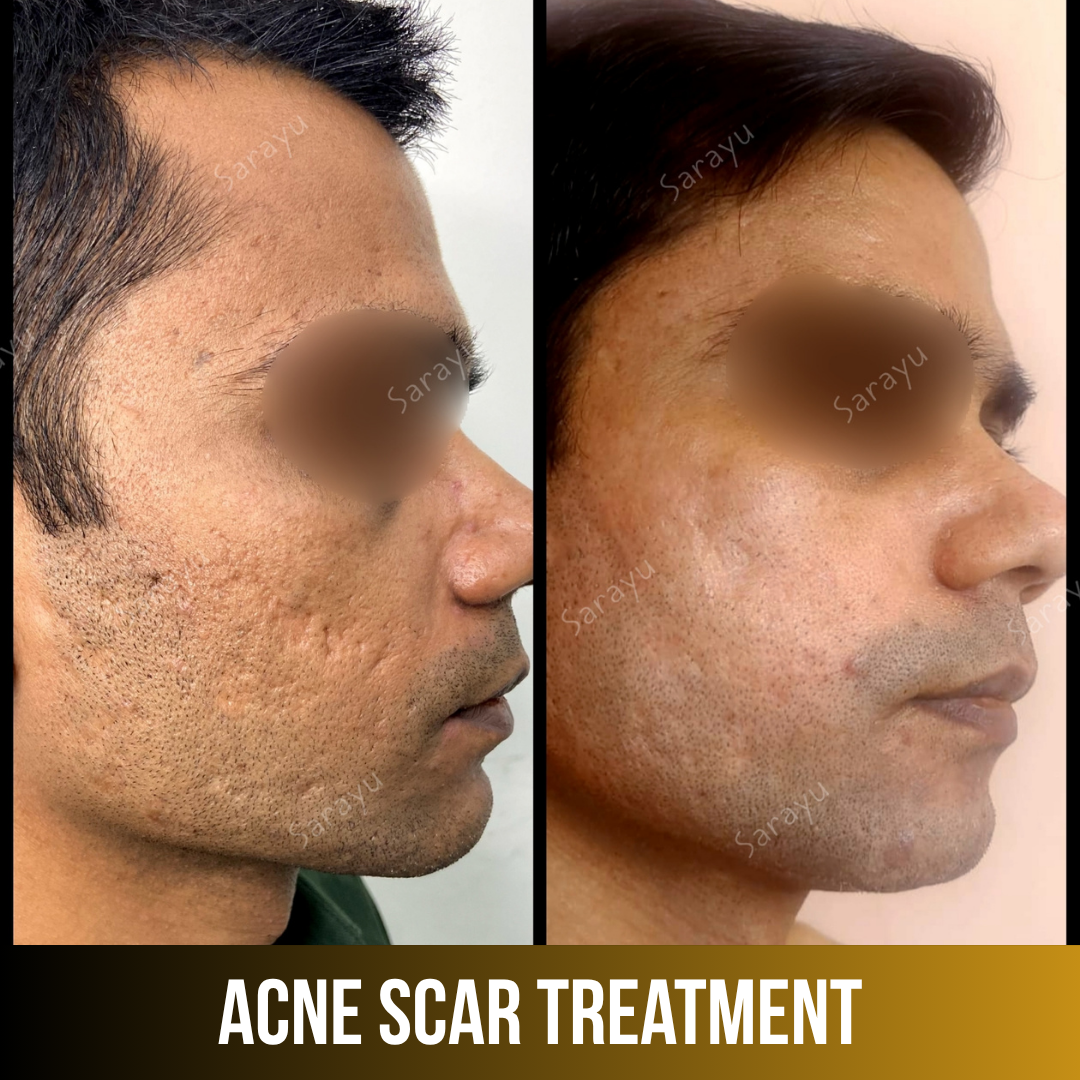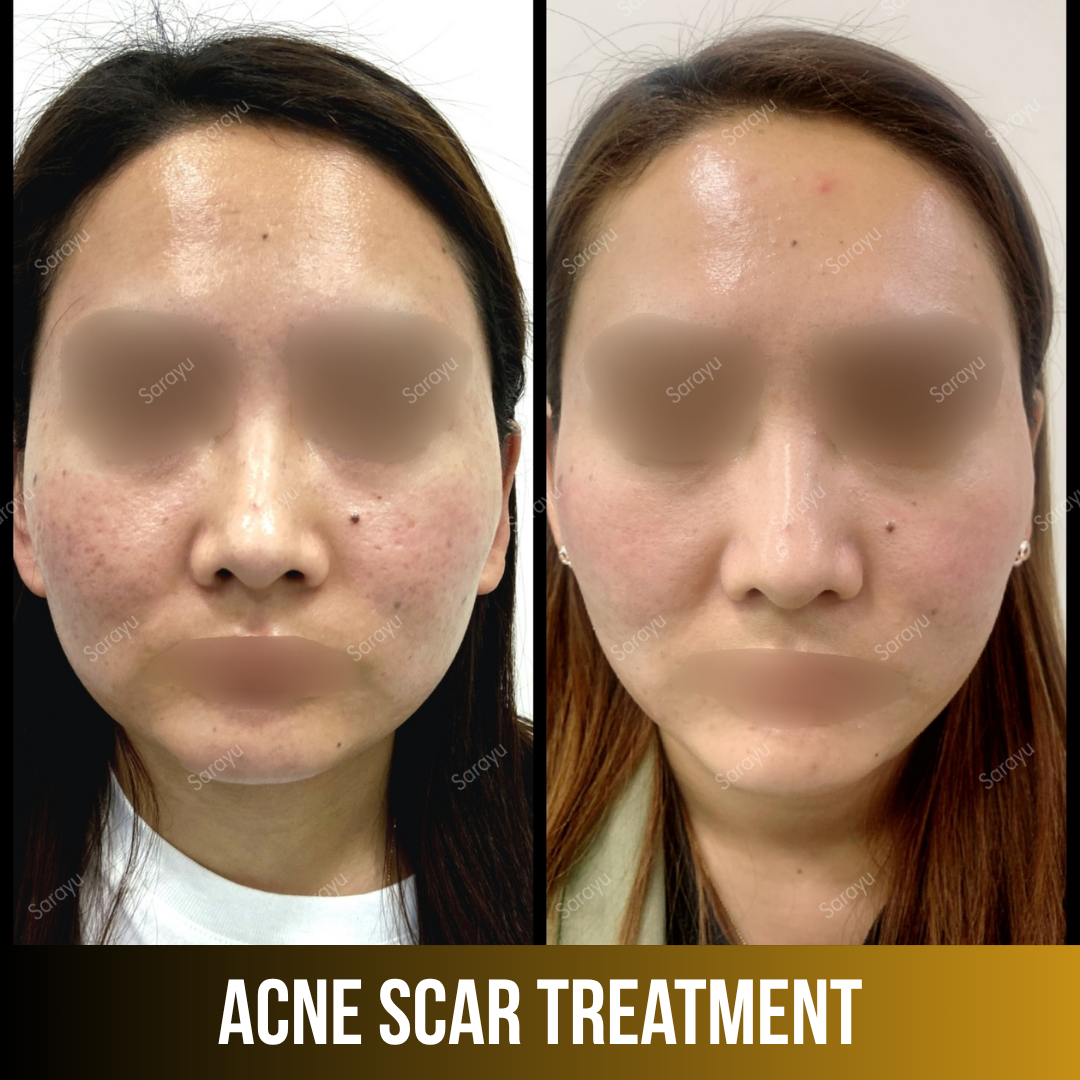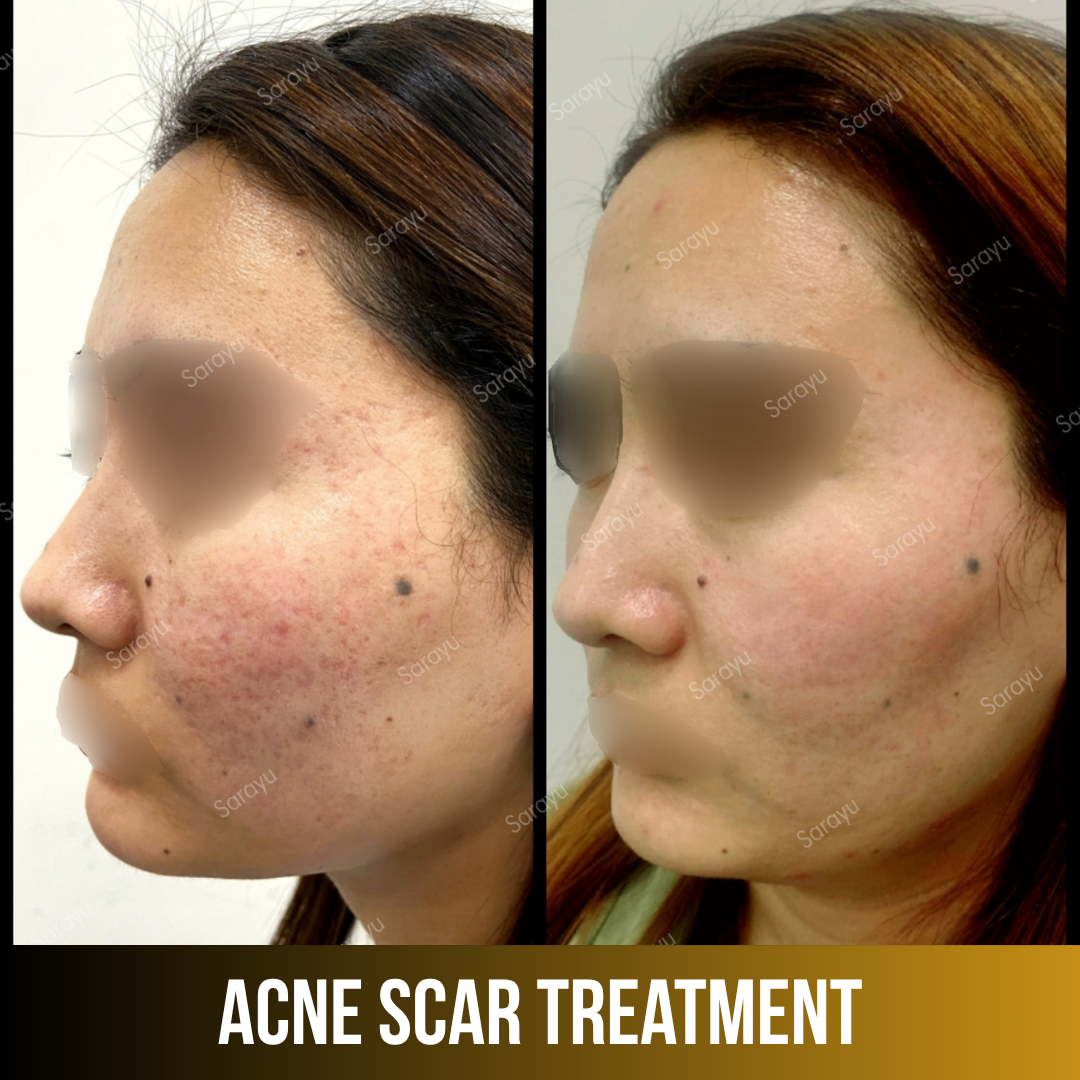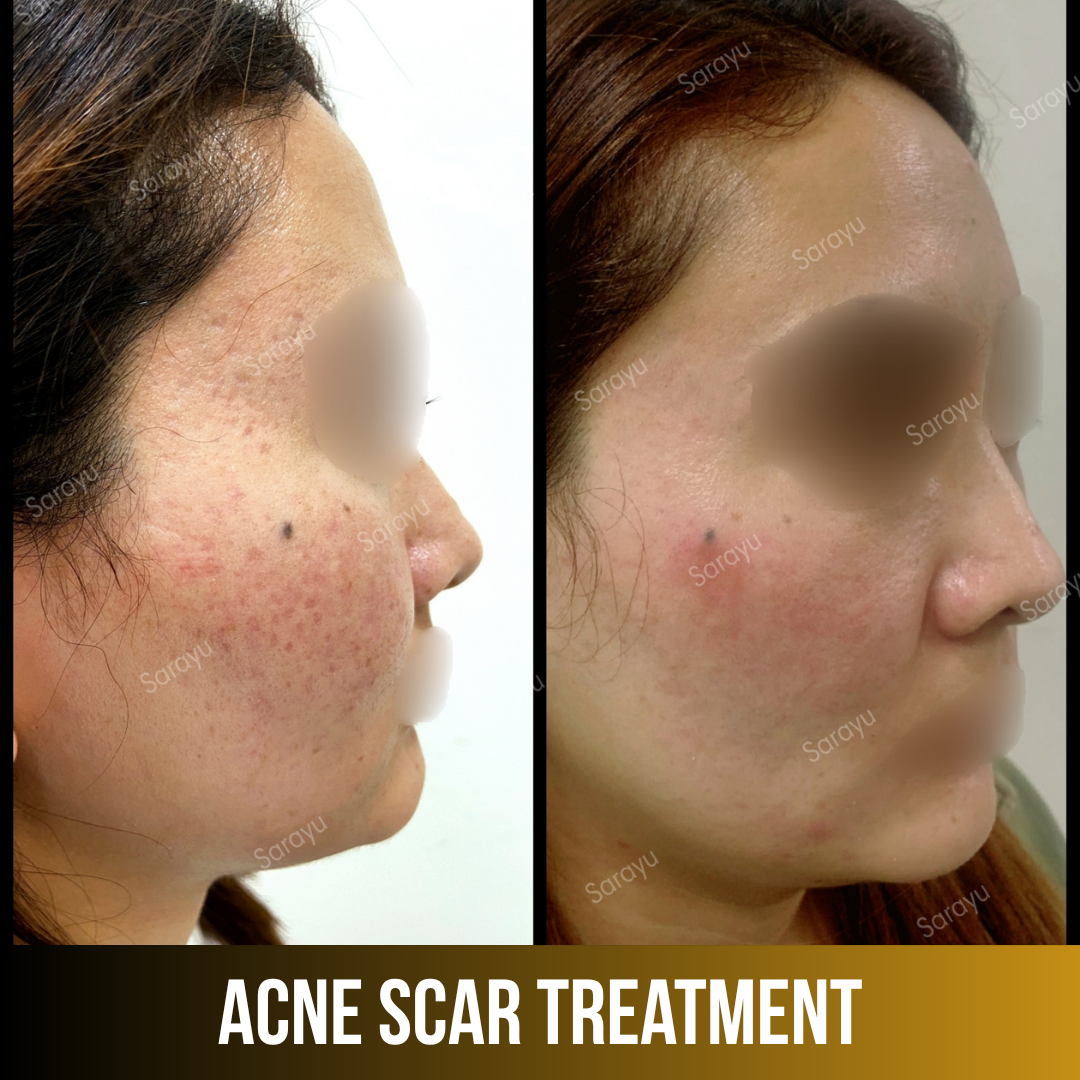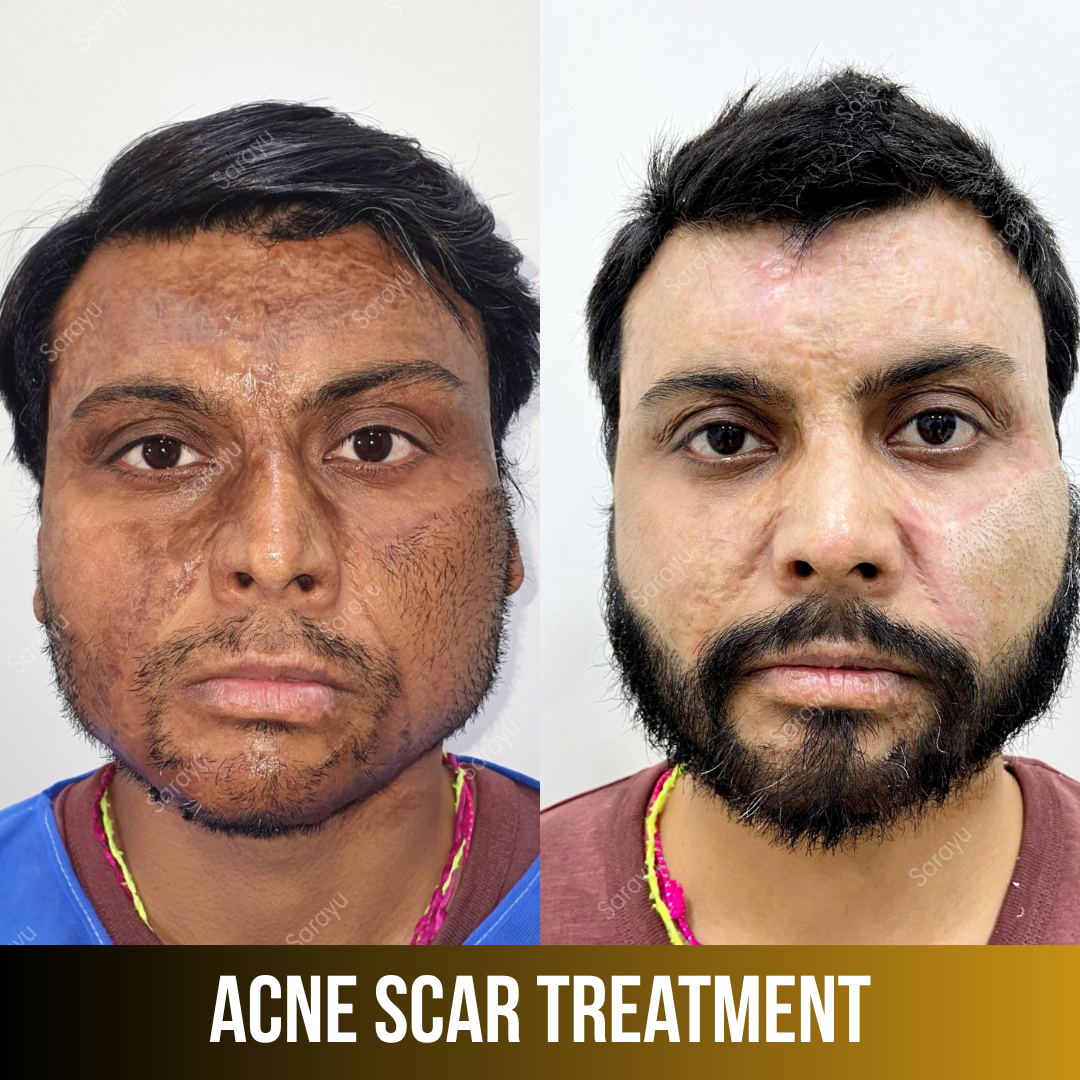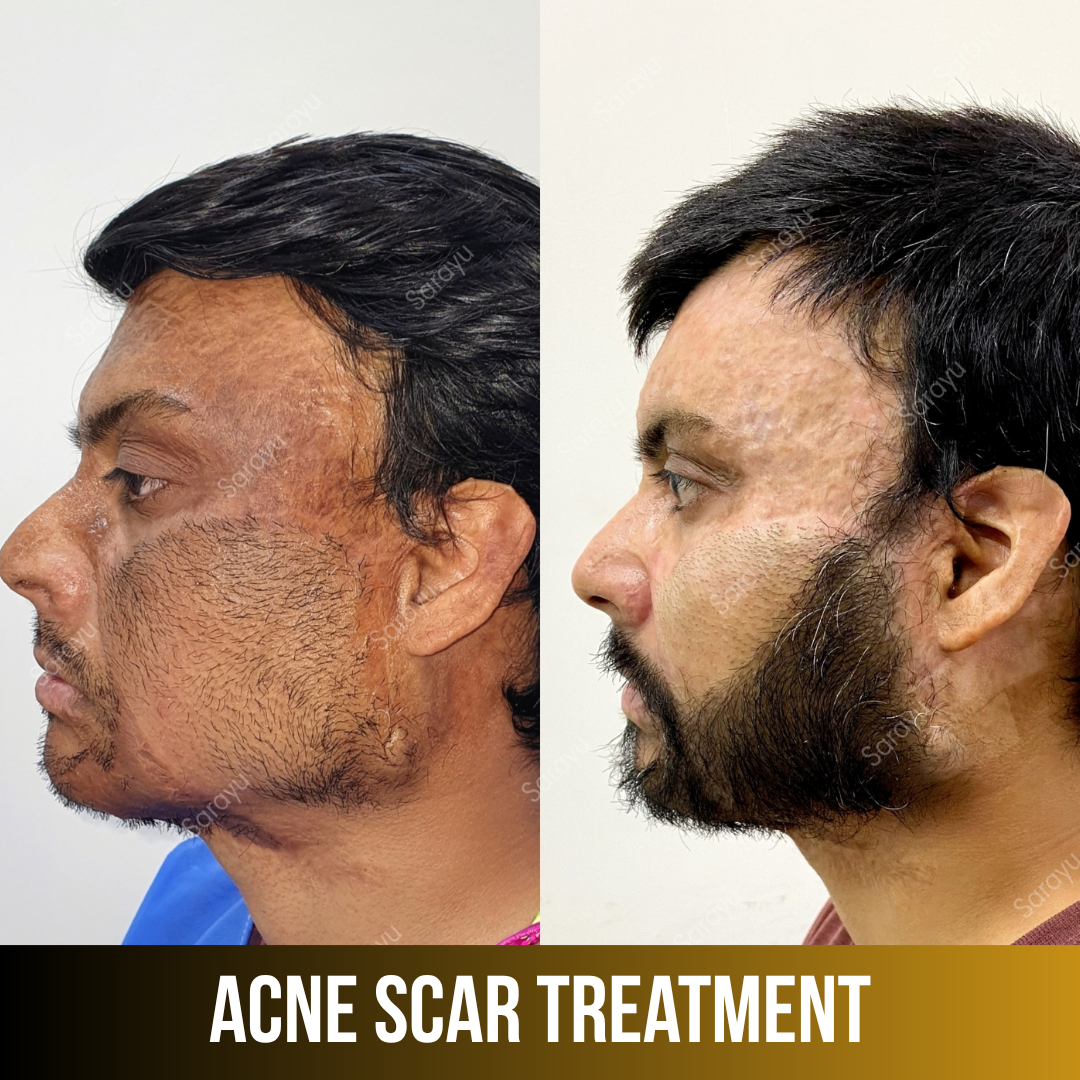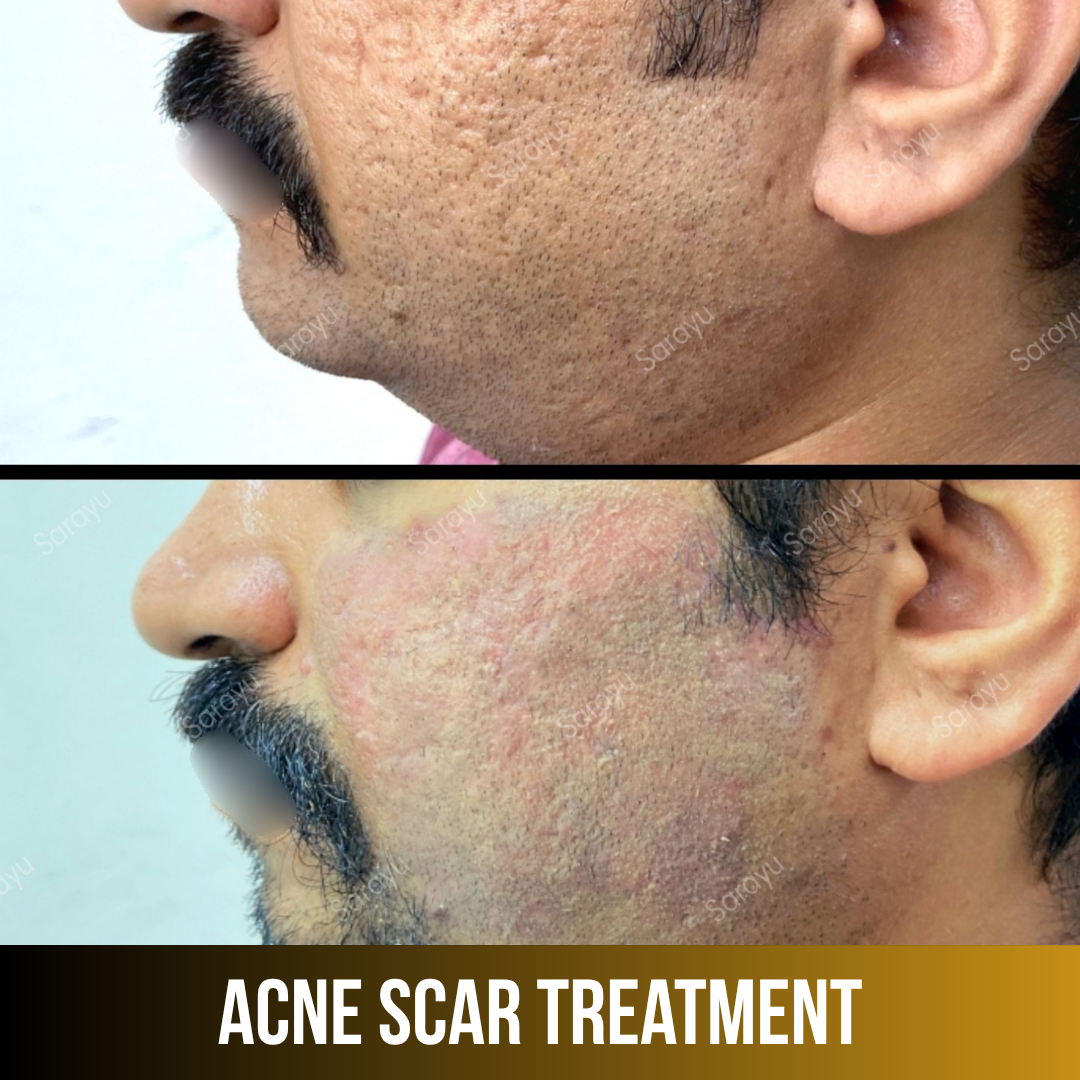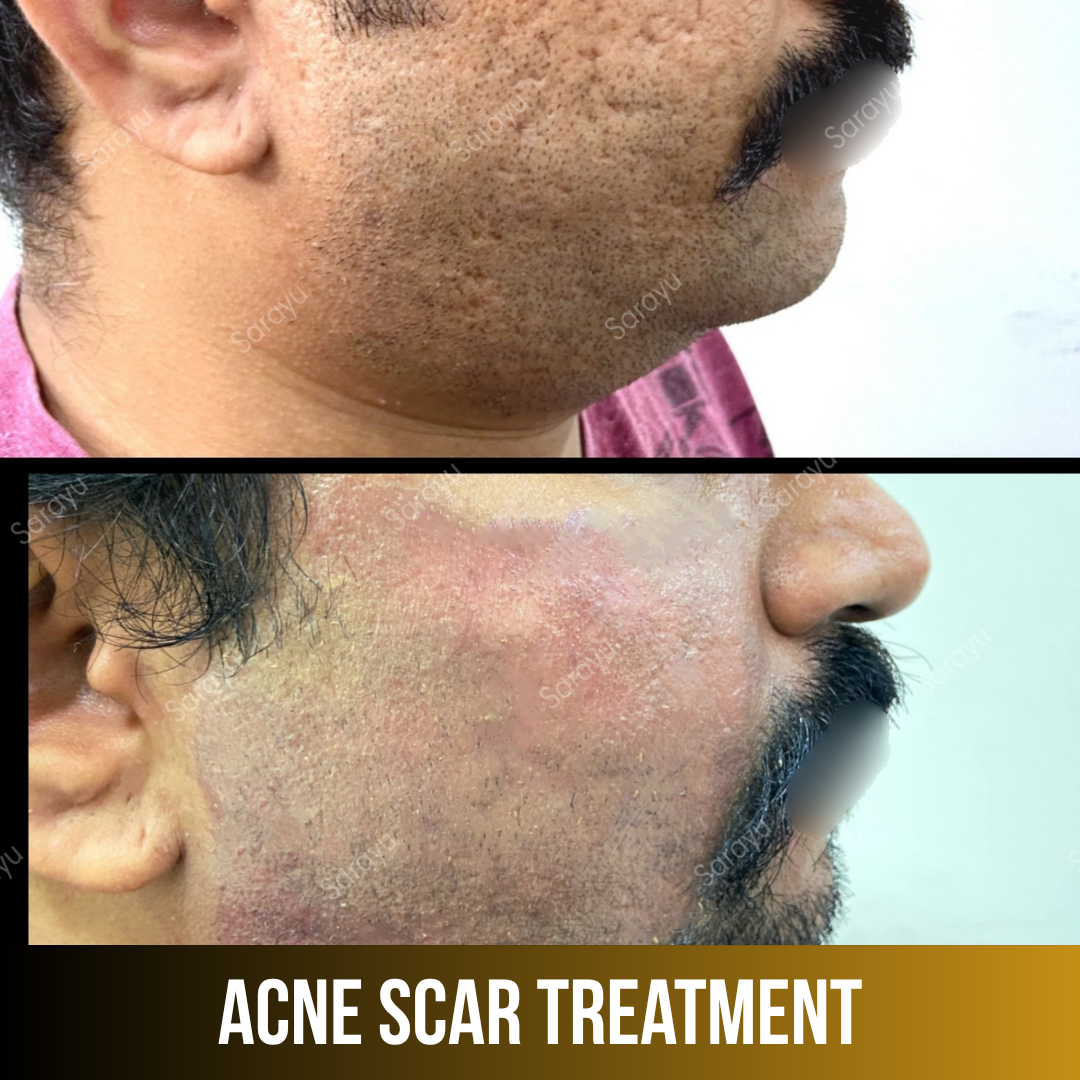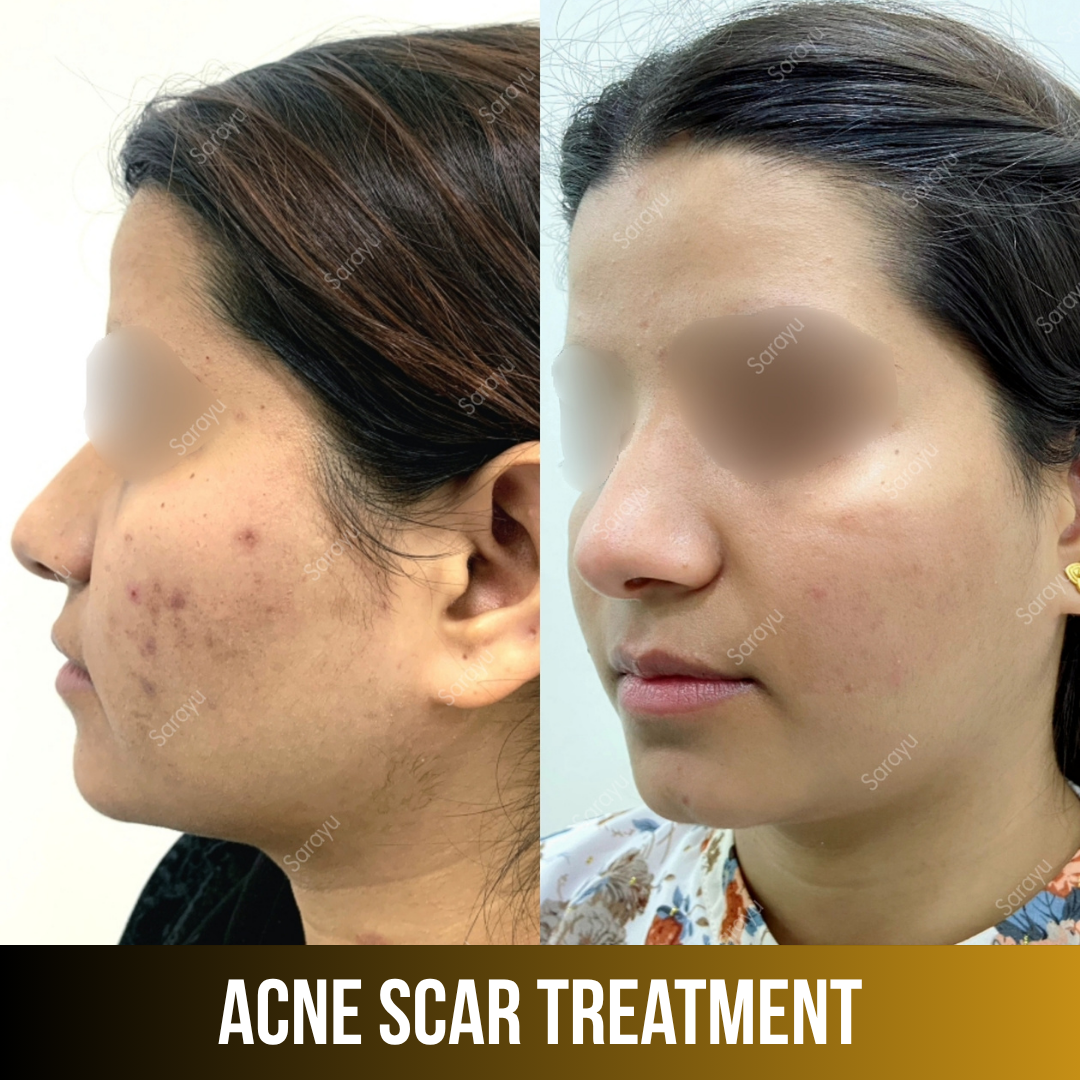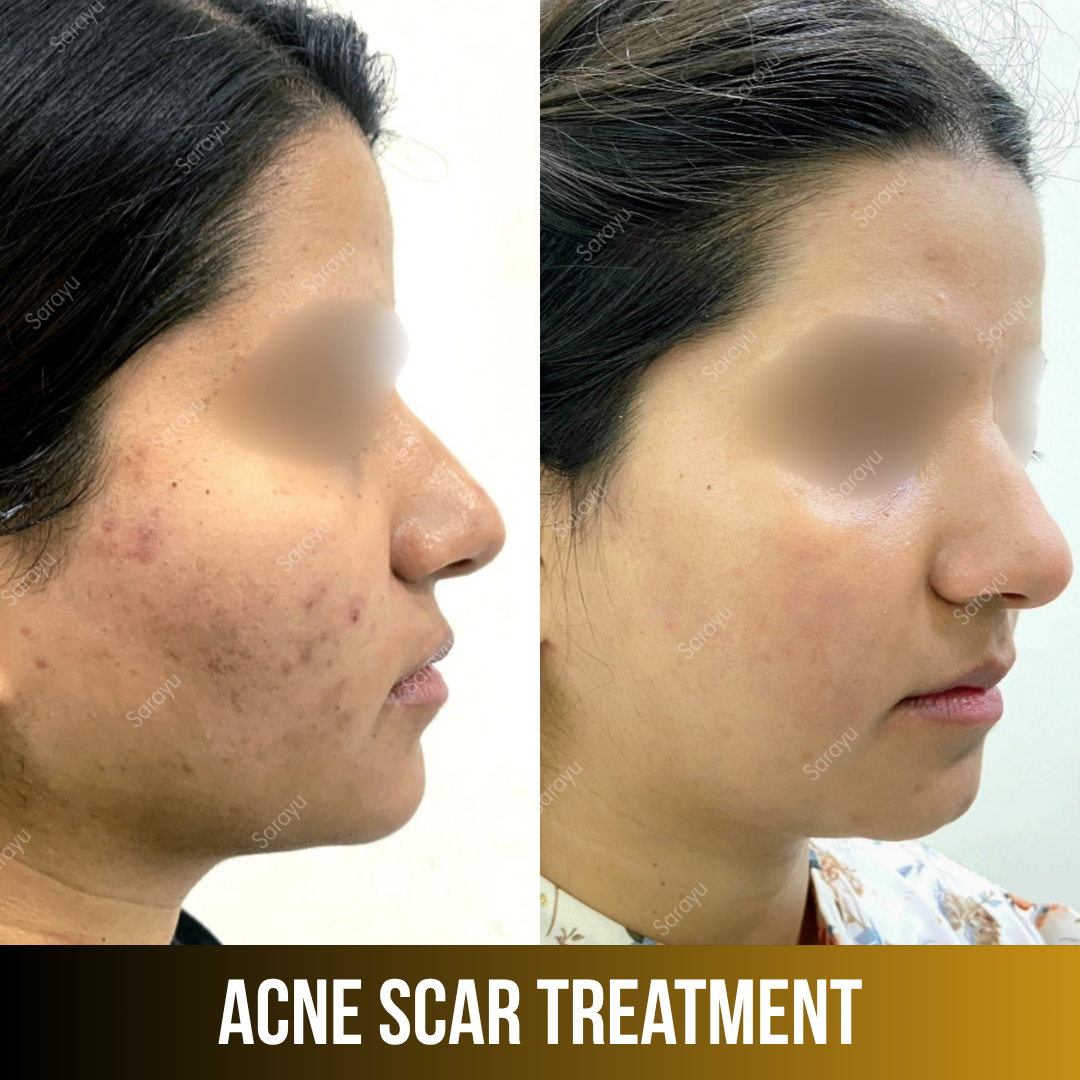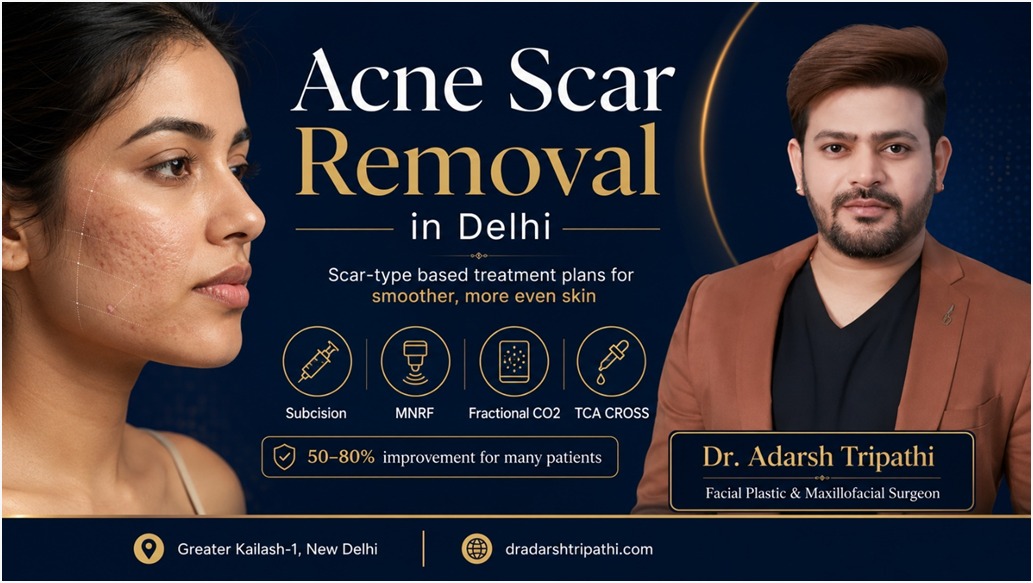
Acne Scar Removal Treatment in Delhi — The Right Treatment for Your Scar Type
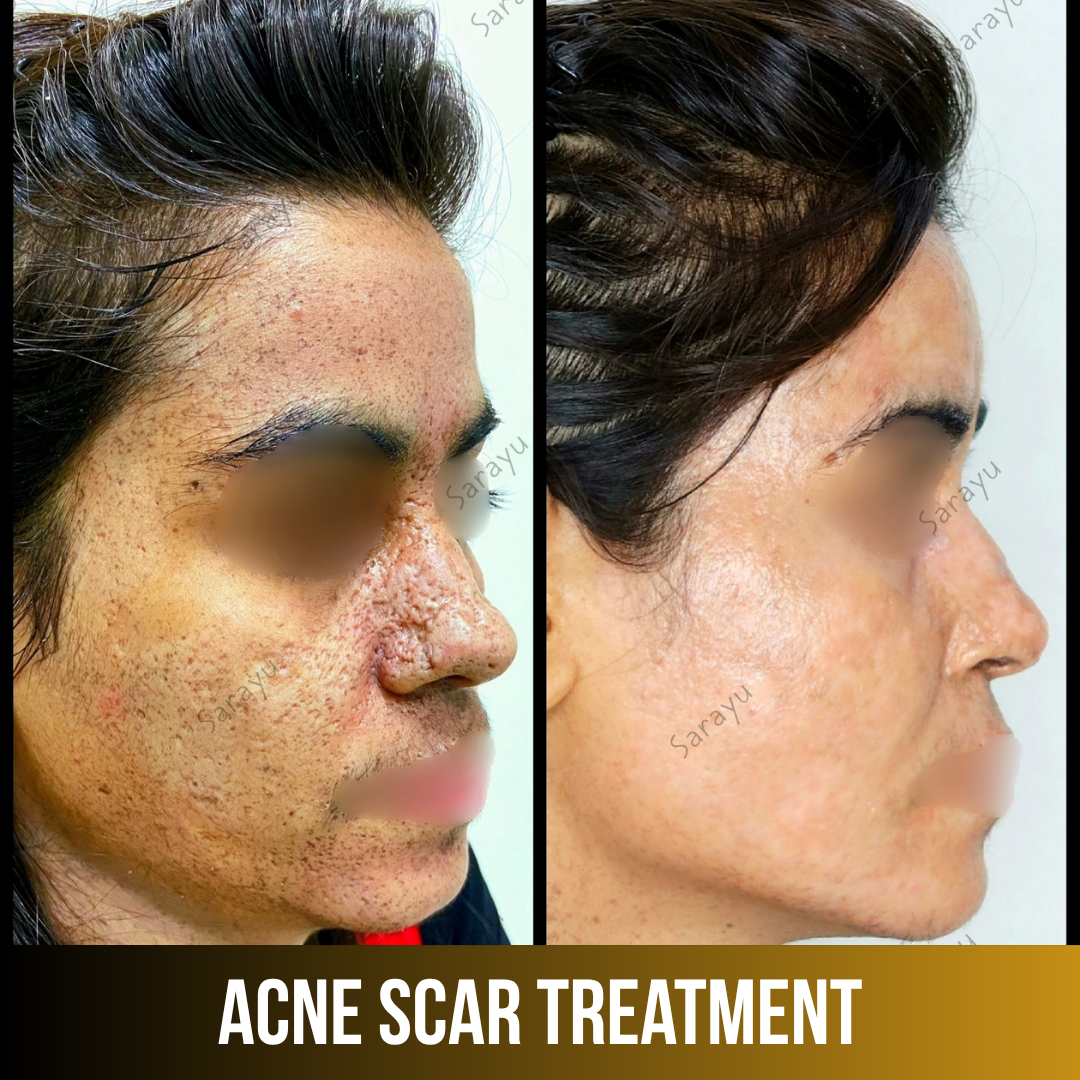
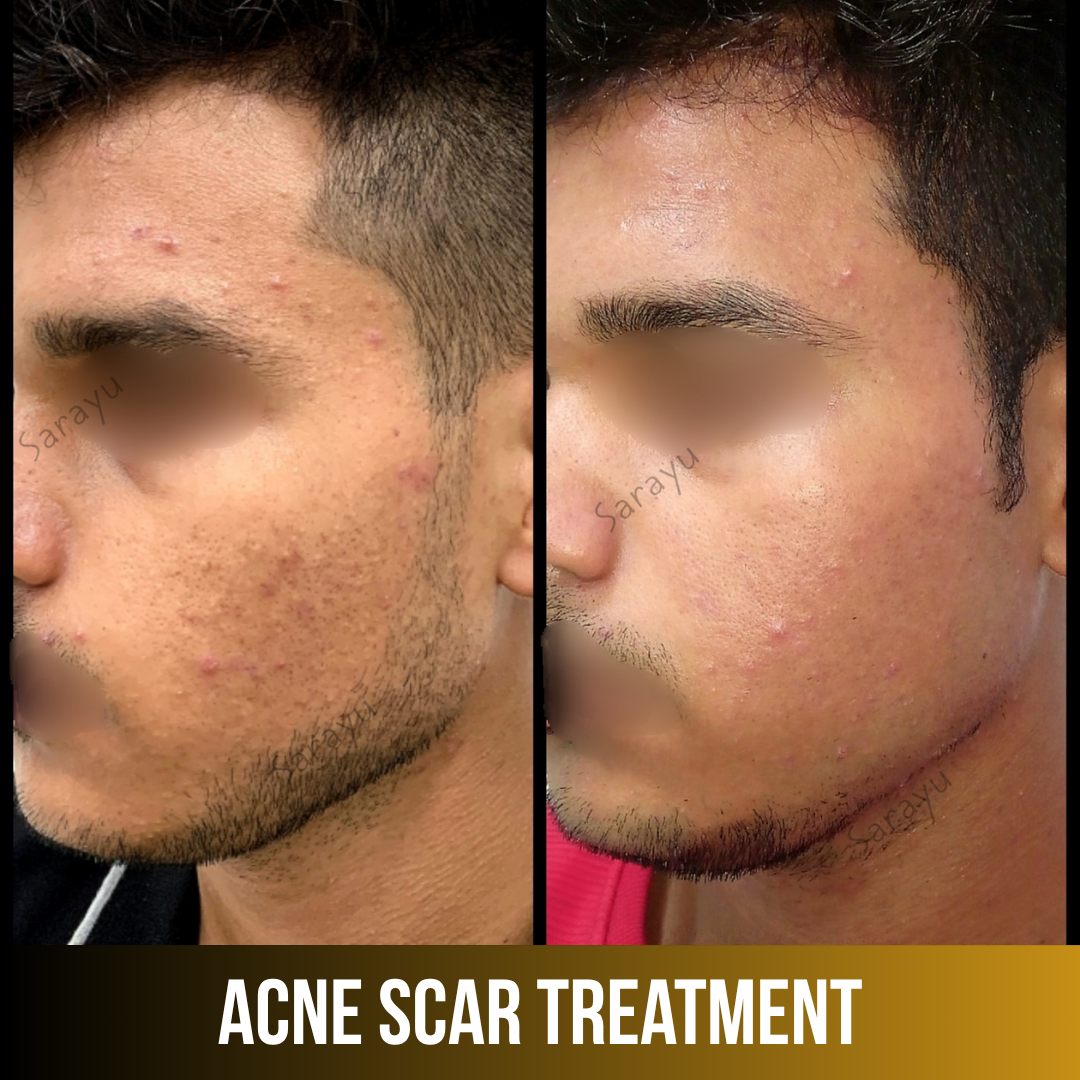
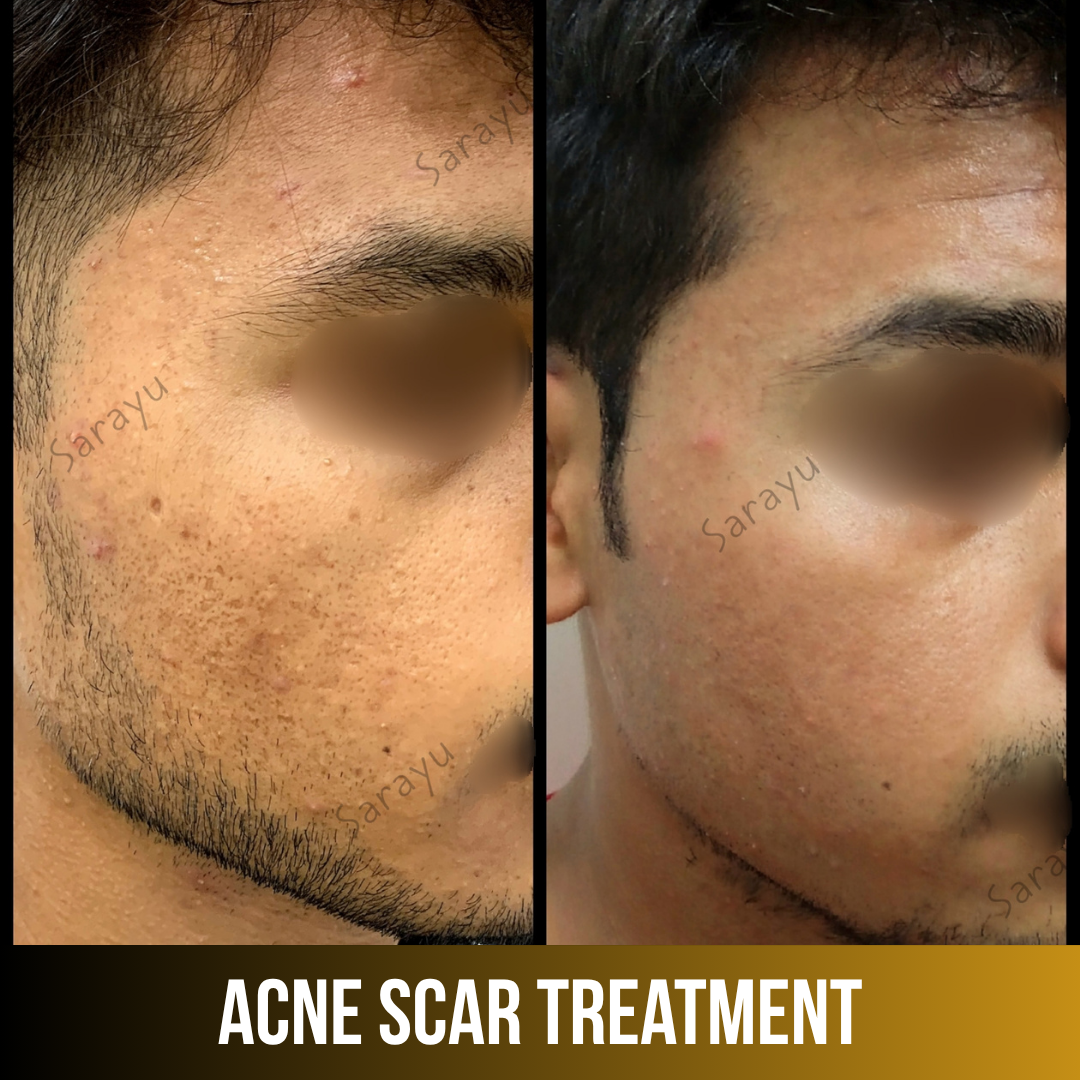
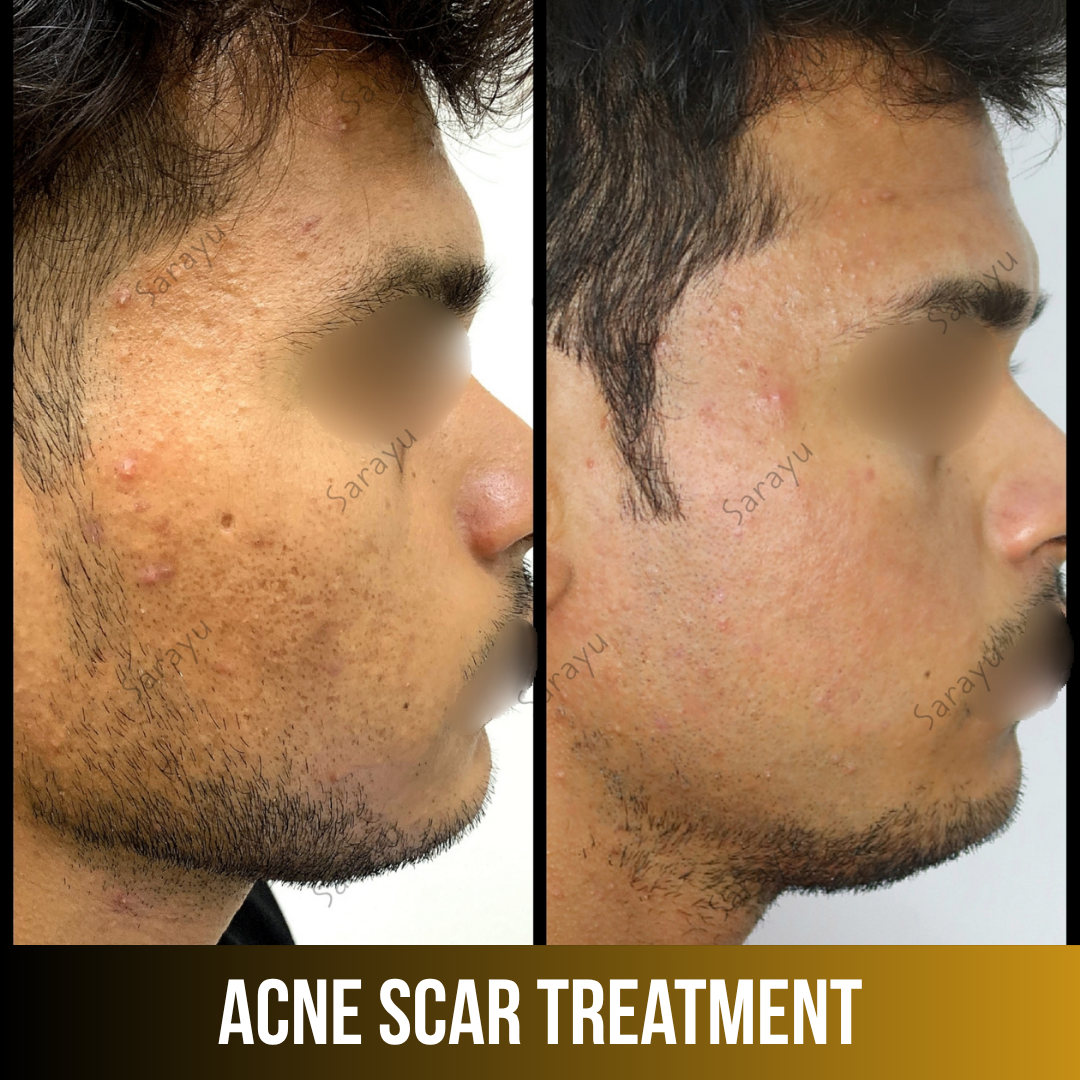
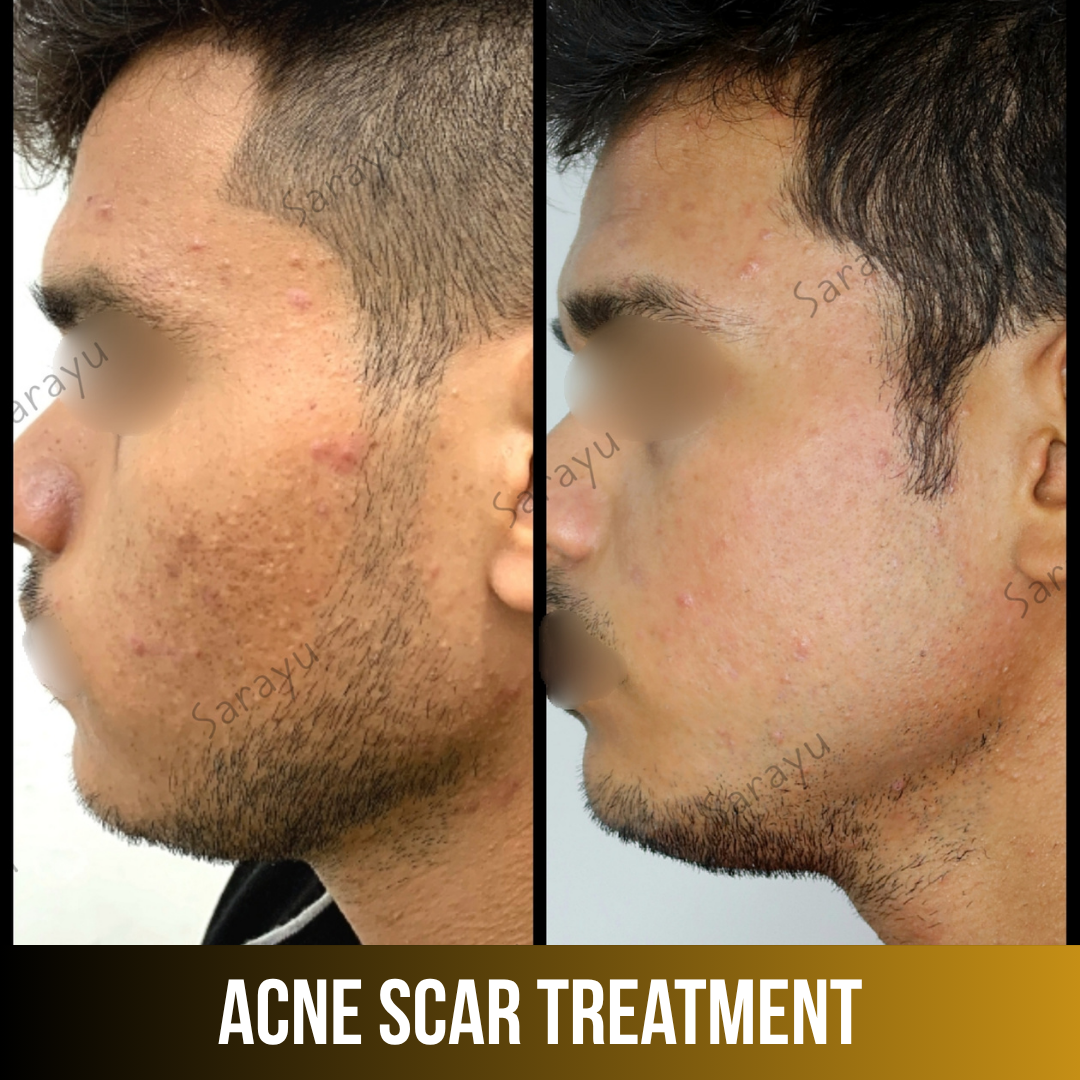
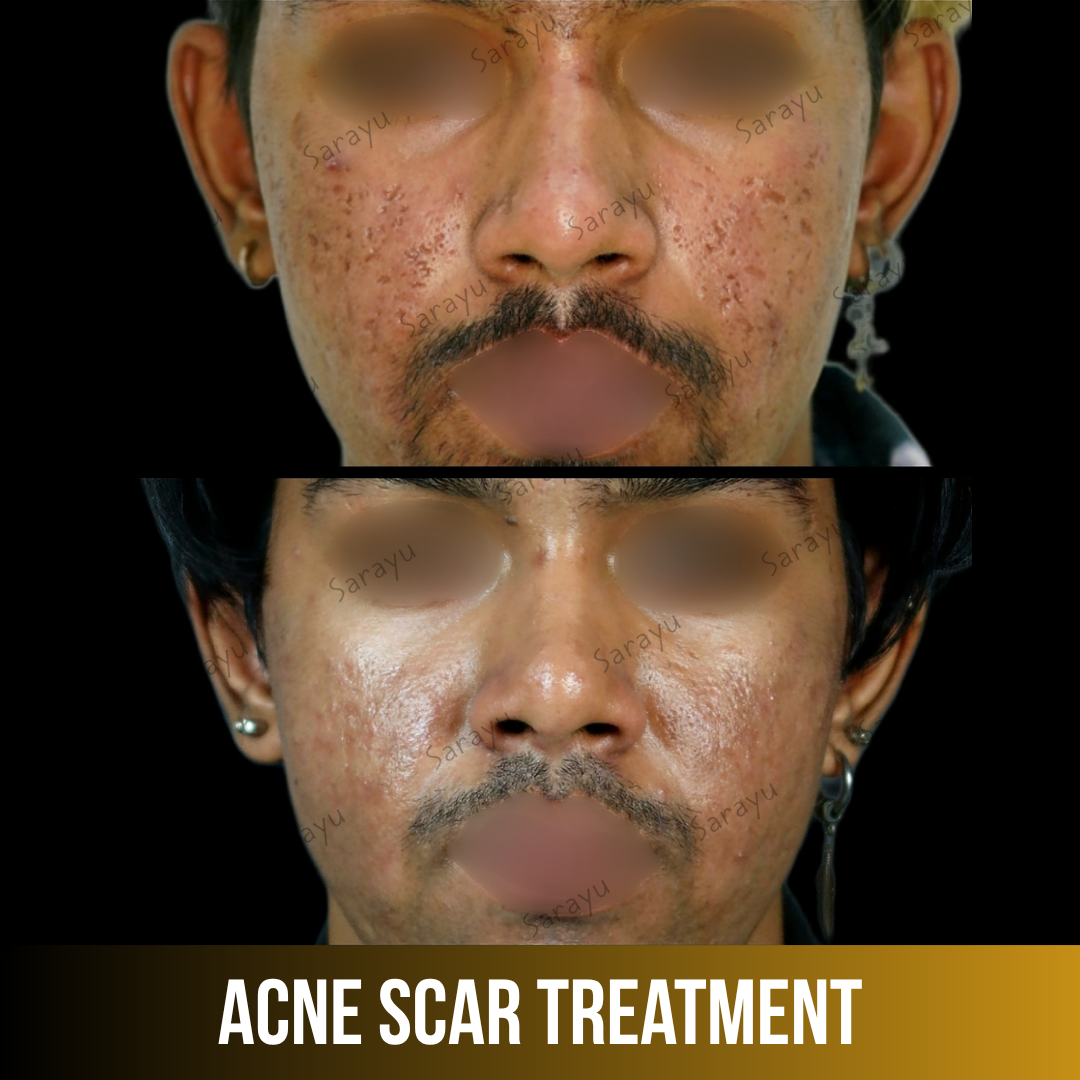
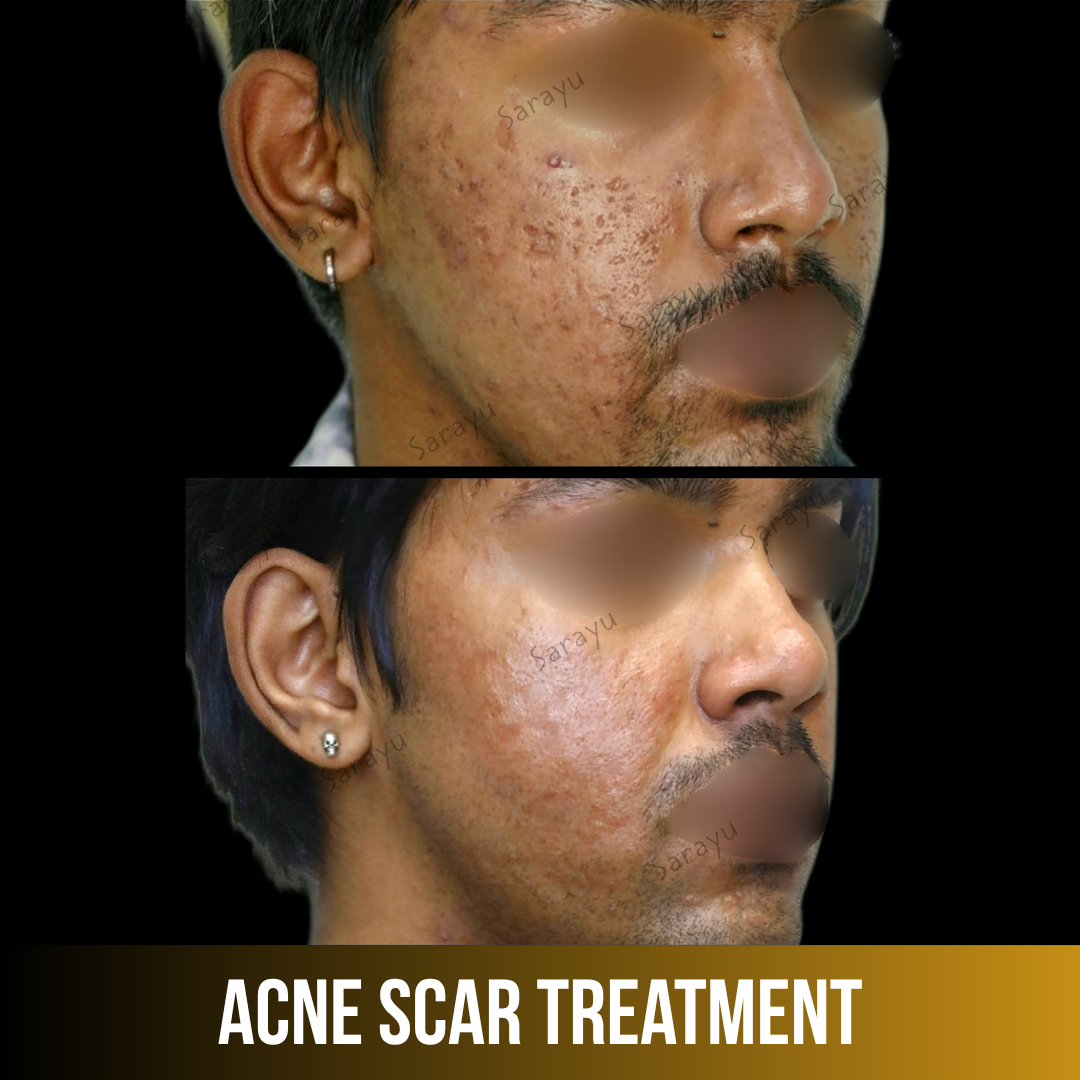
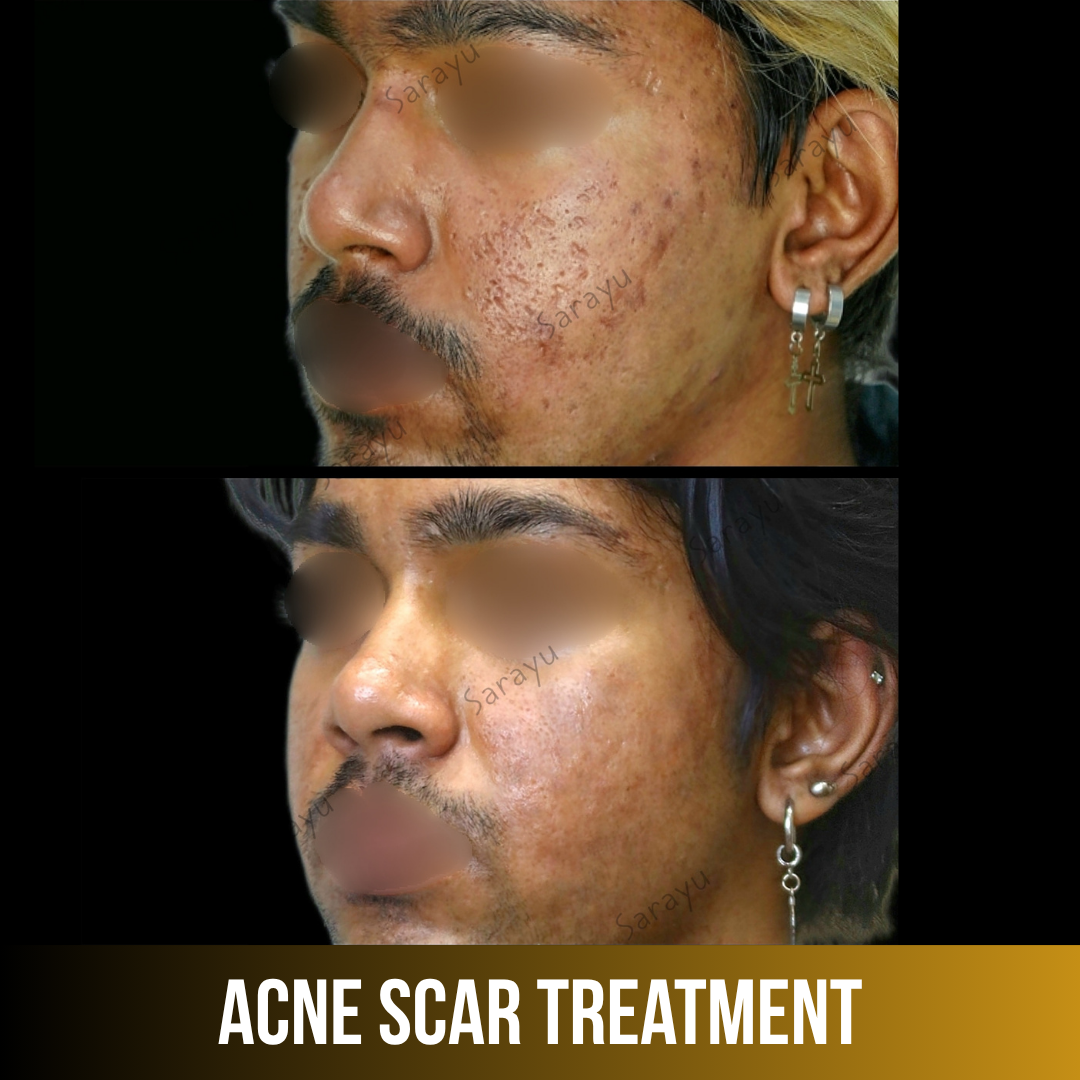
If you’ve lived with acne scars, you’ve probably also lived with the frustration of treatments that didn’t work as well as you hoped. Here’s the reason that happens so often, and it’s the single most important thing on this page: acne scars are not all the same, and a treatment that works brilliantly for one type does almost nothing for another. A deep, narrow ice-pick scar needs a completely different approach from a broad rolling scar, which in turn needs something different from a sharp-edged boxcar scar. When people are disappointed by acne scar treatment, it’s usually because they were given a one-size-fits-all package instead of a plan matched to the scars they actually have.
There’s a second piece of confusion worth clearing up right away, because it sends a lot of people down the wrong path: many of the dark or red marks left after acne are not scars at all. They’re post-acne pigmentation — flat marks of colour, not changes in skin texture — and they fade with completely different (and usually simpler) treatments than true scars. Knowing whether you’re dealing with a textural scar or a pigment mark is the first step, and it changes everything about the treatment and the cost.
Dr. Adarsh Tripathi is a Maxillofacial and Facial Plastic Surgeon with over 18 years of experience at Sarayu Clinics, Greater Kailash-1, New Delhi. Because acne scarring is fundamentally a scar-revision problem, having it treated by a facial surgeon with deep experience in how skin scars and heals — and who offers the full range of treatments rather than just one device — means your plan is built around your specific scars. This page explains the scar types, which treatment suits each, what realistically works for Indian skin, recovery, cost, and how to get the best result.
What Acne Scar Treatment Can Realistically Achieve ?
Honesty matters here, because acne scar treatment is often over-promised. Here’s a realistic picture of the benefits:
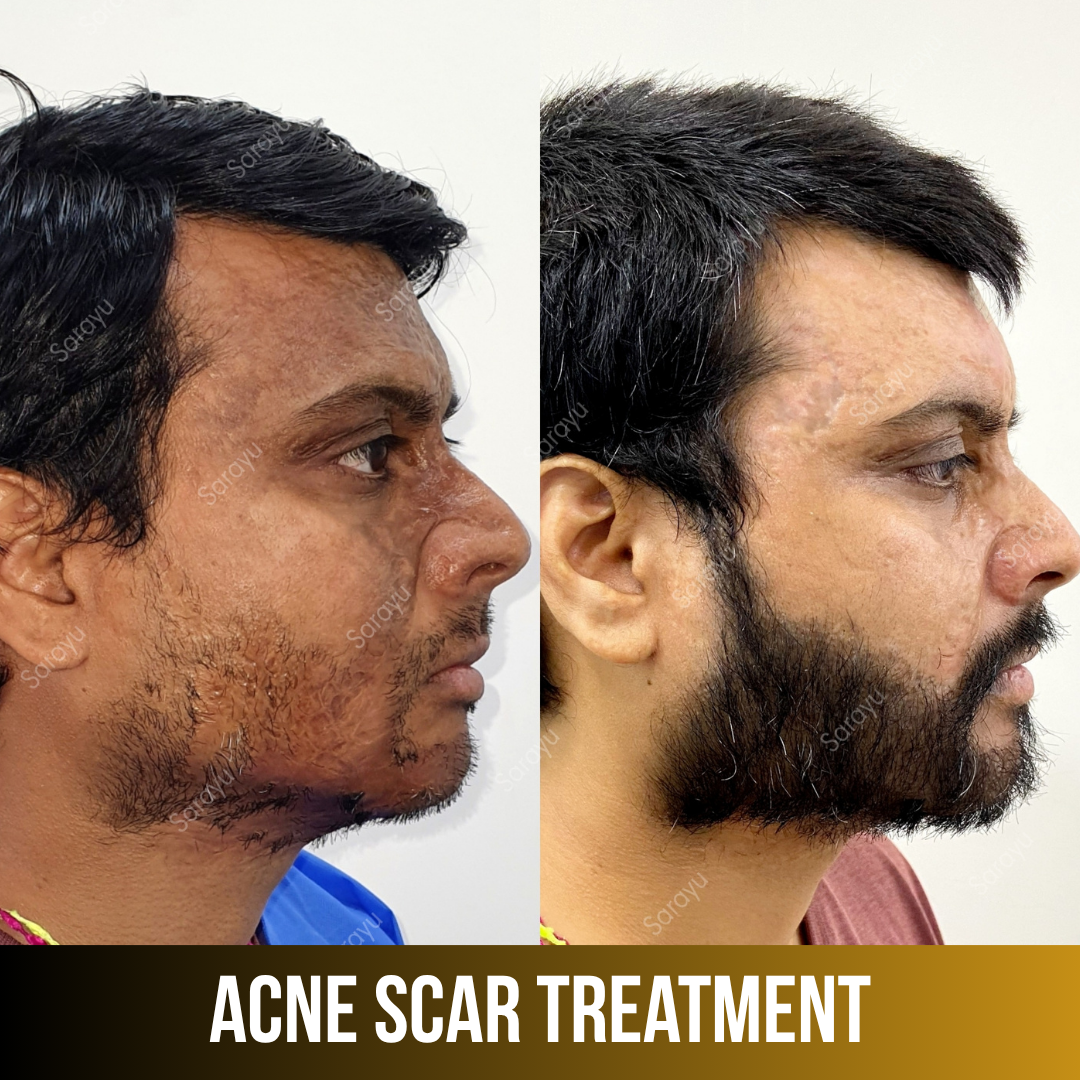
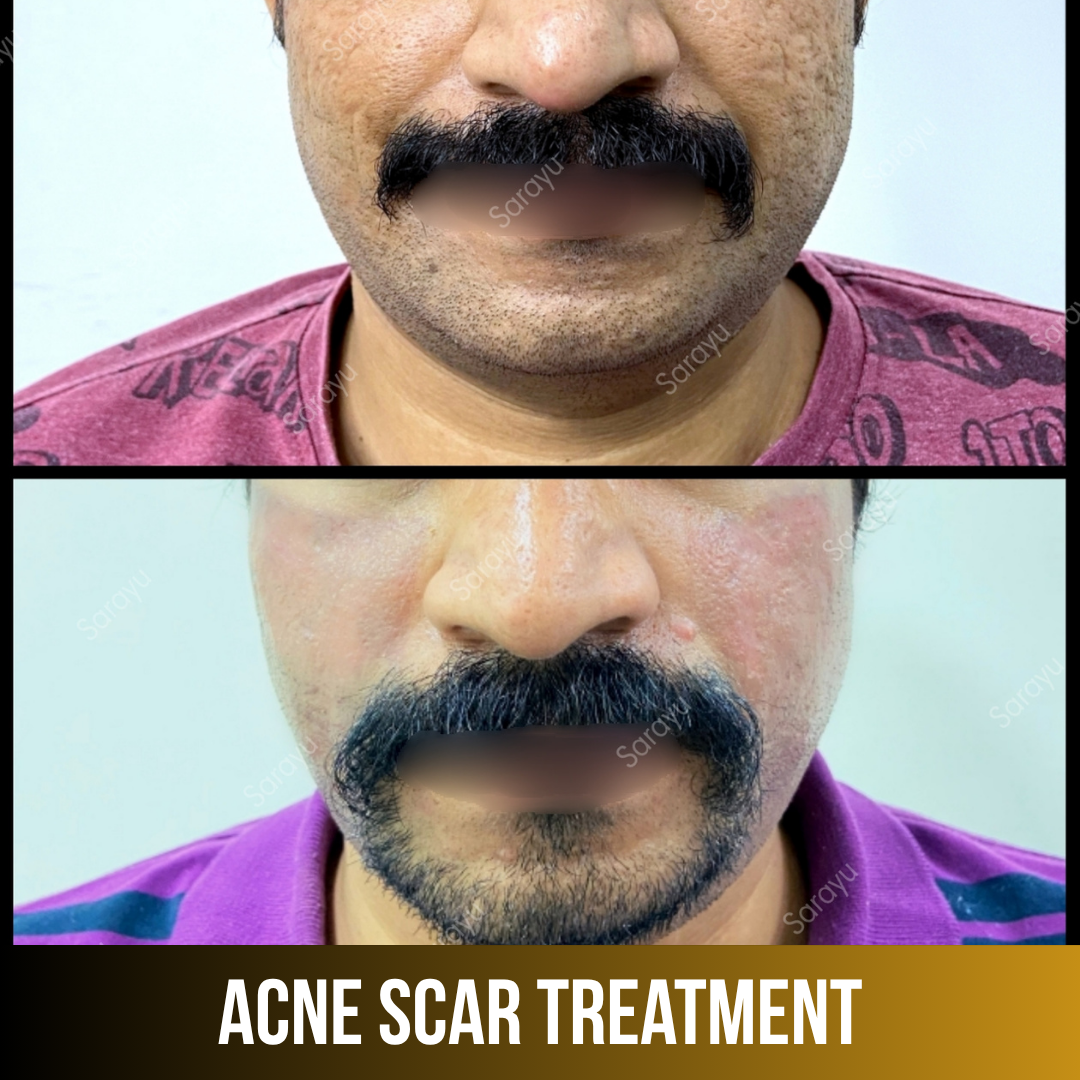
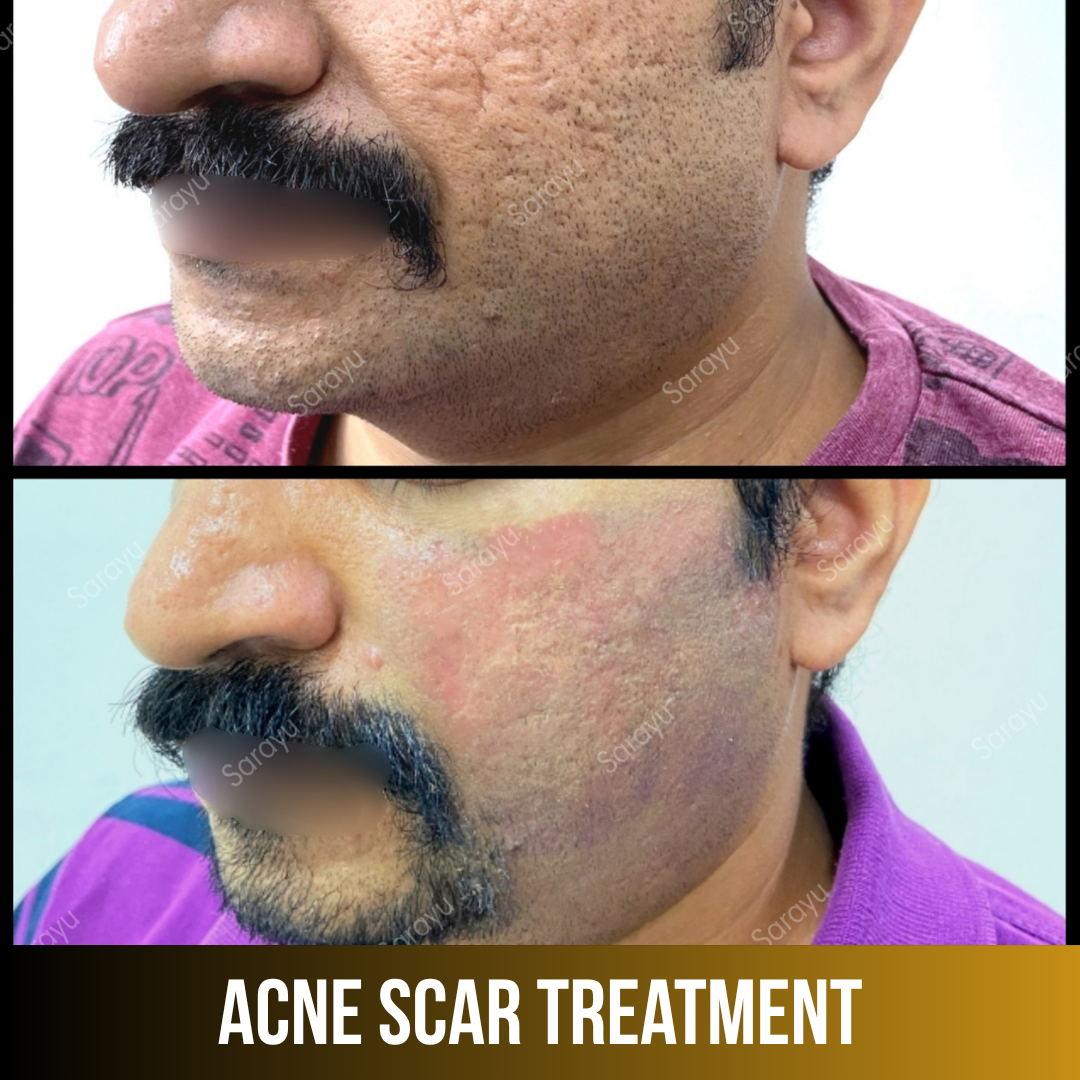
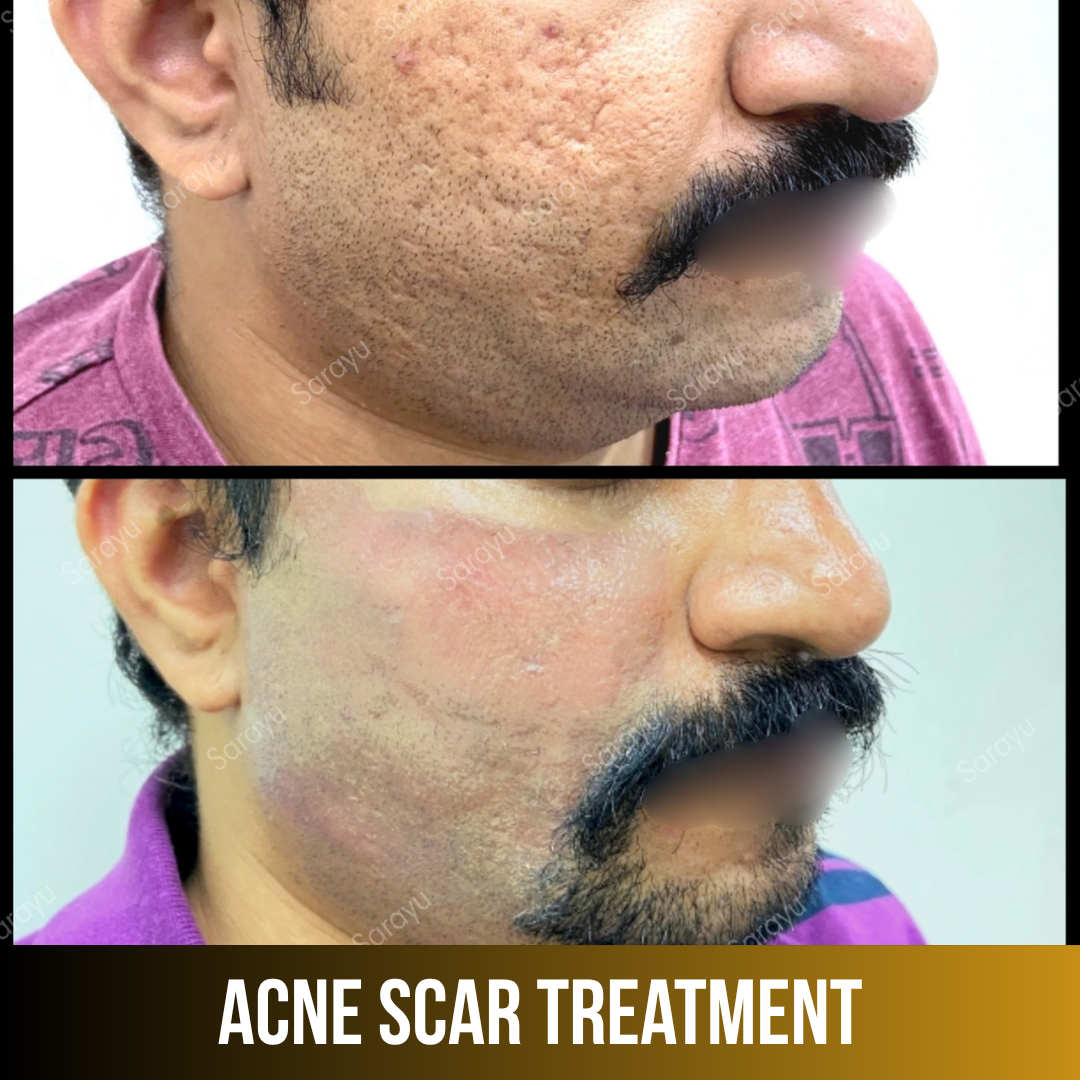
- Significant improvement in scar depth and texture — typically 50–80% improvement with the right combination, not always 100%
- Smoother, more even skin surface as collagen rebuilds in depressed scars
- Reduced shadowing — shallower scars cast less shadow, so skin looks clearer even before they’re fully gone
- Better response to makeup — smoother skin takes makeup more evenly
- Improvement in associated post-acne marks and redness (with the right added treatments)
- Long-lasting results — rebuilt collagen is durable, though skin continues to age naturally
- A genuine confidence boost — acne scarring affects self-image, and improvement is often deeply felt
An honest note: most acne scars can be substantially improved but not always completely erased, especially deep or old scars. The realistic goal is to make them markedly less noticeable — often to the point where they’re hard to see in normal light and no longer something you think about. Any clinic promising total erasure in one or two sessions is overpromising. Real results come from the right combination of treatments over several sessions, with patience as collagen rebuilds.
Areas Treated for Acne Scarring
Acne scars most commonly affect the face, but they can occur anywhere acne was severe. Treatment is tailored to each area’s skin thickness and sensitivity.
Cheeks
The most commonly scarred area, and where rolling and boxcar scars typically cluster. The cheeks respond well to subcision, microneedling RF, and fractional laser, and the broad surface allows comprehensive resurfacing.
Temples
Often affected by boxcar and ice-pick scars. The skin here is treated carefully, responding well to laser, MNRF, and TCA CROSS for the deeper pitted scars.
Forehead
Rolling and shallow boxcar scars are common here. Microneedling RF and fractional laser work well across the forehead’s relatively even surface.
Chin and Jawline
Often the site of hormonal acne and its deeper scars, including ice-pick scars. Treated with a combination of subcision, TCA CROSS, and resurfacing.
Nose
Enlarged pores and shallow scarring around the nose respond to microneedling and laser; the area is treated gently.
Back and Chest (‘Bacne’ Scars)
Severe acne on the back and chest can leave significant scarring, including raised (hypertrophic/keloid) scars more commonly than on the face. These areas have thicker skin and a higher tendency to raised scarring, so treatment (laser, steroid injections for raised scars, microneedling) is planned with that in mind.
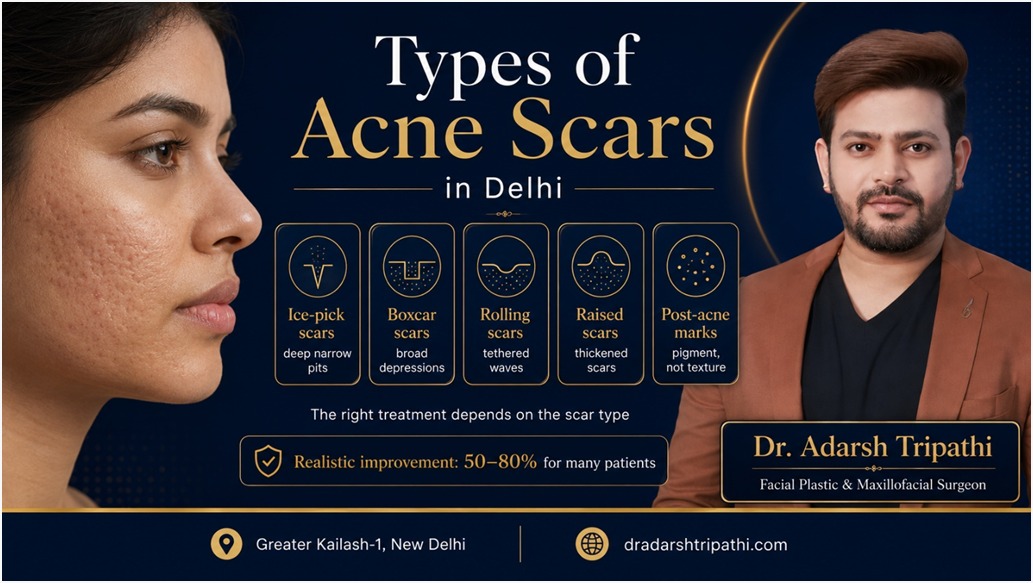
Types of Acne Scars — and the Right Treatment for Each
This is the heart of effective acne scar treatment. Identifying your scar type correctly is what determines which treatment will actually work. Most people have a mix, which is why combination plans are usual.
Ice-Pick Scars
Deep, narrow, V-shaped scars that look like the skin was pierced with a fine pick — they extend deep into the skin. Because they’re narrow and deep, resurfacing lasers alone often can’t reach the base. The most effective treatments are TCA CROSS (a tiny, precise application of high-strength acid into each scar to stimulate collagen and lift the base) and punch excision (removing the individual scar). Fractional laser may help around them.
- Best treatments: TCA CROSS, punch excision/elevation
Boxcar Scars
Broader depressions with sharp, well-defined vertical edges, like a wider crater. They respond well to fractional laser resurfacing (CO2 or erbium) and microneedling RF, which smooth the edges and stimulate collagen to lift the floor. Deeper boxcars may also need subcision or punch techniques.
- Best treatments: fractional laser, MNRF; subcision/punch for deep ones
Rolling Scars
Broad, shallow depressions with sloping edges that give the skin a wavy, undulating look. They’re caused by fibrous bands tethering the skin down from below. The key treatment is subcision — a needle or cannula releases the tethering bands so the skin lifts — often combined with microneedling RF, fillers, and laser for the best result.
- Best treatments: subcision, then MNRF/laser; fillers for immediate lift
Hypertrophic and Keloid Scars (Raised)
Raised, firm scars from an overgrowth of collagen during healing — more common on the chest, back, and jawline. These are treated very differently from depressed scars: steroid injections to flatten them, sometimes combined with laser or, for keloids, specialised scar-revision techniques. They should never be aggressively resurfaced like depressed scars.
- Best treatments: steroid injections, laser; specialised keloid management
Post-Acne Marks (NOT True Scars)
The flat red marks (post-inflammatory erythema) or brown marks (post-inflammatory hyperpigmentation, PIH) left after acne are colour changes, not texture changes — so they are not scars and don’t need scar treatments. They fade with chemical peels, topical brightening agents, and time, and respond much faster and more cheaply than true scars. Confusing these with scars leads to unnecessary, ineffective treatment — which is why proper assessment matters.
- Best treatments: chemical peels, topical brightening, sun protection
Who Is a Good Candidate for Acne Scar Treatment?
Almost anyone bothered by acne scarring is a candidate for at least one treatment — provided active acne is controlled first.
You are a good candidate if:
- You have textural acne scars (ice-pick, boxcar, rolling) or raised scars that bother you
- Your active acne is under control (treating scars while acne is active creates new scars)
- You’re in good general health with no active skin infection in the area
- You have realistic expectations — significant improvement over several sessions, not overnight erasure
- You’re committed to sun protection and aftercare (essential, especially for Indian skin)
Important — control active acne first
There’s little point treating scars while new acne is still forming, as fresh breakouts create fresh scars. If you still have active acne, that’s addressed first (or alongside) so the scar treatment isn’t undermined. This is a step many quick-fix clinics skip.
Special note for Indian and darker skin (Fitzpatrick IV–VI)
Indian skin has a higher risk of post-inflammatory hyperpigmentation (PIH) — meaning aggressive treatments can leave dark marks. This is why microneedling RF (MNRF) is often preferred over ablative laser for Indian skin, as it carries lower pigmentation risk, and why conservative settings and strict sun protection are essential. Matching the treatment intensity to your skin tone is a key safety consideration.
Discuss carefully if you:
- Have active or uncontrolled acne — treat that first
- Are on isotretinoin (acne medication) — most resurfacing is deferred until 6 months after stopping
- Have a tendency to keloid scarring — treatment is planned cautiously
- Have a recent tan or are pregnant — treatment may be deferred
Acne Scar Treatments at Sarayu Clinics, Delhi
The right plan usually combines several of these, matched to your scar types. Here are the options with honest guidance on what each does best.
1. Subcision
Essential for rolling scars. A fine needle or blunt cannula is inserted under the scar to release the fibrous bands tethering the skin down, allowing it to lift. Often combined with microneedling RF or fillers. One of the most effective single treatments for tethered, undulating scars that lasers alone can’t fix.
- Best for: rolling and tethered scars | 3–4 sessions | mild bruising 3–7 days
2. Microneedling Radiofrequency (MNRF / Morpheus8-type)
Fine needles deliver radiofrequency energy into the dermis, remodelling collagen from within. Highly effective for boxcar and rolling scars and, importantly, safer for Indian/darker skin than ablative laser because it carries a lower risk of post-inflammatory pigmentation. A workhorse of modern acne scar treatment.
- Best for: boxcar, rolling scars; safe for Indian skin | 4–6 sessions | 1–3 days redness
3. Fractional Laser Resurfacing (CO2 / Erbium)
Creates microscopic columns of controlled injury to trigger collagen rebuilding and resurface the skin. Excellent for boxcar scars and overall texture. CO2 is more powerful (more downtime, deeper scars); erbium is gentler. Laser settings are carefully adjusted for Indian skin to avoid pigmentation. Often combined with subcision for tethered scars.
- Best for: boxcar scars, overall texture | 3–5 sessions | 3–7 days downtime
4. TCA CROSS
A precise technique where high-strength trichloroacetic acid is applied to the base of individual ice-pick scars (CROSS = Chemical Reconstruction Of Skin Scars). It stimulates collagen to lift the deep, narrow base that lasers can’t reach. The most effective treatment for ice-pick scars, done scar-by-scar over several sessions.
- Best for: ice-pick scars | 3–6 sessions | small scabs heal in a week
5. Microneedling (Dermapen / Dermaroller)
Mechanical collagen-induction therapy for milder, shallower scars and overall texture. Gentler and more affordable than MNRF or laser, often combined with PRP for enhanced healing. A good option for mild scarring or as part of a combination plan.
- Best for: mild scars, texture | 5–8 sessions | 1–2 days redness
6. PRP (Platelet-Rich Plasma)
Growth factors concentrated from your own blood, applied with microneedling or laser to accelerate collagen production and healing. An add-on that boosts the results of other treatments using your body’s own healing factors.
- Best for: enhancing microneedling/laser results | combined sessions
7. Dermal Fillers
For immediate lift of depressed rolling or boxcar scars, fillers plump the depression for instant (temporary) improvement. Useful for a quick result or alongside collagen-building treatments while they take effect. Lasts months, not permanent.
- Best for: instant lift of depressed scars | immediate | temporary
8. Punch Excision / Punch Elevation
A minor surgical technique for individual deep ice-pick or sharp boxcar scars — the scar is cut out (excision) and closed, or its floor lifted (elevation). Converts a deep scar into a tiny, more treatable mark. A facial-surgeon skill that adds precision for the deepest individual scars.
- Best for: individual deep ice-pick/boxcar scars
9. Chemical Peels (for Marks & Mild Texture)
Medical peels improve mild surface scarring and, importantly, the post-acne pigment marks that aren’t true scars. Often part of a combination plan to address both texture and colour.
Combination Protocols — How Real Results Happen
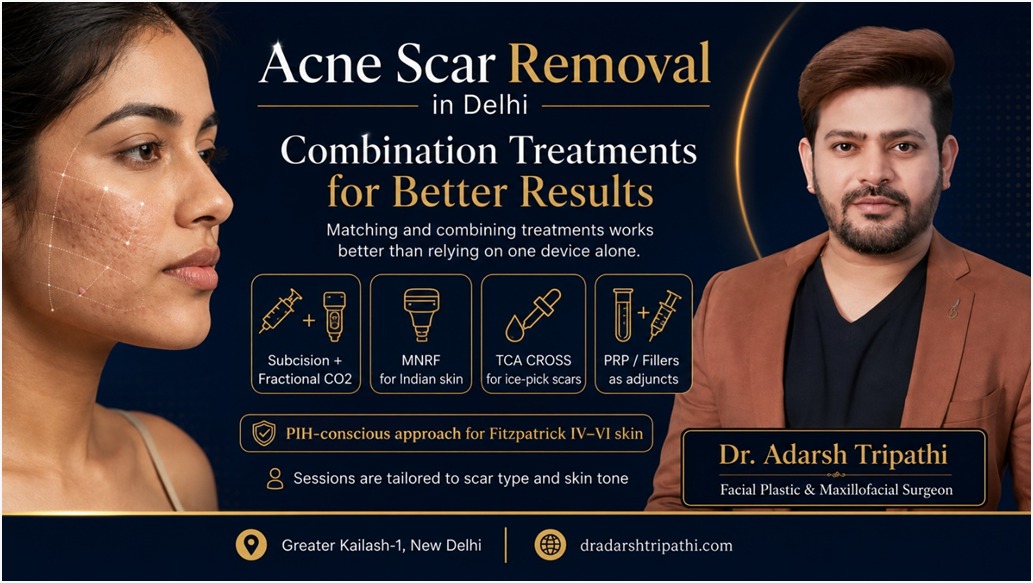
Because most people have a mix of scar types, the strongest results come from combining treatments — for example, subcision to release rolling scars, then MNRF or laser to resurface, TCA CROSS for any ice-pick scars, and peels for pigment marks. Dr. Tripathi designs the combination around your specific scar map rather than offering a single fixed package.
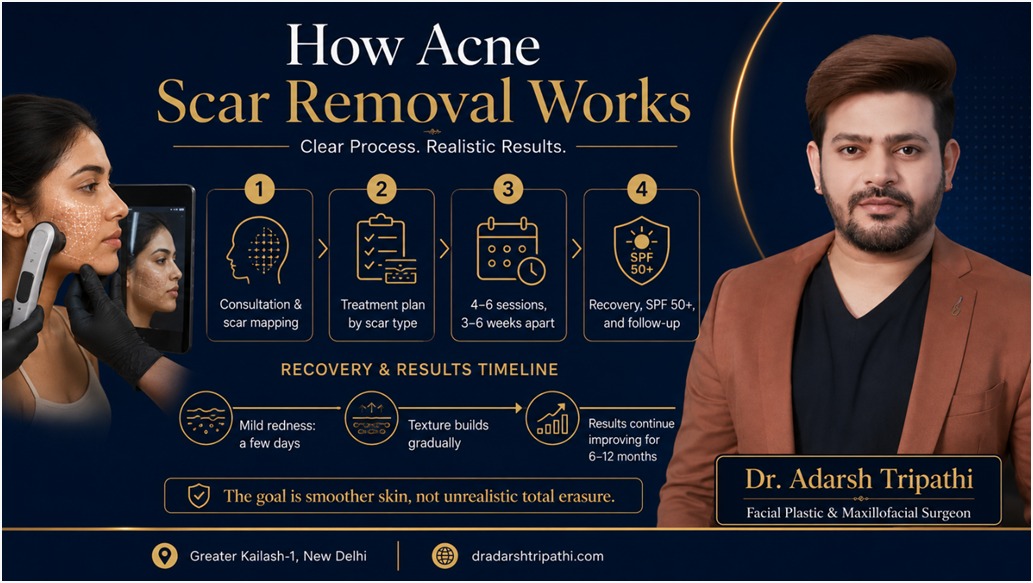
The Treatment Process — Step by Step
Step 1: Consultation & Scar Mapping
Dr. Tripathi examines your skin — identifying your scar types (ice-pick, boxcar, rolling, raised) and distinguishing true scars from pigment marks — assesses your skin tone and PIH risk, checks whether any active acne needs controlling first, and builds a combination plan matched to your scars. This scar-mapping step is what makes the difference between a generic package and an effective plan.
Step 2: Preparation
- Control active acne first if present
- Begin any prescribed pre-treatment topicals (and sun avoidance) as advised
- Stop retinoids/exfoliants for a few days before resurfacing treatments
- Avoid sun and arrive with clean skin on treatment day; patch test for new lasers
Step 3: The Treatment Session
What happens depends on the treatments chosen, but typically: numbing cream is applied for 30–45 minutes, then the planned procedure(s) — subcision, MNRF, laser, TCA CROSS, etc. — are performed. PRP is prepared from a blood sample during numbing if included. Soothing product and SPF are applied at the end. A session lasts 30–60 minutes depending on what’s combined.
Step 4: Aftercare
- Apply prescribed soothing/healing products as directed
- Strict sun protection (SPF 50+) — the most important factor in preventing PIH, especially for Indian skin
- Don’t pick at scabs (TCA CROSS, laser) — let them heal naturally
- Avoid makeup for 24–48 hours after resurfacing, and saunas/swimming for a few days
- Follow the session schedule — results build cumulatively over the course
Downtime — What to Expect by Treatment
Treatment | Discomfort | Visible After-Effects | Downtime | Back to Routine |
Subcision | Mild (numbed) | Bruising, mild swelling | 3–7 days | Next day (with bruising) |
MNRF | Mild (numbed) | Redness, pinpoint marks | 1–3 days | Same/next day |
Fractional Laser (CO2) | Moderate | Redness, peeling | 5–7 days | 2–3 days |
Fractional Laser (Erbium) | Mild-moderate | Redness, light peeling | 3–5 days | Next day |
TCA CROSS | Brief sting | Tiny dark scabs on scars | ~1 week | Same day |
Microneedling | Mild | Redness | 1–2 days | Next day |
PRP (with above) | Mild | As per combined treatment | As combined | As combined |
Chemical Peel | Mild sting | Mild peeling | 3–5 days | Next day |
The practical takeaway: most acne scar treatments have modest downtime — often just a day or two of redness — with fractional CO2 laser being the main exception at about a week of peeling. Treatments are usually spaced 3–6 weeks apart to allow healing and collagen formation between sessions.
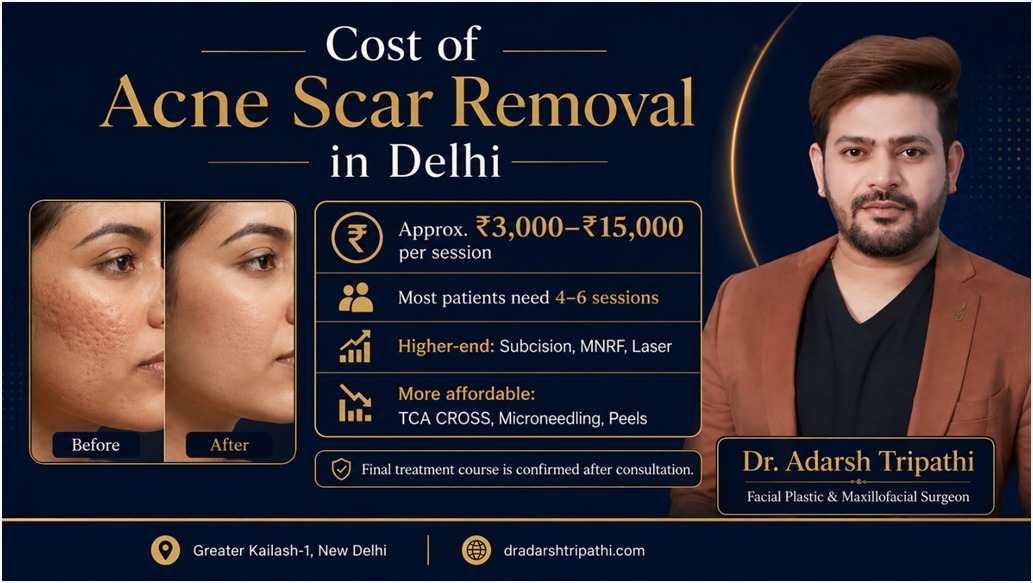
Acne Scar Treatment Cost in Delhi — Transparent Pricing
Cost depends on the treatments used, the number of sessions, scar severity, and area size. Because acne scars usually need a combination over several sessions, it’s best to think in terms of a treatment course rather than a single price.
Approximate Cost at Sarayu Clinics, Delhi
Treatment | Cost Per Session | Typical Sessions | Best For |
Subcision | Rs. 5,000–15,000 | 3–4 | Rolling/tethered scars |
Microneedling RF (MNRF) | Rs. 6,000–15,000 | 4–6 | Boxcar/rolling; Indian skin |
Fractional Laser (CO2/Erbium) | Rs. 6,000–15,000 | 3–5 | Boxcar scars, texture |
TCA CROSS | Rs. 3,000–8,000 | 3–6 | Ice-pick scars |
Microneedling (Dermapen) | Rs. 3,000–8,000 | 5–8 | Mild scars, texture |
PRP (add-on) | Rs. 4,000–8,000 | With above | Boosting results |
Dermal Fillers (scars) | Rs. 15,000–40,000 | As needed | Instant lift (temporary) |
Chemical Peel | Rs. 2,500–7,000 | 4–6 | Marks, mild texture |
Prices shown are for guidance only. Your final treatment cost will be confirmed during the initial consultation, based on your individual needs, concerns, and personalised treatment plan.
Results Timeline — When Will I See Smoother Skin?
Acne scar treatments work by rebuilding collagen, which takes time — so results are gradual and continue improving for months after the sessions finish. Patience is genuinely rewarded here.
- First 2 weeks after a session: healing phase; minimal visible change at first
- Weeks 3–6: early collagen remodelling; subtle smoothing begins
- After 2–3 sessions (months 2–3): visible improvement in scar depth and texture
- After the full course (months 4–6): the main results are clear — markedly smoother skin
- Months 6–12: collagen continues remodelling; results keep improving even after sessions end
Results by Scar Type
- Rolling scars: often the most rewarding — subcision can give noticeable lift relatively quickly
- Boxcar scars: steady improvement with laser/MNRF over the course
- Ice-pick scars: improve gradually with TCA CROSS over several sessions; the deepest may need excision
- Pigment marks (not scars): often fade fastest, within weeks, with peels and brightening
How Long Do Results Last?
The collagen rebuilt by these treatments is durable, so the improvement is long-lasting — treated scars don’t simply return. The skin continues to age naturally over years, and maintaining results is helped by good skincare and sun protection. Crucially, keeping acne under control prevents new scars from forming.
Comparison — Which Acne Scar Treatment Is Right for You?
If Your Scars Are… | Best First Choice | Often Combined With | Why |
Rolling (wavy, tethered) | Subcision | MNRF, fillers | Releases tethering bands |
Boxcar (sharp craters) | Fractional laser / MNRF | Subcision | Resurfaces & lifts floor |
Ice-pick (deep, narrow) | TCA CROSS | Punch excision | Reaches the deep base |
Raised (hypertrophic/keloid) | Steroid injections | Laser | Flattens raised tissue |
Mild / shallow | Microneedling | PRP, peels | Gentle collagen boost |
Mixed types (most people) | Combination plan | Multiple | Each scar type addressed |
Flat marks (pigment, not scars) | Chemical peels | Topical brightening | Colour, not texture |
Professional Treatment vs At-Home Products — An Honest Word
Over-the-counter creams, vitamin C serums, and at-home dermarollers are widely marketed for acne scars. The honest truth: topicals and short at-home rollers can help post-acne pigment marks and very mild texture, and are useful for maintenance — but they cannot rebuild the deep dermal collagen that true textural scars require, and at-home needling carries infection risk if misused. For genuine textural scars (ice-pick, boxcar, rolling), professional treatments that reach the right depth are in a different league. Use topicals for marks and maintenance; use professional treatment for real scars.
Why a Facial Plastic Surgeon for Acne Scars?
Acne scarring is fundamentally a scar-revision problem, and a facial plastic surgeon brings both the diagnostic eye to map scar types accurately and the full toolkit — including surgical techniques like subcision and punch excision that pure-laser clinics may not offer — plus the judgement to treat Indian skin safely. Dr. Adarsh Tripathi’s scar-revision background means your plan is built around what each of your scars actually needs, not around whichever single device a clinic happens to own.
Why Choose Dr. Adarsh Tripathi for Acne Scar Treatment in Delhi
Acne scar results depend on accurate diagnosis and the right combination of treatments — which is exactly where an experienced facial surgeon adds value. Here’s how to choose, and why patients choose Dr. Tripathi:
What to Look For in an Acne Scar Specialist
- The ability to accurately identify your scar types and distinguish scars from pigment marks
- Access to the full range of treatments (subcision, MNRF, laser, TCA CROSS, excision, peels), not just one device
- Experience treating Indian/darker skin safely (lower PIH risk)
- Honesty about realistic results and the need for a combination over several sessions
- A consultation conducted personally by the doctor; genuine reviews and clinical facilities
Dr. Tripathi’s Credentials
- Maxillofacial and Facial Plastic Surgeon with 18+ years of experience
- Expertise in scar revisionScar Revision in Delhi — acne scarring is fundamentally a scar problem
- Offers the complete toolkit including surgical techniques (subcision, punch excision) many clinics lack
- Experienced in treating Indian skin tones with PIH-conscious, conservative protocols
- Builds combination plans matched to your specific scar map, not a fixed package
- Consultations personally conducted by Dr. Tripathi; known for natural, careful results
A Scar-Type-First Philosophy
The reason people are let down by acne scar treatment is almost always a mismatch between the treatment and the scar type. Dr. Tripathi’s approach starts with accurately mapping your scars, then combines the treatments that genuinely address them — releasing tethered scars, resurfacing craters, lifting ice-pick bases, and fading pigment marks — for a result achieved efficiently rather than through repeated, ineffective sessions.
Frequently Asked Questions — Acne Scar Removal Treatment in Delhi
Q: What is the best treatment for acne scars?
A: The best treatment for acne scars depends on the scar type: subcision for rolling scars, fractional laser or MNRF for boxcar scars, TCA CROSS or punch excision for ice-pick scars, and steroid injections for raised scars. Most people have a mix, so the best results come from a combination plan after proper scar mapping. Flat post-acne marks (pigment) are not scars and respond to peels and brightening instead.
Q: How much does acne scar removal cost in Delhi?
A: Acne scar treatment in Delhi costs approximately Rs. 3,000–15,000 per session depending on the method, with most people needing 4–6 sessions. Subcision, MNRF, and laser are at the higher end; TCA CROSS, microneedling, and peels are more affordable. Because scars usually need a combination over several sessions, it’s best to budget for a treatment course, confirmed after consultation at Sarayu Clinics.
Q: Can acne scars be completely removed?
A: Acne scars can be significantly improved but not always completely erased — realistic improvement is around 50–80% for most scars with the right combination of treatments. The goal is to make scars markedly less noticeable, often to the point where they’re hard to see in normal light. Deep or old scars improve more gradually and may need more sessions. Any clinic promising total erasure is overpromising.
Q: What is the difference between acne scars and acne marks?
A: Acne scars are changes in skin texture — depressions (ice-pick, boxcar, rolling) or raised areas — caused by damage to the deeper skin during healing. Acne marks are flat red or brown discolourations (post-inflammatory erythema or hyperpigmentation) that are colour changes, not texture changes. Scars need collagen-rebuilding treatments like laser and subcision; marks fade with peels, brightening, and time. Telling them apart determines the correct treatment.
Q: How many sessions are needed to treat acne scars?
A: Most people need 4–6 sessions to treat acne scars effectively, spaced 3–6 weeks apart to allow healing and collagen formation between them. The exact number depends on scar type, depth, and severity — mild scars may need fewer, while deep or mixed scarring needs more. Results continue improving for several months after the final session as collagen rebuilds.
Q: What is subcision for acne scars?
A: Subcision is a treatment for rolling acne scars in which a fine needle or blunt cannula is inserted under the scar to release the fibrous bands tethering the skin down, allowing the depressed scar to lift. It’s one of the most effective treatments for tethered, wavy rolling scars that lasers alone can’t fix, and is often combined with microneedling RF or fillers for the best result.
Q: What is TCA CROSS for ice-pick scars?
A: TCA CROSS (Chemical Reconstruction Of Skin Scars) is a technique where a high-strength trichloroacetic acid is precisely applied to the base of individual ice-pick scars to stimulate collagen and lift the deep, narrow base that resurfacing lasers can’t reach. It’s the most effective treatment for ice-pick scars, performed scar-by-scar over several sessions, with small scabs that heal within about a week.
Q: Is laser or microneedling RF better for acne scars on Indian skin?
A: Microneedling radiofrequency (MNRF) is often preferred over ablative laser for acne scars on Indian and darker skin because it carries a lower risk of post-inflammatory hyperpigmentation (PIH). MNRF delivers energy into the deeper skin while sparing the surface, making it safer for Fitzpatrick IV–VI skin. Laser is still used with carefully adjusted, conservative settings. The choice depends on your scar type and skin tone.
Q: Do I need to treat active acne before scar treatment?
A: Yes, active acne should be controlled before or alongside acne scar treatment. Treating scars while new breakouts are still forming is counterproductive, because fresh acne creates fresh scars that undermine the results. Getting active acne under control first ensures the scar treatment isn’t constantly working against new damage — a step many quick-fix clinics skip.
Q: Is acne scar treatment painful?
A: Acne scar treatments are not very painful because a numbing cream is applied beforehand. During treatment most people feel mild prickling, warmth, or pressure rather than real pain. TCA CROSS causes a brief sting, and subcision a mild sensation under the skin. Any tenderness afterwards is mild and short-lived, managed with simple aftercare.
Q: Do acne scar creams actually work?
A: Acne scar creams have limited effectiveness on true scars. Topical products and serums (like vitamin C) can help fade flat post-acne pigment marks and very mild texture, and are useful for maintenance — but no cream can rebuild the deep dermal collagen that textural scars (ice-pick, boxcar, rolling) require. For genuine scars, professional treatments that reach the right depth are far more effective; creams are best for marks and upkeep.
Q: Who is the best doctor for acne scar treatment in Delhi?
A: The best doctor for acne scar treatment in Delhi is one who can accurately identify your scar types, offers the full range of treatments rather than a single device, and treats Indian skin safely with PIH-conscious protocols. Dr. Adarsh Tripathi is a Maxillofacial and Facial Plastic Surgeon with 18+ years of experience and a scar-revision background, designing combination plans matched to each patient’s scars at Sarayu Clinics, Greater Kailash.
How to Reach Us:
Phone:+91 9289111083 ,+91 9289111084
Dr Adarsh’s website: https://dradarshtripathi.com/
Facebook: https://www.facebook.com/DrAdarshTripathi3011
Instagram: https://www.instagram.com/dr_adarsh_tripathi/
Youtube: https://www.youtube.com/@dr_adarsh_tripathi
Linkedin: https://www.linkedin.com/in/dr-adarsh-tripathi-a43005b8/
Online Booking: https://dradarshtripathi.com/contact-us/ to schedule appointments conveniently.