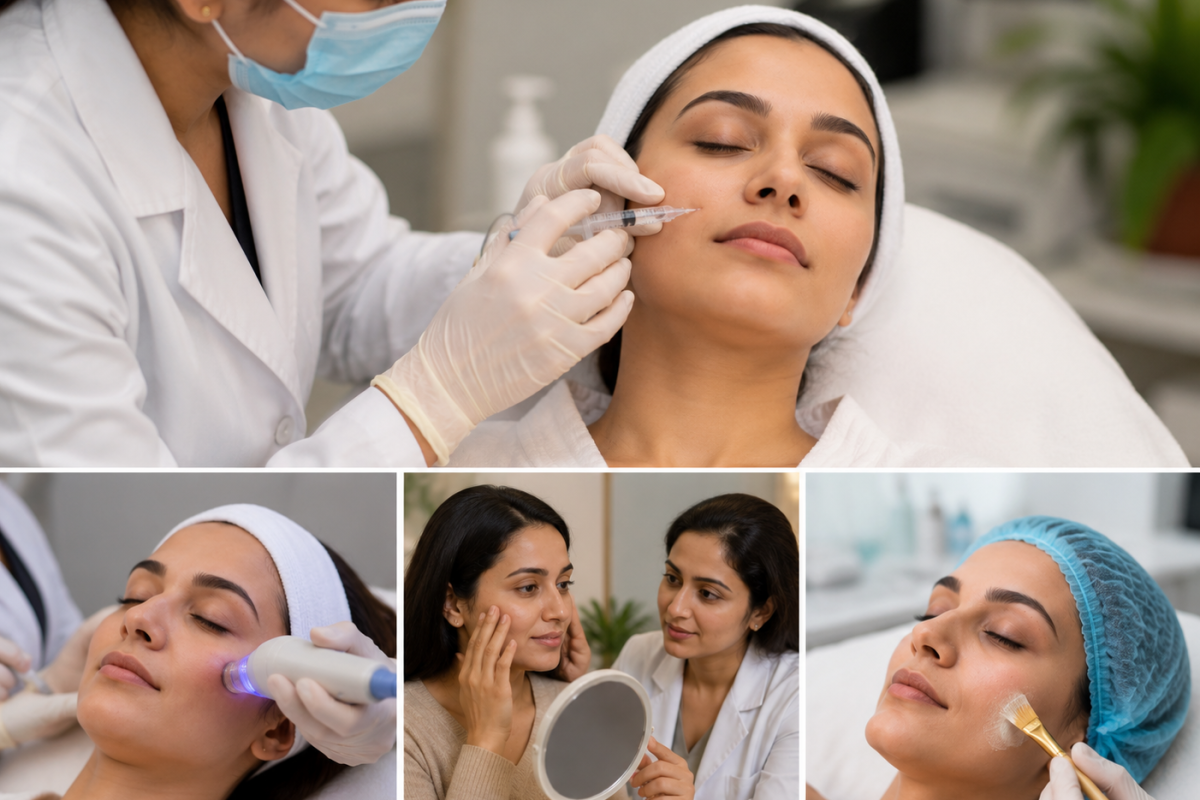
Cheek Treatments in Delhi: Every Surgical & Non-Surgical Option by Dr. Adarsh Tripathi
The cheeks are the visual anchor of the face. They sit at the exact centre of your facial structure and influence how every surrounding feature — the eyes above, the jawline below, the nose between — reads in relation to everything else. When the cheeks are well-proportioned, the face looks balanced and youthful. When they are either too full, too flat, too hollow, or losing volume with age, the entire face can look off.
The concerns patients bring to Dr. Adarsh Tripathi about their cheeks are genuinely varied: some want to reduce round, full cheeks that make their face look heavy and undefined; others want to restore volume to hollow, sunken cheeks that have appeared as they have lost weight or aged; some want higher, more defined cheekbones; and others simply want a subtle non-surgical improvement to texture or contour without any downtime.
What all of these concerns have in common is that they are solvable — whether surgically or without surgery, temporarily or permanently — and the right approach is completely individual. This page is a complete, honest guide to every cheek treatment Dr. Tripathi performs at his clinic in Delhi, written to help you understand your options before you book a consultation.
All Cheek Treatments Offered by Dr. Adarsh Tripathi in Delhi
The treatments below are the complete range of cheek-related procedures Dr. Tripathi performs — from surgical procedures requiring anaesthesia to non-surgical treatments with zero downtime. The right treatment for you depends on your specific concern, your anatomy, your tolerance for downtime, and your expectations.
SURGICAL CHEEK TREATMENTS
Buccal Fat Removal (Cheek Reduction / Cheek Slimming Surgery)
Buccal fat removal is the surgical procedure for patients who have naturally full, round cheeks — often described as ‘chipmunk cheeks’ — that persist despite a healthy weight. The buccal fat pads are discrete deposits of fat located deep inside the cheeks between the facial muscles. Their size is largely genetic and is not significantly reduced by diet or exercise.
The procedure is performed through a small incision inside the mouth — no visible external scar. The buccal fat pad is identified, carefully separated from surrounding structures, and removed. The incision is closed with dissolvable sutures. The result is a slimmer, more defined lower-mid face with enhanced cheekbone prominence. It is performed under local anaesthesia with sedation as a day-case procedure and takes 30 to 60 minutes.
- Best for: genetically round or full cheeks, patients over 20 (some natural fat reduction still occurs in early 20s), good overall health
- Not suitable for: patients already losing facial volume with age — removing more will age them prematurely
- Results: permanent — removed fat pads do not regenerate
- Recovery: 3 to 5 days of mild swelling; soft diet for 1 week; return to work in 5 to 7 days
- Delhi cost range: ₹30,000 – ₹1,50,000 depending on technique and surgeon
Cheek Implants (Malar Augmentation)
Cheek implants are solid, biocompatible implants — most commonly made of medical-grade silicone or porous polyethylene — placed surgically over or near the cheekbone to create structural projection and definition. They are the most permanent solution for patients who want more prominent, higher cheekbones.
There are three primary types of cheek implants, each addressing a different zone:
- Malar implants: placed directly on the cheekbone; creates prominent, defined cheekbones; best for patients seeking higher bone structure
- Submalar implants: placed below the cheekbone in the midface; adds volume to hollow or sunken cheeks without increasing bone projection; best for patients with soft tissue volume loss
- Combined malar-submalar (extended) implants: addresses both zones in a single implant; provides comprehensive midface augmentation
Custom 3D-printed implants are available for patients with complex anatomy or those seeking precisely calibrated augmentation. The surgical technique involves a small incision inside the mouth or occasionally through the lower eyelid — both leave no visible external scar. Surgery takes 1 to 2 hours under general anaesthesia or deep sedation.
- Best for: flat, underdeveloped cheekbones (genetic), volume loss from ageing or illness, facial asymmetry
- Recovery: 10 to 14 days swelling; return to work in 7 to 10 days; avoid contact sports for 6 weeks
- Delhi cost range: ₹60,000 – ₹2,50,000 depending on implant type and customisation
Fat Grafting to Cheeks (Autologous Fat Transfer)
Fat grafting uses the patient’s own fat — harvested from areas such as the abdomen, flanks, or thighs via small-cannula liposuction — which is purified and carefully re-injected into specific cheek zones to restore volume, correct hollowing, or refine contour.
Because the material used is entirely the patient’s own tissue, there is no risk of allergic reaction and the results feel entirely natural. Fat grafting gives a softer, more organic result than implants and can be precisely feathered into the surrounding tissue. However, a proportion of transferred fat is typically reabsorbed by the body — usually 30 to 50% within the first 3 months. Most surgeons slightly overcorrect to account for this. The remaining fat is permanent.
- Best for: volume restoration in ageing or post-weight-loss faces; patients who want natural material; patients having other facial surgery where fat harvesting is included
- Recovery: 7 to 14 days of swelling; 2 to 3 weeks before settling
- Delhi cost range: ₹40,000 – ₹1,20,000 (more if combined with liposuction harvesting from a separate session)
Midface Lift
A midface lift — also called a cheek lift — is a surgical procedure that repositions descended soft tissue in the midface back to a more youthful position. With age, the malar fat pad (the soft tissue sitting over the cheekbone) gradually descends, creating a flattened appearance over the cheekbones and a deepening nasolabial fold.
A midface lift reverses this descent by reattaching or suspending the malar fat pad back to its correct anatomical position through incisions placed inside the mouth and/or at the temples (endoscopic approach). It is frequently combined with lower face or neck procedures for comprehensive facial rejuvenation.
- Best for: patients 40 to 65 with significant malar descent and nasolabial fold deepening; patients wanting structural correction rather than volume addition
- Recovery: 10 to 14 days off work; significant swelling for 2 to 3 weeks
- Delhi cost range: ₹1,00,000 – ₹2,50,000 (often combined with facelift)
Dimple Creation Surgery (Dimpleplasty)
Dimples are considered a desirable facial feature in many cultures. Dimpleplasty is a simple, minimally invasive procedure that creates permanent natural-looking dimples on the cheeks. The procedure takes 20 to 30 minutes under local anaesthesia. A small instrument is used to create a controlled attachment between the skin and the underlying cheek muscle through a tiny incision inside the mouth — no external scar.
Initially the dimple is visible at rest and deepens with smiling. Over 2 to 4 weeks, the dimple becomes visible primarily when smiling, which is the natural appearance. Dimpleplasty is one of the quickest cheek procedures with near-zero downtime.
- Recovery: mild swelling for 2 to 3 days; return to work next day
- Delhi cost range: ₹25,000 – ₹50,000 (one or both cheeks)
Cheek Scar Revision
The cheeks are a common site for traumatic scars from accidents, burns, acne, or chickenpox. Cheek scar revision uses surgical techniques — Z-plasty, W-plasty, geometric broken line closure, or subcision — to make scars thinner, better aligned with skin tension lines, and less visible. Often combined with laser resurfacing or MNRF for the best blending outcome.
The right approach depends entirely on the scar type, depth, age, and location. Dr. Tripathi will assess each scar individually — a single strategy is never applied to all scar types.
- Delhi cost range: ₹20,000 – ₹1,50,000 (highly variable by scar complexity)
NON-SURGICAL CHEEK TREATMENTS
Cheek Fillers (Hyaluronic Acid Dermal Fillers)
Cheek fillers are the most commonly performed non-surgical cheek treatment globally. Hyaluronic acid-based fillers — such as Juvederm Voluma, Restylane Lyft, or equivalent — are injected into the cheek and malar region to add volume, lift the midface, and create more defined cheekbones. The filler attracts water molecules in the tissue, creating a natural-feeling, gel-like volume enhancement.
Results are immediate and adjustable. If the patient is unhappy with the outcome, hyaluronidase enzyme can dissolve hyaluronic acid fillers. The procedure takes 20 to 30 minutes in clinic with a topical anaesthetic applied beforehand.
- Best for: early to moderate volume loss, patients wanting temporary but meaningful results, those not ready for surgery
- Duration: 12 to 18 months on average (Voluma and structural fillers last longer than softer options)
- Downtime: mild bruising for 1 to 3 days; return to work same day or next day
- Delhi cost range: ₹15,000 – ₹40,000 per session depending on volume used
Biostimulatory Fillers (Sculptra and Radiesse)
Unlike hyaluronic acid fillers that simply add immediate volume, biostimulatory fillers work by triggering the skin’s own collagen production. Sculptra (poly-L-lactic acid) and Radiesse (calcium hydroxylapatite) stimulate fibroblast activity, leading to gradual, progressive volume restoration over 2 to 3 months that continues to improve over time.
Results from Sculptra typically last 2 to 3 years — significantly longer than standard fillers. It is injected in a series of 2 to 3 sessions, 4 to 6 weeks apart. Radiesse provides both immediate volume and stimulatory effect and lasts 12 to 18 months. These are particularly suited to patients with significant volume loss who want a natural, gradual improvement.
- Best for: patients with substantial volume loss, skin quality improvement alongside volumising, patients wanting longer-lasting results than standard fillers
- Delhi cost range: ₹25,000 – ₹70,000 per session (Sculptra course typically 2 to 3 sessions)
Thread Lift for Cheeks
PDO (polydioxanone) or PLLA threads are inserted under the cheek skin using fine needles. Barbed threads physically anchor and lift descended cheek tissue, while smooth threads stimulate collagen production around their fibre. The result is a mechanical lift (immediate) combined with progressive collagen improvement over 2 to 3 months.
Thread lift is a popular intermediate option for patients who have more cheek descent than fillers can effectively correct but are not ready for surgical midface lift. Results are real but subtler than surgery, and last 12 to 18 months.
- Best for: early to moderate malar descent, patients wanting non-surgical lift, patients aged 35 to 55
- Downtime: 3 to 5 days mild swelling and bruising; avoid heavy massage or manipulation for 2 weeks
- Delhi cost range: ₹25,000 – ₹70,000 depending on thread type and number used
Masseter Botox (Jaw Slimming / Cheek Narrowing)
The masseter is the large chewing muscle at the back of the jaw. When this muscle is overdeveloped — from habitual teeth grinding (bruxism), clenching, or genetics — it creates a wide, square lower face and contributes to overly full-looking lower cheeks. Botox injections into the masseter muscle cause it to gradually atrophy, slimming the lower face and creating a softer, more V-shaped facial contour.
This is an extremely popular treatment in East Asian aesthetic practice and is gaining significant popularity in India for patients seeking facial slimming without surgery. The effect develops over 4 to 6 weeks as the muscle reduces in size.
- Best for: square lower face, bruxism, overly prominent jaw muscles, patients wanting facial slimming without surgery
- Duration: 4 to 6 months per treatment; with regular treatment, results last progressively longer as the muscle weakens
- Delhi cost range: ₹12,000 – ₹25,000 per session
MNRF for Cheek Acne Scars and Skin Tightening
Microneedling radiofrequency (MNRF) treats cheek skin concerns at the dermal level — addressing acne scars, enlarged pores, and early skin laxity through simultaneous needling and RF energy delivery. It is particularly well-suited to Indian and darker skin tones because it bypasses the outer epidermal layer, significantly reducing the risk of post-inflammatory hyperpigmentation that ablative lasers carry.
The cheeks are the most common treatment area for MNRF — most acne scarring concentrates here, and the skin is thick enough for adequate energy delivery. 3 to 6 sessions spaced 4 to 6 weeks apart are typically recommended, with results continuing to improve for 3 to 6 months after completing the course.
- Best for: acne scars (rolling, boxcar), enlarged pores, early skin laxity, uneven cheek texture
- Downtime: 24 to 72 hours redness; return to work in 2 to 3 days
- Delhi cost range: ₹8,000 – ₹20,000 per session
Laser Treatments for Cheek Skin
Laser treatments address the surface and sub-surface quality of cheek skin — not its volume or structural position. Common cheek laser indications include:
- Cheek pigmentation and melasma: Q-switched Nd:YAG, Hollywood Spectra, or picosecond laser for brown spots, post-acne marks, and uneven tone
- Cheek acne scar resurfacing: fractional CO2 or erbium laser for more significant textural scarring — more powerful than MNRF for deep scars but with longer downtime
- General cheek skin quality: non-ablative fractional lasers for texture, fine lines, and overall glow
Chemical Peels for Cheeks
Chemical peels applied to the cheeks address pigmentation, mild acne scarring, uneven skin tone, and post-inflammatory marks. Light peels (glycolic, lactic, salicylic) are suitable for all skin types with no downtime. Medium peels (TCA) treat more established pigmentation and textural concerns with 3 to 7 days of peeling. Peels are commonly used as part of a course of treatment before or alongside MNRF for comprehensive cheek skin improvement.
- Delhi cost range: ₹3,000 – ₹15,000 per session depending on peel type and area
Ultherapy / HIFU for Cheek Lifting
High-intensity focused ultrasound targets the SMAS layer (the structural muscle layer beneath the skin) in the cheek area to stimulate collagen and produce a gradual lifting effect. When applied to the midface, HIFU can produce 1 to 3 mm of tissue lift over 2 to 3 months — enough to make a meaningful difference in early cheek descent.
HIFU is best positioned as a maintenance tool or an early intervention for patients with mild malar descent who are not yet ready for surgical correction. It does not replace midface lift for patients with significant tissue descent.
- Downtime: none; mild tenderness for 2 to 3 days
- Results: gradual improvement over 2 to 3 months; lasts 12 to 18 months
- Delhi cost range: ₹20,000 – ₹60,000 per session
PRP for Cheek Skin Quality
Platelet-Rich Plasma uses a small amount of the patient’s own blood, processed to concentrate growth factors, which are then injected or needled into the cheek skin. PRP stimulates cellular renewal, collagen synthesis, and tissue hydration — improving skin quality, tone, and luminosity over 3 to 4 sessions.
PRP is most effective as a complement to MNRF (where it is delivered immediately after needling through the micro-channels) or as a maintenance treatment for patients who have already achieved their main structural results and want to preserve skin quality.
- Delhi cost range: ₹8,000 – ₹20,000 per session
Non-Surgical Liquid Facelift (Combination Approach)
A non-surgical facelift is not a single product or device — it is a combination of treatments designed to address volume, lift, and skin quality simultaneously without surgery. For the cheeks, this typically combines: cheek fillers or biostimulatory fillers for volume, a thread lift for mechanical lift, and Botox where needed for muscle relaxation.
The treatments are planned as a coordinated programme rather than isolated injections, and the result — when executed with proper anatomical planning — is a genuinely refreshed, more youthful appearance that looks natural. This approach is particularly suited to patients who want meaningful results but cannot or choose not to have surgery.
- Delhi cost range: ₹40,000 – ₹1,50,000 depending on which treatments are included
Cheek Concerns and Which Treatments Address Them
Cheek Concern | Recommended Treatment(s) |
Round, full, or ‘chubby’ cheeks (genetic) | Buccal Fat Removal (surgical, permanent) | Masseter Botox if lower face bulk is the main issue |
Flat or underdeveloped cheekbones | Cheek Implants (permanent) | Cheek Fillers (temporary) | Fat Grafting (natural) |
Hollow or sunken cheeks (age / weight loss) | Submalar Implants | Fat Grafting | Cheek Fillers | Sculptra (biostimulatory) |
Sagging or descended midface | Midface Lift (surgical) | Thread Lift (non-surgical) | Fillers (mild cases) |
Acne scars on cheeks | MNRF (primary) | Fractional CO2 Laser | Chemical Peel | Subcision (rolling scars) | PRP combined with MNRF |
Cheek pigmentation / uneven tone | Chemical Peel | Q-switched Laser / Hollywood Spectra | Picosecond Laser |
Square lower face / wide jawline | Masseter Botox | Buccal Fat Removal (if mid-cheek fullness is contributing) |
Want dimples | Dimpleplasty (Dimple Creation Surgery) |
Traumatic or surgical scars on cheeks | Scar Revision Surgery | Laser Resurfacing | MNRF |
General volume loss with ageing | Cheek Fillers | Sculptra | Fat Grafting | Midface Lift (if structural descent) |
Early skin laxity on cheeks | MNRF | Thread Lift | Ultherapy/HIFU | Skin-boosting injectables |
Comprehensive non-surgical rejuvenation | Non-Surgical Liquid Facelift (fillers + threads + Botox, planned together) |
Are You a Good Candidate? An Honest Guide
For Buccal Fat Removal
- Over 21 — buccal fat naturally reduces in early adulthood and the procedure is not appropriate before this process has stabilised
- Full, round lower cheeks that persist at a healthy weight and have been present since adolescence
- Good facial proportions overall — a flat face or already-narrow face is not typically a good candidate
- Not actively losing weight — significant future weight loss will further reduce facial volume
- Realistic expectations — buccal fat removal slims the midface and enhances cheekbone prominence; it does not create a completely different face
For Cheek Implants
- Flat, underdeveloped cheekbones that have been a concern from a young age (genetic)
- Post-weight-loss or post-illness volume loss in the midface with good skin elasticity
- Adults who want a permanent solution rather than repeated filler maintenance
- Good general health; non-smoker or willing to stop smoking 4 weeks before and after surgery
For Cheek Fillers
- Early to moderate volume loss
- Patients wanting to trial a result before committing to surgery
- Patients who want temporary, adjustable results
- Suitable from early 20s onwards; no upper age limit
For Non-Surgical Treatments Generally
- Most adults in good health — Botox and fillers have very broad candidacy
- Pregnant or breastfeeding women should avoid injectables and energy-based treatments
- Patients with autoimmune conditions or on certain medications should inform Dr. Tripathi before treatment
What to Expect: Key Procedure Overviews ?
Buccal Fat Removal — Step by Step
- Consultation: assessment of buccal fat volume, facial proportions, and whether removal will benefit or age the face over time
- Anaesthesia: local anaesthesia with sedation; no general anaesthesia required in most cases
- Incision: small cut inside the mouth between the upper molars and cheek; no external scar
- Fat removal: the buccal fat pad is gently exposed, separated from surrounding structures, and excised
- Closure: dissolvable sutures inside the mouth; no external stitches
- Recovery begins: patient goes home the same day; soft diet for 7 days
Cheek Implant Surgery — Step by Step
- Consultation: assessment of cheekbone structure, midface volume, and implant type/size selection
- Anaesthesia: general anaesthesia or deep sedation; 1 to 2-hour procedure
- Incision: inside the mouth (intraoral) or occasionally through the lower eyelid crease; no visible scar
- Pocket creation: soft tissue elevated over the cheekbone to create a precise pocket for the implant
- Implant placement and fixation: implant positioned and secured to prevent movement
- Closure and recovery: dissolvable sutures; compression dressing; swelling management
Cheek Fillers — Step by Step
- Consultation and assessment of facial proportions and filler placement zones
- Topical numbing cream applied for 20 to 30 minutes
- Filler injected using a fine needle or blunt-tip cannula into specific cheek zones
- Gentle moulding to ensure even distribution
- Immediate result visible; mild swelling resolves in 24 to 48 hours
Downtime Comparison Across All Cheek Treatments
Treatment | Downtime / Recovery |
Buccal Fat Removal | 3–5 days mild swelling; soft diet for 7 days; social presentable in 5–7 days; final result at 3 months |
Cheek Implants | 10–14 days swelling; return to desk work in 7–10 days; avoid contact sports for 6 weeks; final result at 3 months |
Fat Grafting (Cheeks) | 7–14 days swelling; full activity in 2–3 weeks; some fat reabsorption in first 3 months |
Midface Lift | 10–14 days off work; significant swelling for 2–3 weeks; exercise restricted for 6 weeks |
Dimpleplasty | 2–3 days mild swelling; return to work next day; dimple fully settles in 4 weeks |
Cheek Scar Revision | Varies: 7–14 days for incisional revision; 1–3 days for laser-only |
Cheek Fillers (HA) | None to 1–2 days bruising; return to work same day |
Sculptra / Radiesse | 1–2 days mild swelling at injection sites; return to work same day |
Thread Lift (Cheeks) | 3–5 days mild swelling and bruising; avoid facial massage for 2 weeks |
Masseter Botox | None — immediate return to normal activity |
MNRF (Cheeks) | 24–72 hours redness; return to work in 2–3 days |
Laser Treatments | None (light lasers) to 5–7 days (fractional CO2) |
Chemical Peel | None (light) to 3–7 days peeling (medium TCA) |
Ultherapy / HIFU | None; mild tenderness for 1–2 days |
PRP (Cheeks) | None; mild redness for a few hours |
Cheek Treatment Costs in Delhi at Dr. Adarsh Tripathi’s Clinic (2025–26)
The figures below are realistic Delhi market ranges based on current data. Your specific cost is confirmed in writing at consultation. All figures are in Indian Rupees.
Treatment | Approximate Cost Range (Delhi, 2025–26) |
Buccal Fat Removal | ₹30,000 – ₹1,50,000 |
Cheek Implants (per side) | ₹60,000 – ₹2,50,000 (both sides) |
Fat Grafting to Cheeks | ₹40,000 – ₹1,20,000 |
Midface Lift | ₹1,00,000 – ₹2,50,000 |
Dimpleplasty (both cheeks) | ₹25,000 – ₹50,000 |
Scar Revision (Cheeks) | ₹20,000 – ₹1,50,000 (varies by scar) |
Cheek Fillers (HA — per session) | ₹15,000 – ₹40,000 |
Sculptra (per session) | ₹25,000 – ₹60,000 |
Radiesse (per session) | ₹20,000 – ₹45,000 |
Thread Lift — Cheeks | ₹25,000 – ₹70,000 |
Masseter Botox (per session) | ₹12,000 – ₹25,000 |
MNRF (Cheeks — per session) | ₹8,000 – ₹20,000 |
Chemical Peel (Cheeks) | ₹3,000 – ₹15,000 per session |
Laser Treatments (Cheeks) | ₹5,000 – ₹25,000 per session |
Ultherapy / HIFU (Midface) | ₹20,000 – ₹60,000 |
PRP (Cheeks — per session) | ₹8,000 – ₹20,000 |
Non-Surgical Liquid Facelift | ₹40,000 – ₹1,50,000 (combination) |
Results Timeline: When Will You See a Difference?
Surgical Procedures
- Buccal fat removal: early slimming visible at week 2 to 3 as swelling resolves; final sculpted result at 2 to 3 months when residual swelling fully clears
- Cheek implants: significant improvement visible at week 3 to 4; final result at 3 months
- Fat grafting: initial volume higher than final result (overcorrection); fat settles over 3 months; final result at 3 to 6 months (permanent fat contribution)
- Midface lift: dramatic improvement visible by week 3; final result at 3 to 6 months
- Dimpleplasty: dimple forms within 1 to 2 weeks; natural smile-only appearance established by 4 weeks
Non-Surgical Treatments
- Cheek fillers: immediate volume visible; final result at 2 to 3 weeks as filler integrates; lasts 12 to 18 months
- Sculptra: no immediate volumising effect; gradual improvement from month 1 to 3; full effect after course of 2 to 3 sessions; lasts 2 to 3 years
- Thread lift: immediate lift; progressive improvement over 2 to 3 months as collagen builds; lasts 12 to 18 months
- Masseter Botox: muscle begins to reduce at 4 to 6 weeks; full slimming effect at 3 months; lasts 4 to 6 months
- MNRF course: progressive improvement session by session; final result 3 to 6 months after completing the course
- Ultherapy / HIFU: gradual lift from month 1 to 3; peak effect at 3 months; lasts 12 to 18 months
Surgical vs. Non-Surgical: Choosing the Right Path
The most common question patients ask before their first consultation is whether they need surgery or whether something non-surgical can achieve their goal. Here is an honest framework:
Concern | Non-Surgical Approach | Surgical Approach | When to Choose Surgery |
Full, round cheeks | Masseter Botox can slim the lower face; face contouring makeup | Buccal fat removal is the only permanent structural solution | When fullness is from buccal fat pads (genetic, persistent at healthy weight) |
Flat or absent cheekbones | Cheek fillers or fat grafting (temporary to semi-permanent) | Cheek implants (permanent, structural) | When patient wants permanent projection; when fillers require too much volume to look natural |
Hollow or sunken cheeks | Fillers or Sculptra for volume restoration | Fat grafting or submalar implants | When hollowing is severe; when patient prefers natural material over repeated filler sessions |
Descended midface / sagging | Thread lift (mild descent); HIFU (very early) | Midface lift (significant structural descent) | When non-surgical treatments produce insufficient lift |
Acne scars on cheeks | MNRF is the primary non-surgical treatment | Surgical subcision for tethered rolling scars | When scars are structurally tethered — no non-surgical treatment fully resolves this |
Wide lower face | Masseter Botox is highly effective non-surgically | Buccal fat removal if mid-cheek fullness contributes | Try Botox first; surgery if effect is insufficient after full muscle atrophy |
Frequently Asked Questions About Cheek Treatments in Delhi
Is buccal fat removal suitable for everyone with full cheeks?
No — and this is one of the most important questions to answer honestly. Buccal fat removal is appropriate for patients whose cheeks are consistently full at a stable, healthy weight, and where the fullness is clearly from the buccal fat pad rather than overall facial weight. It is not appropriate for patients who are still losing weight (facial fat naturally reduces as weight is lost, so removal may create an overly gaunt result), patients with already-slim faces, or patients under 21 whose facial fat composition is still changing. A significant number of patients who had buccal fat removal in their 20s report that their faces appear hollow and prematurely aged in their 40s. Dr. Tripathi will tell you honestly at consultation whether this procedure is right for your face.
What is the difference between cheek fillers and cheek implants?
Cheek fillers use injectable hyaluronic acid gel to add temporary volume — they last 12 to 18 months and are fully reversible. Cheek implants are solid silicone devices placed surgically over the cheekbone to create permanent structural definition. Fillers are appropriate for mild to moderate volume loss and patients who want temporary, adjustable results. Implants are better for patients with structurally flat cheekbones who want a lasting solution. The choice depends on your degree of concern, your preference for permanence, and your tolerance for surgery.
How long do cheek fillers last in Delhi?
Standard hyaluronic acid cheek fillers typically last 12 to 18 months. Structural fillers like Juvederm Voluma tend to last at the upper end of this range because they are thicker formulations placed deeper in the tissue. Biostimulatory fillers (Sculptra) last 2 to 3 years. Individual metabolism, lifestyle, and activity levels affect how long any filler lasts. Sun exposure and significant weight fluctuations can accelerate breakdown.
Will buccal fat removal make me look older as I age?
This is a legitimate concern that has received more attention in recent years. The face naturally loses fat volume with age — this is part of why older faces look hollower than younger ones. If buccal fat is removed in a face that will continue to lose volume naturally, the result can become progressively hollow and aged-looking over time. This risk is highest in patients who are already on the slimmer side facially, those with narrow faces, and those who have it done at a young age. Dr. Tripathi will assess this risk at consultation and will advise against the procedure if he believes it will not serve you well long-term.
Can I combine cheek treatments with other facial procedures?
Yes — and combination approaches are very common. Buccal fat removal is frequently combined with chin augmentation or jawline contouring for a comprehensive facial sculpting outcome. Cheek implants pair well with a midface lift or rhinoplasty. Non-surgical: cheek fillers combined with masseter Botox and jaw contouring produces a comprehensive non-surgical facial rebalancing that many patients find highly satisfying. Dr. Tripathi will plan combinations based on what genuinely makes sense for your anatomy — not what maximises treatment volume.
How much does buccal fat removal cost in Delhi?
Buccal fat removal in Delhi ranges from ₹30,000 to ₹1,50,000 depending on the surgeon’s experience, clinic standards, and whether the procedure is combined with others. At the lower end of this range, the procedure is often done under local anaesthesia only in a basic clinical setting. A written, itemised quote is provided at Dr. Tripathi’s consultation.
Is cheek filler treatment painful?
Cheek fillers are generally very well-tolerated. A topical anaesthetic cream is applied for 20 to 30 minutes before treatment, and most fillers also contain lidocaine (a local anaesthetic) within the product itself. Most patients describe mild pressure during injection rather than pain. The cheekbone area is less sensitive than the lips, which are notoriously more uncomfortable to inject. Mild bruising at injection sites is the most common post-treatment experience.
What is masseter Botox and does it really slim the face?
Yes — masseter Botox (injecting botulinum toxin into the large chewing muscle at the jaw) is a well-established, effective treatment for slimming a wide or square lower face. It works by gradually reducing the size of the masseter muscle over 4 to 6 weeks following each treatment, creating a narrower jaw and softer facial contour. The effect is real and noticeable in suitable patients — particularly those whose jaw width is muscle-related rather than bone-related. Multiple treatments are needed to maintain the result, but the muscle weakens progressively with repeated sessions, meaning less product is needed over time.
What is the recovery from cheek implant surgery?
Cheek implant surgery is more involved than non-surgical treatments but the recovery is manageable. Swelling is significant for the first 7 to 10 days and gradually resolves over 3 to 4 weeks. Most patients return to desk work within 7 to 10 days. Strenuous activity and contact sports are avoided for 6 weeks. A soft or liquid diet is recommended for the first week if intraoral incisions are used. The final implant result is fully visible at approximately 3 months.
Can men have cheek treatments?
Yes — cheek treatments are equally appropriate for men and women. Male aesthetic goals for the cheeks are often slightly different — men typically want defined, prominent cheekbones with a harder structural look rather than soft, rounded volume. Buccal fat removal, cheek implants, and masseter Botox are particularly popular among men for achieving a more angular, defined facial appearance. Non-surgical options like cheek fillers can also be used for men with a conservative, structured approach.
Dr. Adarsh Tripathi — Facial Plastic and Reconstructive Surgeon, Delhi
Cheek procedures — particularly the surgical ones — require a thorough understanding of facial anatomy. The buccal fat pad sits near the parotid duct and facial nerve branches; cheek implants require precise pocket creation over the zygoma without disturbing the infraorbital nerve; fat grafting demands even distribution without creating lumps or irregularities. These are not forgiving anatomical areas.
Dr. Adarsh Tripathi is a specialist in facial plastic and reconstructive surgery with years of dedicated training and practice in both surgical and non-surgical facial procedures. His dual practice — Dr. Adarsh Tripathi Clinic (dradarshtripathi.com) and Sarayu Clinics in Greater Kailash — is focused exclusively on the face. He does not perform general plastic surgery alongside facial work; the face is his entire clinical focus.
What Patients Experience at Dr. Tripathi’s Clinic
- A consultation that starts with listening — understanding your specific concern, your timeline, and what a good outcome looks like to you
- Honest assessment of which treatments will and will not benefit your specific anatomy — including honest discouragement from procedures that may not serve you well
- A written, personalised treatment plan with itemised costs before any commitment is made
- All surgical procedures performed in a properly equipped, sterile facility with appropriate anaesthesia and post-operative monitoring
- Non-surgical treatments administered by trained practitioners under Dr. Tripathi’s direct supervision using certified, medical-grade products and devices
- Follow-up care and accessible post-treatment support throughout recovery
Location and Access
Dr. Tripathi’s clinic and Sarayu Clinics are located in Greater Kailash, South Delhi — one of the most accessible areas of the city, easily reached from Hauz Khas, Lajpat Nagar, Malviya Nagar, Kalkaji, Faridabad, Noida, and Gurgaon. Weekday and weekend appointments are available.
How to Reach Us:
Phone:+91 9289111083 ,+91 9289111084
Email: sarayuinquiries@gmail.com
Dr Adarsh’s website: https://dradarshtripathi.com/
Facebook: https://www.facebook.com/DrAdarshTripathi3011
Instagram: https://www.instagram.com/dr_adarsh_tripathi/
Youtube: https://www.youtube.com/@dr_adarsh_tripathi
Linkedin: https://www.linkedin.com/in/dr-adarsh-tripathi-a43005b8/
Online Booking: https://dradarshtripathi.com/contact-us/ to schedule appointments conveniently.