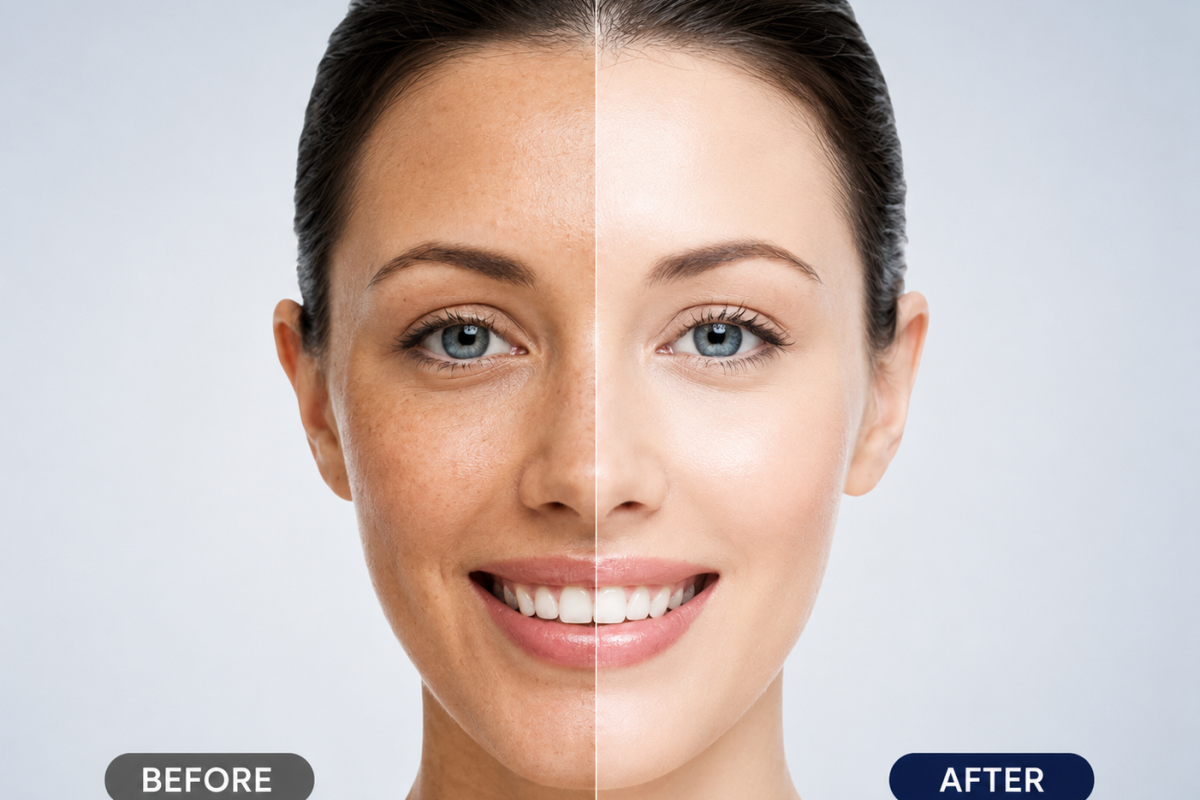
SKIN WHITENING & BRIGHTENING TREATMENT IN DELHI
Let’s be straightforward about something that most clinic pages avoid saying: ‘skin whitening’ is not about making your natural complexion lighter. The treatments grouped under this term — laser toning, chemical peels, glutathione therapy, skin boosters — work by addressing specific causes of uneven skin tone: excess pigmentation, tanning, post-inflammatory marks from acne, melasma, sun damage, and dullness caused by poor skin cell turnover.
The goal is not a different skin colour. The goal is your skin at its clearest, most even, and most radiant — without the dark patches, tan lines, persistent marks, or lacklustre texture that has built up over time from sun exposure, pollution, stress, or hormonal changes. That distinction matters, and any clinic worth choosing will make it upfront.
At Sarayu Clinics, Greater Kailash-1, New Delhi, Dr. Adarsh Tripathi — Maxillofacial and Facial Plastic Surgeon with over 18 years of experience — offers a medically supervised range of skin brightening and pigmentation treatments, customised to Indian skin tones and the specific type of pigmentation affecting your skin. This page covers every treatment available, who they suit, realistic costs, recovery, and what results actually look like over time.
What Skin Brightening Treatments Can Realistically Do
The benefits of professional skin whitening treatment are real and measurable — when the right treatment is matched to the right cause of pigmentation. Here is an honest picture of what patients typically experience:
Visible Skin Benefits
- Reduction in dark spots, sun spots, and post-acne marks — among the most consistent outcomes across laser and peel treatments
- Improvement in melasma — a notoriously stubborn hormonal pigmentation that responds best to a combined approach of laser, peels, and topical prescription therapy
- Reversal of tanning — UV-induced tanning responds particularly well to laser toning and chemical peels
- More even, uniform skin tone — patches that are darker than surrounding skin are brought closer to your baseline
- Improved skin texture — most brightening treatments have a dual benefit of improving the surface quality of skin alongside tone
- Natural-looking radiance — the ‘glow’ patients describe after treatment comes from improved light reflectance as dead, pigmented cells are removed and skin cell turnover improves
- Reduction of dullness — city pollution, stress, and poor sleep deposit oxidative damage in the skin. Antioxidant IV therapy and skin boosters directly address this
Functional Benefits Often Overlooked
- Improved confidence in being photographed, in professional settings, and socially
- Reduction of dark circles — periorbital pigmentation (darkness around the eyes) is a frequent secondary benefit of overall facial brightening treatments
- Lighter and more even appearance of body areas: underarms, knees, elbows, and inner thighs where friction and hormonal activity cause darkening
- Better makeup finish — pigmentation and uneven texture make makeup application harder. Clearer skin requires less coverage
What These Treatments Cannot Do ?
- They cannot permanently change your natural skin colour — the baseline complexion you were born with is determined by your genetics
- They cannot fix pigmentation that is actively being triggered — an untreated hormonal imbalance, daily sun exposure without sunscreen, or ongoing acne will continue creating new marks
- They cannot replace a consistent skincare routine and sun protection — without maintenance, most pigmentation concerns recur
- A single session is rarely sufficient — most concerns require a structured course of 3–6 sessions for measurable, lasting results
Body Areas Where Skin Whitening Treatment Is Effective
A significant gap in most competitor pages is that they focus exclusively on facial treatment. Pigmentation affects the whole body, and Dr. Adarsh Tripathi’s clinic offers treatments tailored to different areas with distinct protocols.
Face
The face receives the most sun exposure and is most affected by hormonal pigmentation. Melasma on the cheeks and forehead, post-acne marks, sun spots on the nose and temples, and generalised dullness are the most common facial concerns. Facial brightening treatments typically use lower-energy settings to suit the delicate periorbital (around-eye) and perioral (around-mouth) zones.
Neck and Décolletage
The neck and upper chest are chronically sun-exposed but often neglected in skincare routines. Horizontal neck lines, uneven tanning, and age spots in this area respond well to the same laser and peel protocols used for the face, often combined with skin booster injections for simultaneous hydration and brightening.
Underarms
Underarm darkening is one of the most commonly searched pigmentation concerns in India. It is caused by friction, shaving, waxing, deodorant use, and in some cases hormonal factors. Chemical peels and laser toning specifically calibrated for this area can significantly lighten underarm skin over 4–6 sessions. Switching to laser hair reduction (which Dr. Tripathi’s clinic also offers) removes the ongoing irritation from repeated shaving and waxing, helping prevent new darkening.
Arms and Hands
Sun-exposed arms accumulate tanning and age spots over time. The backs of hands in particular show age-related pigmentation changes (liver spots or solar lentigines) from the mid-30s onwards. Laser toning and skin booster injections are highly effective for hands and arms, often delivering visible improvement in 3–4 sessions.
Knees and Elbows
Darkening at the knees and elbows is caused by friction, pressure, and thicker skin in these areas. Chemical peels — particularly salicylic and glycolic acid peels — work well here because the skin is more resilient and can tolerate slightly stronger concentrations than the face. Consistent moisturisation is equally important for maintenance.
Inner Thighs and Groin
Friction, synthetic fabrics, and hormonal pigmentation all contribute to darkening in the inner thigh and groin area. This is a sensitive zone that requires peels or lasers calibrated specifically for the thicker, more pigmented skin found here, and performed under proper clinical conditions. Results from 4–6 sessions are typically good.
Back
Back pigmentation is often a combination of post-acne marks (for those with a history of back acne), sun damage, and general uneven tone. The back’s larger surface area means treatment is typically done in sections. Chemical peels work efficiently here; laser toning is used for more stubborn marks.
Lips
Darkened lips — caused by sun exposure, smoking, dehydration, or hormonal changes — respond to a targeted combination of laser toning at low settings and topical brightening therapy. This is an area where many clinics do not offer treatment; Dr. Adarsh Tripathi’s experience in perioral (around-mouth) anatomy from facial plastic surgery gives an advantage in treating this delicate zone precisely.
Skin Conditions Addressed by Whitening and Brightening Treatments
Different types of pigmentation have different causes and different best-response treatments. Treating all pigmentation the same way is a common clinical mistake. Here is the full range of conditions addressed:
Hyperpigmentation
The umbrella term for any area of skin that is darker than the surrounding baseline. Caused by excess melanin production. Includes sun spots, age spots, melasma, post-inflammatory hyperpigmentation, and freckles. Most hyperpigmentation responds to a combination of laser toning, chemical peels, and prescription brightening topicals.
Melasma
Melasma is a chronic, hormonally driven pigmentation pattern — typically appearing as symmetrical patches on the cheeks, upper lip, forehead, and jawline. It predominantly affects women and is frequently triggered or worsened by pregnancy, oral contraceptives, and UV exposure. Melasma is the most challenging pigmentation condition to treat because the melanocytes (pigment cells) remain sensitised even after treatment — meaning sun protection and maintenance therapy are not optional, they are essential. A combination approach of Q-switched Nd:YAG laser toning, chemical peels, and topical prescription therapy (such as Tri-Luma or azelaic acid) gives the most sustainable results.
- Important: aggressive laser settings on melasma can worsen it — a phenomenon called post-inflammatory hyperpigmentation (PIH). Conservative, staged treatment is the correct clinical approach for Indian Fitzpatrick IV-V skin tones.
Post-Inflammatory Hyperpigmentation (PIH)
The dark marks left behind after acne, eczema, rashes, insect bites, or any inflammatory skin event. PIH is extremely common in darker skin tones — Indian skin responds to inflammation by producing excess melanin as a protective response. Chemical peels (particularly salicylic acid peels) and laser toning are highly effective for PIH. Treating the underlying acne or skin condition simultaneously is equally important.
Sun Damage and Tanning
Cumulative UV exposure causes two types of visible change: acute tanning (the temporary darkening from a recent sun event) and chronic sun damage (deeper, more stubborn pigmentation including solar lentigines or ‘sun spots’). Both respond to treatment, though chronic sun damage requires more sessions. Tanning typically clears in 2–3 laser or peel sessions with consistent sunscreen use.
Uneven Skin Tone / Skin Dullness
Not all uneven skin tone is caused by specific dark spots. A generalised flatness and lack of luminosity — common in people living in high-pollution urban environments like Delhi — is caused by oxidative stress, accumulated dead skin cells, and reduced microcirculation. Treatments that address this specifically include glutathione IV therapy, skin boosters (hyaluronic acid + antioxidant micro-injections), and medical-grade medi-facials.
Freckles (Ephelides)
Freckles are small concentrated spots of melanin, common in people with lighter complexions and those with genetic predisposition. They are benign but cosmetically bothersome for some patients. Q-switched laser treatments are very effective for freckle reduction, with results often visible after 1–2 sessions.
Age Spots and Liver Spots (Solar Lentigines)
Flat, well-defined dark spots that develop in sun-exposed areas — typically the face, backs of hands, and forearms — from the mid-30s onwards. They are associated with cumulative UV damage and natural aging. Laser toning is the most effective treatment. They do not disappear entirely with topical products alone.
Dark Circles (Periorbital Pigmentation)
Periorbital dark circles have multiple causes: pigmentation, volume loss, visible blood vessels, and shadowing from under-eye hollows. The pigmentation component — which appears as a brownish or greyish discolouration on the eyelid skin — can be addressed with laser toning at very low settings appropriate for the thin periorbital skin. The tear trough hollowing component is a structural issue better addressed with filler.
Acanthosis Nigricans
A darkening and thickening of skin at friction points — typically the neck, armpits, and groin — that is often associated with insulin resistance, PCOS, or obesity. While cosmetic treatment can improve appearance, addressing the underlying medical condition (typically through dietary changes, weight management, or medication) is essential and should be done in conjunction with a physician. Dr. Adarsh Tripathi coordinates with relevant specialists for cases where a medical cause is identified.
Skin Whitening Treatments Available at Sarayu Clinics, Delhi
The following treatments are available individually or in combination, depending on your skin type, the specific pigmentation concern, and your lifestyle and downtime tolerance.
1. Q-Switched Nd:YAG Laser Toning
The clinical workhorse of skin brightening in Delhi. Q-switched lasers emit ultra-short pulses of energy that selectively target melanin in the skin without damaging surrounding tissue — a process called selective photothermolysis. The laser energy heats and fragments excess pigment, which the body then absorbs and eliminates naturally over the following 2–4 weeks.
Laser toning at low fluence (energy settings) is safe and effective for Indian skin tones (Fitzpatrick IV-V) when performed by an experienced practitioner. At higher settings or with incorrect wavelength selection, the same laser can worsen pigmentation — which is why the practitioner’s experience matters as much as the equipment.
- Sessions: 4–8, typically spaced 2–4 weeks apart
- Downtime: none to minimal — mild redness for a few hours
- Best for: melasma, sun spots, tanning, post-acne marks, freckles, generalised dullness
2. Chemical Peels
A controlled exfoliation technique using medical-grade acids — glycolic acid, salicylic acid, lactic acid, TCA (trichloroacetic acid), Jessner’s solution, or mandelic acid — to remove the outer pigmented layers of skin and stimulate new cell growth. Different acid types and concentrations are selected based on the skin concern:
- Salicylic acid peels: best for acne-prone and oily skin with PIH
- Glycolic acid peels: best for sun damage, uneven tone, and improving skin texture
- Lactic acid peels: best for sensitive skin types and mild brightening
- TCA peels: deeper peels for stubborn pigmentation and significant sun damage — requires more downtime
- Mandelic acid peels: excellent for darker skin tones with lower PIH risk
Chemical peels are one of the most evidence-backed and cost-effective treatments for pigmentation. They are often combined with laser toning for significantly better results than either alone.
- Sessions: 4–6, spaced 2–3 weeks apart
- Downtime: mild peeling for 3–5 days (superficial peels); 7–10 days (medium-depth TCA)
- Best for: PIH, acne marks, melasma, tanning, general brightening
3. Glutathione IV Therapy (Skin Brightening Drips)
Glutathione is the body’s master antioxidant — produced naturally in every cell, but depleted by stress, pollution, and aging. When administered intravenously in therapeutic doses, it inhibits tyrosinase (the enzyme responsible for melanin production), shifts melanin production from the darker eumelanin to the lighter phaeomelanin, and provides systemic antioxidant protection.
Glutathione IV drips for skin brightening are widely used across India and Southeast Asia. The evidence base is growing, with several clinical studies showing meaningful improvement in skin tone with regular sessions. Results are gradual — patients typically notice improvement from session 4–6 onwards — and require maintenance.
Important: glutathione drips should only be administered by a medical professional in a clinical setting. Unregulated IV administration carries real risks (infection, allergic reaction, vein damage). At Sarayu Clinics, all IV treatments are administered under medical supervision with sterile, pharmaceutical-grade products.
- Sessions: 8–12 for initial results; maintenance every 2–4 weeks thereafter
- Downtime: none
- Best for: generalised brightening, dullness from oxidative stress, body brightening
4. Skin Boosters (Mesotherapy / Micronutrient Infusion)
Skin boosters involve micro-injections of hyaluronic acid, vitamins (particularly Vitamin C and B-complex), antioxidants, and peptides into the upper layers of the skin. Unlike dermal fillers which add volume to specific areas, skin boosters improve skin hydration, elasticity, and radiance at a cellular level across a treated area. The result is a naturally luminous, healthy glow rather than a volume change.
Popular branded skin booster products used at Sarayu Clinics include Profhilo and Juvederm Volite — both well-evidenced options with strong safety profiles. These are distinct from glutathione drips (which are systemic) — skin boosters act locally on the treated skin.
- Sessions: 2–3 initially, spaced 4 weeks apart; maintenance every 6 months
- Downtime: tiny injection marks visible for 24–48 hours
- Best for: dullness, loss of skin radiance, dehydrated or stressed skin, early aging changes
5. Microdermabrasion
A mechanical exfoliation technique that uses fine crystals or a diamond-tipped handpiece to remove the outer dead skin layer. Gentler than chemical peels and with no downtime, microdermabrasion improves skin texture, mildly reduces surface pigmentation, and allows subsequent skincare products and treatments to penetrate more effectively. It works best as a regular maintenance treatment rather than a primary intervention for significant pigmentation.
- Sessions: 6–10, spaced 1–2 weeks apart
- Downtime: none
- Best for: mild dullness, superficial sun damage, skin texture improvement, maintenance
6. Medical-Grade Medi-Facials
Clinical, doctor-prescribed facials tailored to address specific skin concerns rather than simply cleansing and hydrating. At Sarayu Clinics, medi-facials for brightening typically incorporate a combination of enzyme exfoliation, brightening-active serums (Vitamin C, kojic acid, arbutin, niacinamide), LED light therapy, and skin-specific masks. They are a good starting point for patients new to skin treatment, and an excellent maintenance protocol between more intensive sessions.
- Sessions: monthly for maintenance
- Downtime: none
- Best for: mild pigmentation, general brightening, maintenance, sensitive skin types
7. Intense Pulsed Light (IPL) Therapy
IPL uses broad-spectrum light energy to target melanin and haemoglobin in the skin, making it effective for sun damage, freckles, and diffuse redness alongside pigmentation. Unlike laser, which uses a single wavelength, IPL covers a range of wavelengths. It is highly effective for sun damage on lighter skin tones and for mixed pigmentation-redness concerns (such as post-acne redness combined with PIH). It requires careful patient selection — IPL is not appropriate for all skin tones and is less commonly used in deeply pigmented Indian skin where Q-switched laser is typically the preferred option.
- Sessions: 3–5, spaced 3–4 weeks apart
- Downtime: mild redness for 24–48 hours; treated spots temporarily darken before flaking off
- Best for: sun freckles, solar lentigines, mixed pigmentation and redness
8. Topical Prescription Brightening Therapy
Not all skin brightening is procedural. A well-designed prescription topical regimen — used consistently at home alongside clinic treatments — is often what determines how well clinic results hold over time. Dr. Adarsh Tripathi prescribes topical brightening agents including:
- Hydroquinone (2–4%): the most evidence-backed depigmenting agent; used under medical supervision in cycles
- Azelaic acid (15–20%): excellent for PIH and melasma; safe for long-term use
- Kojic acid: a gentle melanin inhibitor suitable for maintenance
- Niacinamide (Vitamin B3): reduces melanin transfer to skin cells; safe for all skin tones
- Retinoids (Tretinoin): accelerates cell turnover and enhances the effect of other brightening agents
- Vitamin C serums: antioxidant protection and mild brightening; essential for maintenance
9. LED Light Therapy
LED (light-emitting diode) therapy uses specific wavelengths of light to stimulate cellular repair, reduce inflammation, and improve skin quality. Yellow and green wavelengths are used for pigmentation and brightening; red light for overall collagen stimulation and skin health. LED is non-invasive, painless, and has no downtime. It is typically used as an add-on to other treatments rather than a standalone pigmentation treatment.
- Sessions: 6–10 as part of a combined protocol
- Downtime: none
- Best for: enhancing results of other treatments; sensitive skin; inflammation reduction
Who Is a Suitable Candidate for Skin Brightening Treatment?
Almost anyone with a specific pigmentation concern, uneven skin tone, or desire for improved skin clarity is a candidate for at least one of the treatments above. The key is matching the right treatment to the right concern.
You are a suitable candidate if:
- You have visible pigmentation — dark spots, melasma, PIH, sun damage, or tanning — that has not improved adequately with over-the-counter products
- You want to address generalised dullness or lack of skin radiance
- You are committed to wearing sunscreen daily — this is not optional with any brightening treatment
- You have realistic expectations — significant pigmentation requires multiple sessions; visible improvement is gradual
- You are not pregnant or breastfeeding (most aesthetic treatments are deferred during this period)
- Your skin is not currently inflamed, sunburnt, or experiencing an active breakout at the time of treatment
Special considerations for Indian skin (Fitzpatrick IV-VI):
Indian skin tones carry a higher risk of post-inflammatory hyperpigmentation (PIH) — meaning that aggressive or incorrectly calibrated treatments can actually darken the skin further. This is a real clinical risk and the most important reason to choose a medically qualified practitioner with specific experience in treating darker skin tones. Dr. Adarsh Tripathi’s practice in Delhi means treating Indian skin is his default, not an exception.
- Conservative laser settings protect against PIH in darker skin
- Superficial peels are preferred over aggressive medium-depth peels for initial treatments in Fitzpatrick IV-V skin
- Patch testing before any new treatment is standard protocol
The Skin Whitening Treatment Process — From Consultation to Maintenance
Step 1: Consultation and Skin Analysis
Your first appointment begins with a detailed skin assessment. Dr. Adarsh Tripathi evaluates your skin tone (Fitzpatrick type), the specific type and depth of pigmentation, your history of prior treatments (including any products you currently use), your sun exposure habits, and any underlying medical factors (hormonal conditions, medications that cause photosensitivity). A Wood’s lamp or dermatoscope may be used to assess whether pigmentation is superficial (epidermal) or deep (dermal) — which directly determines which treatments will be most effective.
Step 2: Personalised Treatment Protocol
Based on the consultation, a treatment protocol is designed specifying which treatments will be used, in what sequence, at what intervals, and for how many sessions. Most brightening protocols combine 2–3 modalities — for example, laser toning + chemical peels + topical prescription therapy — because combination approaches consistently outperform single-modality treatment. The protocol also includes the home skincare regimen.
Step 3: Pre-Treatment Preparation
- Begin prescribed topical therapy (typically 2–4 weeks before the first procedure)
- Strictly avoid sun exposure in the 2 weeks before treatment — even brief unprotected exposure can sensitise the skin
- Discontinue retinoids and exfoliating acids 5–7 days before procedures
- Attend patch test 48 hours before first peel or laser session (mandatory for new patients)
- Arrive for treatment with clean skin — no makeup, moisturiser, or sunscreen on the treatment day
Step 4: Treatment Session
What happens during a session depends on the treatment:
- Laser toning (20–30 mins): goggles worn, cooling gel applied, laser handpiece moved systematically over the treatment area. Mild warmth or tingling sensation. Cooling air applied simultaneously.
- Chemical peel (15–30 mins): skin cleansed and degreased, peel applied in layers, neutralised after the appropriate contact time. Mild stinging or warmth during application. Face sponged clean after neutralisation.
- Glutathione IV (30–45 mins): IV cannula placed in the arm, drip administered slowly. Entirely painless. Patient rests during the infusion.
- Skin boosters (20–30 mins): numbing cream applied for 20 minutes, micro-injections made across the treatment area using a fine needle or cannula. Mild discomfort during injection.
- Medi-facial (60–75 mins): multi-step process including cleanse, exfoliation, active serum application, LED therapy, and mask.
Step 5: Immediate Aftercare
- Sunscreen SPF 50+ must be applied immediately before leaving the clinic — without exception
- No makeup for 24 hours after laser or peels
- Avoid touching, rubbing, or picking at the treated skin
- Use gentle, fragrance-free moisturiser as prescribed
- If peeling occurs after a chemical peel — let it happen naturally. Do not peel manually.
- Avoid steam rooms, saunas, and swimming for 48–72 hours post-treatment
Step 6: Home Skincare Between Sessions
Results between sessions depend significantly on what patients do at home. The non-negotiables are:
- SPF 50+ sunscreen, every day, rain or shine — UV exposure is the number one trigger for pigmentation recurrence
- Vitamin C serum in the morning — antioxidant protection and mild ongoing brightening
- Prescribed brightening topicals — used as directed, typically in the evening
- Gentle hydrating cleanser and moisturiser — over-washing and harsh cleansers impair the skin barrier and worsen pigmentation
- Retinoid (if prescribed) — used 2–3 nights per week to accelerate cell turnover
Downtime — What Each Treatment Involves
Treatment | During Session | Immediately After | Downtime | Return to Work |
Laser Toning | Warm/tingling sensation | Mild redness, slight warmth | None–minimal | Same day |
Superficial Chemical Peel | Mild stinging | Redness, tight feeling | 3–5 days peeling | Next day |
TCA (Medium) Peel | Moderate stinging | Redness, visible peeling | 7–10 days | 3–5 days |
Glutathione IV Drip | None (mild arm vein coolness) | None | None | Same day |
Skin Boosters | Mild injection discomfort | Tiny bumps 24–48 hrs | 1–2 days | Same/next day |
Microdermabrasion | Mild suction sensation | Mild pink flush | None | Same day |
LED Therapy | Warm light — painless | None | None | Same day |
Medi-Facial | Relaxing, mild exfoliation | Mild flush | None | Same day |
IPL | Rubber-band snap sensation | Redness 24–48 hrs, spot darkening | 3–5 days | Next day |
The practical takeaway: most skin brightening treatments at Sarayu Clinics involve no meaningful social downtime — you can return to work the same day. The main exception is medium-depth TCA peels, which require 7–10 days of visible peeling and are best planned around a period when you can be at home.
Skin Whitening Treatment Cost in Delhi — A Transparent Breakdown
Cost is one of the most searched aspects of any skin treatment. The honest reality is that pricing for skin whitening treatment in Delhi varies significantly — by treatment type, number of sessions, treatment area, and clinic credentials. Here is a clear breakdown:
Approximate Cost at Sarayu Clinics, Delhi
Treatment | Cost Per Session | Recommended Sessions | Total Approx. Cost |
Q-Switched Laser Toning (face) | Rs. 3,000–8,000 | 6–8 | Rs. 18,000–64,000 |
Chemical Peel (superficial) | Rs. 1,500–3,500 | 4–6 | Rs. 6,000–21,000 |
Chemical Peel (TCA/medium) | Rs. 4,000–8,000 | 2–3 | Rs. 8,000–24,000 |
Glutathione IV Drip | Rs. 3,000–6,000 | 8–12 (initial) | Rs. 24,000–72,000 |
Skin Boosters (Profhilo etc.) | Rs. 12,000–25,000 | 2–3 | Rs. 24,000–75,000 |
Microdermabrasion | Rs. 1,500–3,000 | 6–8 | Rs. 9,000–24,000 |
Medi-Facial (brightening) | Rs. 2,500–5,000 | Monthly | Ongoing maintenance |
IPL (face) | Rs. 5,000–10,000 | 3–5 | Rs. 15,000–50,000 |
Underarm/body laser toning | Rs. 3,000–6,000 per area | 4–6 | Rs. 12,000–36,000 |
LED Therapy (add-on) | Rs. 1,000–2,500 | As add-on | Included in package |
When Will You See Results? A Realistic Timeline
One of the most common misunderstandings about skin brightening treatments is expecting dramatic results after one session. Here is what a realistic timeline looks like for the most common concerns:
Mild Tanning and Generalised Dullness
- After Session 1: visible improvement in skin freshness and texture; tanning slightly lighter
- After Sessions 2–3: clear brightening, more even tone, improved skin glow
- After Sessions 4–6: close to optimal result for mild concerns
- Maintenance: monthly medi-facial or skin booster every 6 months
Post-Acne Hyperpigmentation (PIH)
- Weeks 2–4 after session 1: mild fading of individual marks
- Month 2–3 (sessions 3–4): 40–60% improvement in mark visibility
- Month 4–5 (sessions 5–6): 70–80% improvement in most patients
- Month 6: optimal result; maintenance topicals prevent recurrence
Melasma
Melasma has the most unpredictable timeline because it is a chronic, hormonally-driven condition. Realistic expectations:
- Month 1–2: mild lightening of affected patches with combination laser + peel therapy
- Month 3–4: 40–60% reduction in patch intensity in many patients
- Month 5–6: best achievable result — melasma rarely clears completely, but can be well-controlled
- Ongoing: maintenance topical therapy and strict sun avoidance are lifelong requirements; melasma will recur without them
Sun Spots and Solar Lentigines
- These respond fastest to laser toning — spots typically darken temporarily after treatment, then flake off over 2–3 weeks
- After sessions 1–2: significant fading of individual spots
- After sessions 3–4: most spots resolved
Glutathione IV Brightening
- Sessions 1–4: systemic antioxidant benefits; skin feels more hydrated and fresh
- Sessions 5–8: gradual brightening and improved overall tone
- Sessions 9–12: most patients see the full brightening effect at this stage
- Maintenance: every 2–4 weeks to sustain results
Treatment Comparison — Which Is Right for Your Concern?
Concern | First Choice | Second Option | Maintenance |
Melasma | Q-switched laser (low fluence) + TCA peel | Salicylic peel + prescription topicals | Topical Vit C + SPF 50 daily |
Post-acne marks (PIH) | Salicylic acid peel | Laser toning | Azelaic acid topical |
Sun tanning (recent) | Glycolic peel | Laser toning | SPF + Vit C serum |
Sun spots / age spots | Q-switched laser | IPL (if Fitzpatrick I-III) | SPF 50 daily |
Generalised dullness | Glutathione IV + medi-facial | Skin boosters | Monthly medi-facial |
Underarm darkening | Laser toning (underarm) | Salicylic peel | Laser hair reduction |
Dark circles (pigment) | Laser toning (periorbital) | Skin boosters | Vit C eye serum |
Body brightening | Glutathione IV + laser body | Chemical peel body | SPF + moisturiser |
Acanthosis nigricans (neck) | Laser toning + medical Rx | Glycolic peel | Medical management |
Freckles | Q-switched laser | IPL | SPF 50 mandatory |
Professional Treatment vs At-Home Products — What Can OTC Products Actually Do?
This is a question worth answering honestly, because many people spend months on over-the-counter brightening products before seeking professional treatment.
- Vitamin C serums (L-ascorbic acid 10–20%): effective antioxidant and mild brightening; best as maintenance alongside professional treatment, not as primary treatment for significant pigmentation
- Niacinamide (5–10%): reduces melanin transfer; genuinely useful for mild marks and daily brightening; slow results
- Alpha Arbutin: a gentler alternative to hydroquinone; useful for maintenance
- Retinol (over-the-counter): accelerates cell turnover; useful but much weaker than prescription tretinoin
- OTC ‘fairness creams’: most have insufficient active concentrations to produce meaningful results; some contain unlisted steroids or mercury compounds — a genuine health risk
The honest answer: OTC products are excellent for maintenance and prevention. For existing pigmentation — especially melasma, PIH, and sun damage of more than 6 months’ duration — professional clinic treatment produces results that OTC products simply cannot replicate.
Safety, Side Effects, and Risk Management
Skin brightening treatments performed by qualified medical professionals with appropriate equipment are safe for Indian skin. The risks below are real but manageable with correct technique and patient selection.
Common, Expected Reactions (Not Complications)
- Mild redness and warmth immediately after laser or peel — resolves within hours to 24 hours
- Peeling for 3–7 days after chemical peels — normal and expected; do not manually peel
- Temporary darkening of treated spots after laser (paradoxical darkening before elimination) — resolves in 2–3 weeks
- Mild bruising at skin booster injection sites — resolves in 24–48 hours
Less Common Risks
- Post-inflammatory hyperpigmentation (PIH) from aggressive laser settings on darker skin — prevented by conservative settings, patch testing, and experienced practitioners
- Chemical peel complications in skin that was not properly prepared or is sensitised — prevented by pre-treatment topicals and appropriate peel selection
- Infection at IV glutathione sites — prevented by sterile technique and pharmaceutical-grade products
- Allergic reaction to peel ingredients — screened by patch testing
Rare but Serious Risks
- Ochronosis from prolonged unsupervised hydroquinone use — not a risk when hydroquinone is prescribed in monitored, cyclic protocols
- Scarring from inappropriate laser settings on an active acne breakout or inflamed skin — prevented by refusing treatment when skin is actively inflamed
- Systemic reactions to IV glutathione in patients with G6PD deficiency — screened with pre-treatment blood test
How Sarayu Clinics Manages These Risks ?
- Comprehensive consultation and skin typing before any treatment
- Mandatory patch test before first laser or peel session
- Conservative treatment protocols designed for Fitzpatrick IV-V Indian skin tones
- Pre-treatment screening bloodwork for IV therapy patients
- Detailed aftercare instructions provided in writing
- 24-hour contact available for any concerns post-treatment
About Dr. Adarsh Tripathi — Why a Facial Plastic Surgeon for Skin Brightening?
Dr. Adarsh Tripathi is a Maxillofacial and Facial Plastic Surgeon with over 18 years of clinical experience at Sarayu Clinics, Greater Kailash-1, New Delhi. His background is worth understanding in context — while skin brightening treatments are often performed at general dermatology clinics or beauty salons, having them supervised by a facial plastic surgeon with deep anatomical knowledge of the face has specific advantages.
- Understanding of facial anatomy means laser energy and peel agents are calibrated differently for the delicate periorbital zone (around eyes), the thicker skin of the forehead, and the sun-damaged skin of the nose and cheeks — not applied uniformly
- Experience with Indian skin tone as the primary patient demographic — not an exception to a Caucasian-default treatment protocol
- Medical oversight for IV treatments (glutathione, skin boosters) — these are medical procedures and require a qualified doctor’s supervision
- Ability to address the structural contributors to concerns like dark circles (which may need blepharoplasty or filler alongside brightening treatment) rather than only treating the surface pigmentation
- Integration with the full range of facial treatments available at Sarayu Clinics — so your skin brightening plan can be coordinated with any other facial procedure you are considering
Frequently Asked Questions — Skin Whitening Treatment in Delhi
Q: What is skin whitening treatment in Delhi?
A: Skin whitening treatment in Delhi refers to medically supervised procedures — including laser toning, chemical peels, glutathione IV therapy, and skin boosters — that reduce excess pigmentation, correct uneven skin tone, and improve overall skin radiance. The goal is restoring your skin’s clearest, most even natural tone — not changing your baseline complexion.
Q: How much does skin whitening treatment cost in Delhi?
A: Skin whitening treatment costs in Delhi range from Rs. 1,500–Rs. 3,500 per session for superficial chemical peels, Rs. 3,000–Rs. 8,000 per session for Q-switched laser toning, and Rs. 3,000–Rs. 6,000 per session for glutathione IV drips. Total course costs depend on how many sessions are needed. A personalised quote is provided after consultation at Sarayu Clinics.
Q: Is skin whitening treatment safe for Indian skin?
A: Yes — when performed by an experienced practitioner using appropriate settings for Indian (Fitzpatrick IV-V) skin tones. Indian skin has a higher risk of post-inflammatory hyperpigmentation (PIH) from aggressive treatment, which is why conservative settings, patch testing, and pre-treatment preparation are essential. At Sarayu Clinics, all protocols are designed specifically for Indian skin.
Q: How many sessions are needed for skin whitening treatment?
A: Most skin brightening protocols require 4–8 sessions for visible, lasting results. Mild tanning may clear in 3–4 sessions. Melasma and stubborn PIH typically require 6–8 sessions and ongoing maintenance. Glutathione IV therapy for overall brightening typically shows results from session 5–8 onwards. The exact number is confirmed after consultation and skin assessment.
Q: Are results from skin whitening treatment permanent?
A: Results from skin whitening treatment are long-lasting but require maintenance to sustain. The treated pigmentation is genuinely reduced or removed, but the underlying triggers — sun exposure, hormonal changes, pollution — continue to affect the skin. Daily sunscreen use, a consistent brightening skincare routine, and periodic maintenance sessions preserve results over the long term.
Q: What is the best treatment for melasma in Delhi?
A: The most effective approach for melasma in Delhi combines Q-switched Nd:YAG laser toning (at conservative low-fluence settings), chemical peels (salicylic or TCA depending on skin type), and prescription topical therapy (such as hydroquinone-tretinoin-steroid combinations). This multi-modality approach consistently outperforms any single treatment. Strict, year-round sun protection is non-negotiable for melasma management.
Q: Can skin whitening treatment remove dark spots and pigmentation?
A: Yes. Dark spots from sun damage, acne marks (PIH), and melasma all respond to professional skin whitening treatments including laser toning and chemical peels. Most patients see 60–80% improvement in individual dark spots after a full course of treatment. Deeper, older pigmentation takes more sessions; freshly formed marks respond faster.
Q: What is glutathione IV therapy for skin whitening?
A: Glutathione IV therapy involves intravenous infusion of glutathione — the body’s natural master antioxidant — in therapeutic doses. It inhibits the enzyme responsible for dark melanin production, provides antioxidant protection, and gradually improves overall skin tone and clarity with regular sessions. Results appear gradually from session 5–8 onwards. It must be administered by a medical professional in a clinical setting.
Q: Can skin whitening treatment be done on the body — underarms, back, legs?
A: Yes. Skin brightening treatments at Sarayu Clinics are available for the face, neck, underarms, arms, hands, knees, elbows, inner thighs, back, and lips. Different treatment protocols are used for different body areas based on skin thickness, pigmentation type, and sensitivity of the zone.
Q: What should I avoid after skin whitening treatment?
A: After skin whitening treatment: apply SPF 50+ sunscreen immediately and every day without exception; avoid direct sun exposure for at least 48–72 hours; do not use exfoliating acids or retinoids for 5–7 days post-treatment; do not pick at peeling skin after chemical peels; avoid swimming, saunas, and steam rooms for 48–72 hours; and use only the prescribed gentle moisturiser.
Q: How soon will I see results from skin whitening treatment?
A: Some improvement in skin texture and freshness is often visible after the first session. Meaningful brightening of pigmentation typically becomes noticeable from session 3–4 onwards with laser or peel treatment. Glutathione IV results are more gradual — most patients notice visible skin tone improvement after 6–8 sessions. Final results are assessed at the end of the full prescribed course.
Q: What is the difference between skin whitening and skin brightening?
A: Skin brightening refers to improving overall skin radiance, clarity, and glow — addressing dullness, uneven texture, and lack of luminosity. Skin whitening typically refers to reducing excess pigmentation — dark spots, melasma, tanning, and marks. In clinical practice the two overlap significantly, as most brightening treatments also reduce pigmentation. Both terms, at a reputable clinic, refer to restoring your best natural skin tone — not changing your fundamental complexion.
Q: What is post-inflammatory hyperpigmentation (PIH) and how is it treated?
A: Post-inflammatory hyperpigmentation (PIH) is the dark mark left behind after inflammation — most commonly from acne, but also from eczema, rashes, or any skin injury. It is caused by excess melanin produced as part of the skin’s inflammatory response. PIH is treated with salicylic acid chemical peels, Q-switched laser toning, and topical prescription agents such as azelaic acid and niacinamide. Treating the underlying acne or skin condition simultaneously is essential to prevent new marks from forming.
Q: Is there any downtime after skin whitening treatment in Delhi?
A: Most skin whitening treatments at Sarayu Clinics have minimal or no downtime — you can return to work the same day. The exception is medium-depth chemical peels (TCA peels), which involve 7–10 days of visible peeling and some social downtime. Laser toning, superficial peels, glutathione IV, skin boosters, and medi-facials all have no meaningful downtime.
How to Reach Us:
Phone:+91 9289111083 ,+91 9289111084
Email: sarayuinquiries@gmail.com
Dr Adarsh’s website: https://dradarshtripathi.com/
Facebook: https://www.facebook.com/DrAdarshTripathi3011
Instagram: https://www.instagram.com/dr_adarsh_tripathi/
Youtube: https://www.youtube.com/@dr_adarsh_tripathi
Linkedin: https://www.linkedin.com/in/dr-adarsh-tripathi-a43005b8/
Online Booking: https://dradarshtripathi.com/contact-us/ to schedule appointments conveniently.