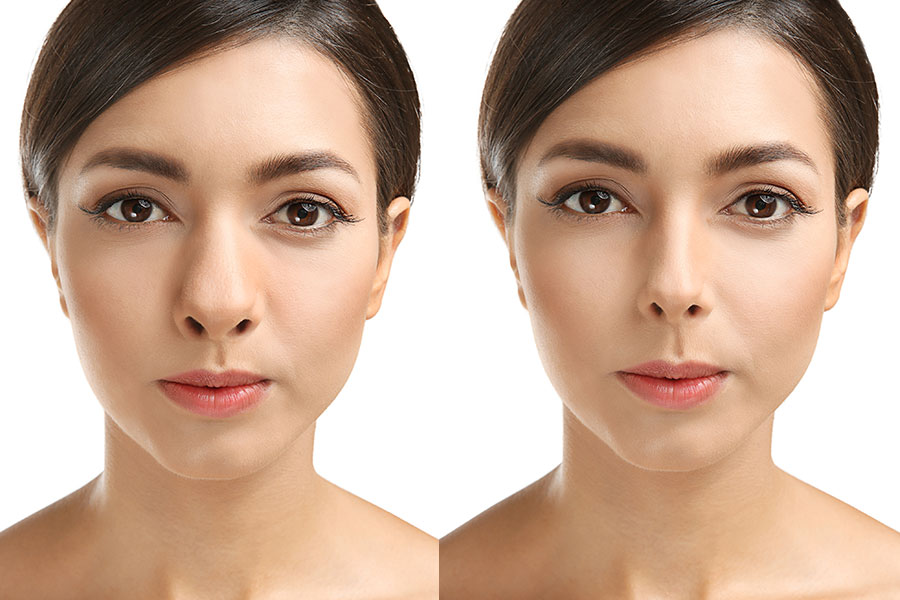
Alarplasty treatment in Delhi is a safe procedure when performed by a qualified facial plastic surgeon in an accredited facility — it is a minor, well-established surgery with a low complication rate. The honest caveat most clinics won’t tell you: alarplasty is permanent and unforgiving of poor technique, because the nostrils are small, highly visible, and even a millimetre of over-correction or asymmetry is noticeable. So the real question isn’t whether alarplasty is safe in general — it’s whether YOUR surgeon has the precision and aesthetic judgement to get a permanent result right the first time.
If you’ve been researching alarplasty (also called alar base reduction or nostril reduction surgery), you’ve probably read a lot of reassuring marketing and very little honest detail. This article is the honest version — what alarplasty actually involves, who it genuinely suits, the real risks nobody likes to mention, realistic results, and what alarplasty treatment in Delhi. It’s written and medically reviewed by Dr. Adarsh Tripathi, a Maxillofacial and Facial Plastic Surgeon based in Greater Kailash, New Delhi, whose daily work is facial proportion and nasal aesthetics.
What Is Alarplasty? A Plain-English Explanation
Alarplasty is a surgical procedure that reduces the width of the nostrils (the ‘alae’, or sides of the nose) or narrows a wide nasal base. It is a focused, relatively minor procedure — distinct from a full rhinoplasty, which reshapes the entire nose. Alarplasty specifically targets the bottom of the nose: the nostril flare, the width of the nasal base, and the size of the nostril openings.
People consider alarplasty when their nostrils flare widely, when the nasal base is wider than the inner corners of the eyes (a common aesthetic reference point), or when wide nostrils feel out of proportion with the rest of the face. It’s a particularly relevant procedure for many Indian, South Asian, African, and Southeast Asian noses, which more commonly have a wider, flatter nasal base than European noses — meaning the surgeon’s experience with diverse nasal anatomy matters.
Alarplasty vs Rhinoplasty — The Key Difference
Alarplasty reduces nostril and nasal-base width only; rhinoplasty reshapes the whole nose (bridge, tip, profile, and base). Alarplasty is often performed as a standalone procedure under local anaesthesia, while rhinoplasty is a larger operation. Sometimes alarplasty is performed AS PART of a rhinoplasty when both base width and overall shape need addressing. If your concern is purely wide nostrils, alarplasty alone may suffice; if you also dislike your bridge, tip, or profile, a full rhinoplasty (with or without alar base reduction) is the more complete answer.
Is Alarplasty Treatment in Delhi Safe? The Honest Answer
Yes — alarplasty is considered a safe procedure with a low complication rate when performed by a qualified surgeon in a proper clinical setting. It is a minor, well-established operation, usually done under local anaesthesia as a day procedure, with most patients returning to normal activities within a week. However, ‘safe in general’ and ‘safe in any hands’ are two different things — and this is what nobody tells you.
Why Alarplasty Is Generally Safe
- It’s a minor, superficial procedure — not deep or high-risk anatomy
- Usually performed under local anaesthesia, avoiding general-anaesthesia risks
- Day-care procedure — you go home the same day
- Well-established technique with decades of refinement
- Low rate of serious complications in experienced hands
- Quick recovery compared to most facial surgery
What Nobody Tells You — The Honest Risks
The risks of alarplasty are real but specific, and they cluster around one theme: it’s permanent and precision-dependent. Here’s the honest list:
- Permanent scarring — alarplasty involves incisions at the base of the nostrils. A skilled surgeon hides these in the natural crease where the nostril meets the cheek, where they usually heal almost invisibly — but scarring is permanent and, if poorly placed or in scar-prone skin, can be visible
- Asymmetry — the two nostrils must match. Even slight asymmetry is noticeable because the nose is central and symmetrical by nature. This is the most common aesthetic complication and depends heavily on surgical precision
- Over-correction — removing too much tissue creates an unnaturally pinched or narrow look that is very difficult to reverse. Under-correction is fixable; over-correction is a permanent problem
- Notching or irregularity at the nostril rim if incisions aren’t precisely planned
- Keloid or hypertrophic scarring — more relevant for those with a personal/family history of keloids (worth disclosing at consultation)
- Changes to nostril shape with breathing or smiling if too much is altered
- Standard surgical risks — minor bleeding, infection (uncommon with proper care), delayed healing
| ⚠️ The one risk that matters most — permanence Alarplasty is PERMANENT. Tissue removed cannot be put back. Over-correction — making the nostrils too narrow or pinched — is the complication that’s genuinely hard to fix and can require complex reconstructive surgery. This is precisely why the choice of surgeon matters more for alarplasty than for many ‘bigger’ procedures: the margin for error is millimetres, the result is on permanent display in the centre of your face, and conservative, precise technique is everything. A surgeon who removes slightly too little can always refine later; a surgeon who removes too much has created a lasting problem. Choose precision and conservatism over aggressive promises. |
Who Is a Good Candidate for Alarplasty?
A good alarplasty candidate has genuinely wide or flaring nostrils that are out of proportion with their face, realistic expectations, good general health, and no untreated keloid tendency. The ideal candidate wants a subtle refinement in proportion — not a dramatic transformation — and understands the result is permanent.
You may be a good candidate if:
- Your nostrils flare wider than the inner corners of your eyes
- Your nasal base feels disproportionately wide for your face
- You’re bothered specifically by nostril/base width (not the bridge or tip)
- You’re in good general health and a non-smoker (or willing to stop)
- You have realistic expectations — subtle refinement, not a new nose
- You understand and accept the permanence of the result
You may NOT be an ideal candidate if:
- Your main concern is the bridge, tip, or profile (you may need rhinoplasty instead)
- You have a strong personal or family history of keloid scarring (needs careful assessment)
- You expect a dramatic change (alarplasty is a refinement, not a transformation)
- You’re a smoker unwilling to stop (impairs healing)
- You have unrealistic expectations or body-image concerns
Honest candidacy assessment is part of a responsible consultation. A good surgeon will sometimes tell you that alarplasty alone won’t achieve what you want — or that you don’t need it at all. That honesty protects you from a permanent procedure you might regret.
How Is Alarplasty Performed? The Procedure Step by Step
Alarplasty is typically performed under local anaesthesia as a day procedure taking 30-60 minutes. The surgeon removes a precise, pre-planned wedge of tissue from the nostril base to narrow the width, then closes the incisions in the natural crease where the nostril meets the cheek so the scar is hidden.
- Consultation and planning — the surgeon assesses your nasal proportions, measures the base width, discusses realistic outcomes, and plans precisely how much (usually very little) to remove
- Marking — the exact incision lines and amount of tissue to be removed are marked, often with the patient sitting upright so natural proportions are visible
- Local anaesthesia — the nostril base area is numbed; most patients feel only the initial injection
- Tissue removal — a precise wedge of tissue is removed from the nostril base/sill to reduce width and/or flare, according to the plan
- Closure — incisions are closed with fine sutures, tucked into the natural alar crease so the scar is concealed
- Same-day discharge — you go home the same day with aftercare instructions
The artistry is in the planning, not the cutting: deciding exactly how much to remove, where to place the incision, and how to keep the two sides symmetrical. This is where a facial plastic surgeon’s eye for proportion matters.
Alarplasty Recovery & Downtime — What to Expect
Alarplasty recovery is relatively quick — most patients return to work within 5-7 days, with sutures removed around day 5-7 and most visible swelling settling within 2-3 weeks. The final refined result appears over a few months as the area fully heals and any residual swelling resolves.
| Timeframe | What to Expect |
| Days 1-3 | Mild swelling and tenderness at the nostril base; minimal pain managed with simple medication |
| Days 5-7 | Sutures removed; most patients return to work/social activities |
| Weeks 2-3 | Most visible swelling settles; scars pink but settling |
| Months 1-3 | Scars fade and mature; refined result becomes clear |
| Months 3-6 | Final result; scars typically well-hidden in the alar crease |
Recovery Tips
- Keep the area clean and follow wound-care instructions precisely
- Avoid strenuous exercise for 2-3 weeks
- Protect the scars from sun (sun exposure darkens healing scars) with SPF once healed
- Don’t smoke — it significantly impairs wound healing
- Avoid facial steam, saunas, and swimming for 2-3 weeks
- Attend follow-up so healing and symmetry can be monitored
Alarplasty Cost in Delhi — Transparent Pricing
Alarplasty cost in Delhi typically ranges from Rs. 35,000 to Rs. 90,000, depending on the complexity of the case, the surgeon’s experience and qualification, the facility, and whether it’s a standalone procedure or part of a rhinoplasty. Standalone alarplasty under local anaesthesia is at the lower end; alarplasty combined with rhinoplasty is priced as part of the larger procedure.
| Factor | Effect on Cost |
| Standalone alarplasty (local anaesthesia) | Rs. 35,000–90,000 (typical range) |
| Part of full rhinoplasty | Priced within the rhinoplasty (varies) |
| Surgeon’s qualification & experience | Higher for experienced facial plastic surgeons |
| Facility accreditation & safety standards | Accredited facilities cost more — and are safer |
| Complexity / revision cases | Higher for complex or corrective work |
| Why the cheapest alarplasty is rarely the best value Because alarplasty is permanent and precision-dependent, the surgeon’s skill is the single biggest factor in your result — and the cheapest option is often the riskiest. A poorly done alarplasty (over-corrected, asymmetric, or badly scarred) may need complex revision surgery that costs far more than getting it right the first time, and some over-corrections can’t be fully fixed at all. The honest advice: choose alarplasty on the surgeon’s qualification, precision, and aesthetic judgement — not on the lowest price. For a permanent result in the centre of your face, surgeon skill is worth the difference. |
Alarplasty Results — Realistic Expectations
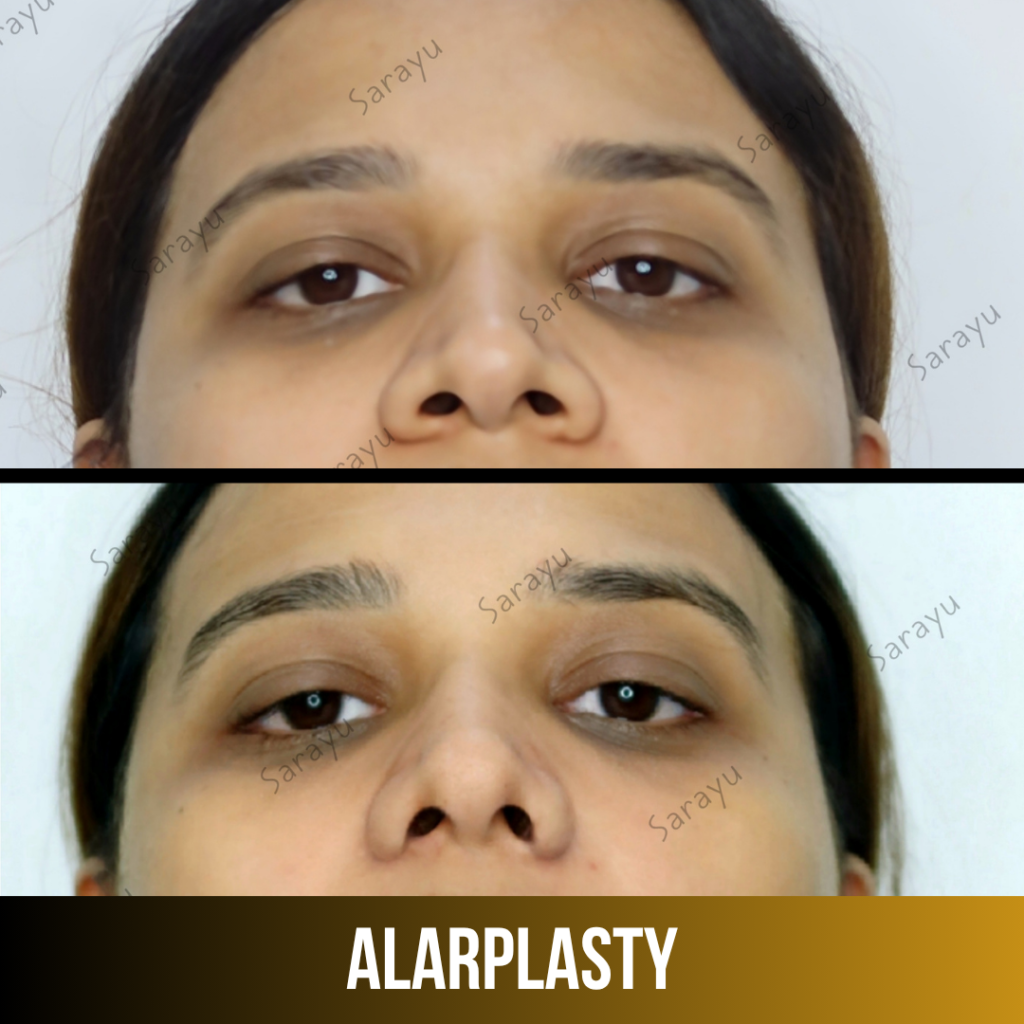
Alarplasty results are subtle, permanent, and most successful when natural-looking rather than dramatic. A well-done alarplasty narrows the nasal base and reduces nostril flare just enough to improve facial proportion — ideally in a way that looks like you’ve always had it, not like you’ve had surgery. The best results are the ones nobody can point to.
What a Good Result Looks Like
- Nostril width in better proportion with the face
- Reduced flare without an unnatural ‘pinched’ look
- Symmetry between the two nostrils
- Well-hidden scars in the natural alar crease
- A natural result that complements — not dominates — the face
What to Be Realistic About
Alarplasty refines proportion; it doesn’t transform your nose or your face. If your concern is the bridge, tip, or profile, alarplasty alone won’t address it. The change is real but subtle — and subtlety is the goal. Patients hoping for a dramatic facial transformation from nostril reduction alone will be disappointed; patients hoping for a refined, natural improvement in proportion are usually very satisfied. Managing expectations toward ‘subtle and natural’ is part of a good outcome.
How to Choose a Safe Alarplasty Surgeon in Delhi
To choose a safe alarplasty surgeon in Delhi, prioritise a qualified facial plastic, plastic, or maxillofacial surgeon who works in an accredited facility, shows genuine before-and-after results, takes a conservative precision-first approach, and is honest about realistic outcomes. Because alarplasty is permanent, the surgeon’s judgement matters more than the marketing.
- Qualified surgeon (facial plastic / plastic / maxillofacial) — not an undertrained practitioner
- Experience with diverse nasal anatomy (important for Indian/South Asian noses)
- Conservative, precision-first approach (removing too little is fixable; too much isn’t)
- Genuine before/after evidence of natural-looking results
- Honest assessment — willing to say if you need rhinoplasty instead, or nothing at all
- Accredited clinical facility with proper sterility and safety
- Clear discussion of the permanent nature and the real risks
This is exactly the approach Dr. Adarsh Tripathi takes at Sarayu Clinics — a facial-aesthetics-first, conservative, honest assessment built on 18+ years as a Maxillofacial and Facial Plastic Surgeon whose daily work is nasal and facial proportion.
Frequently Asked Questions About Alarplasty in Delhi
Q: Is alarplasty treatment in Delhi safe?
A: Yes, alarplasty treatment in Delhi is safe when performed by a qualified facial plastic, plastic, or maxillofacial surgeon in an accredited facility. It is a minor, well-established procedure usually done under local anaesthesia with a low complication rate and quick recovery. The main consideration is that alarplasty is permanent, so the surgeon’s precision and aesthetic judgement are critical to a good result.
Q: How much does alarplasty cost in Delhi?
A: Alarplasty cost in Delhi typically ranges from Rs. 35,000 to Rs. 90,000 for a standalone procedure under local anaesthesia, depending on the surgeon’s experience, the facility, and the complexity of the case. When alarplasty is performed as part of a full rhinoplasty, it is priced within the larger procedure. Because the result is permanent, surgeon skill — not lowest price — should guide the decision.
Q: What is the difference between alarplasty and rhinoplasty?
A: Alarplasty reduces the width of the nostrils and nasal base only, while rhinoplasty reshapes the entire nose including the bridge, tip, and profile. Alarplasty is a focused, minor procedure often done under local anaesthesia; rhinoplasty is a larger operation. Alarplasty can be performed alone for wide nostrils, or as part of a rhinoplasty when overall nasal shape also needs changing.
Q: Does alarplasty leave a scar?
A: Alarplasty does leave permanent scars, but a skilled surgeon places the incisions in the natural crease where the nostril meets the cheek, where they usually heal to become barely visible. Scar visibility depends on surgical technique, incision placement, and individual healing. People with a history of keloid or hypertrophic scarring should disclose this at consultation, as it affects candidacy and planning.
Q: How long is the recovery after alarplasty?
A: Alarplasty recovery is relatively quick — most patients return to work within 5-7 days. Sutures are typically removed around day 5-7, most visible swelling settles within 2-3 weeks, and the final refined result appears over a few months as scars mature and fade. Avoiding smoking, strenuous activity, and sun exposure during healing supports the best outcome.
Q: Is alarplasty permanent?
A: Yes, alarplasty is permanent because the tissue removed to narrow the nostrils cannot be replaced. This permanence is the most important reason to choose a precise, conservative, experienced surgeon — over-correction (removing too much) is difficult to fix and may require complex revision surgery, while a conservative result can always be refined later if needed.
Q: Can alarplasty be combined with other nose surgery?
A: Yes, alarplasty is frequently combined with rhinoplasty when a patient wants to change both the nostril/base width and the overall nose shape (bridge, tip, or profile). Combining the procedures in a single surgery is common and efficient. If only the nostril width is a concern, alarplasty can be performed alone under local anaesthesia as a standalone procedure.
Q: Who is the best doctor for alarplasty in Delhi?
A: The best doctor for alarplasty in Delhi is a qualified facial plastic, plastic, or maxillofacial surgeon experienced with diverse nasal anatomy, who takes a conservative precision-first approach, shows genuine natural-looking results, and is honest about realistic outcomes. Dr. Adarsh Tripathi is a Maxillofacial and Facial Plastic Surgeon with 18+ years of experience in nasal and facial aesthetics at Sarayu Clinics, Greater Kailash, New Delhi.
The Bottom Line — Is Alarplasty in Delhi Worth It?
Alarplasty in Delhi is a safe, effective, and worthwhile procedure for the right candidate — someone with genuinely wide nostrils, realistic expectations, and a precise, experienced surgeon. The honest truth nobody tells you is simply this: alarplasty is permanent and precision-dependent, so the surgeon you choose matters more than almost any other factor. Done conservatively by a skilled facial plastic surgeon, it delivers a subtle, natural improvement in facial proportion that most patients are delighted with. Done aggressively or by an inexperienced hand, it can create permanent problems.
If you’re considering alarplasty, the most valuable next step is an honest, in-person consultation where your nasal proportions are properly assessed and you’re told the truth about what the procedure can — and can’t — do for you.
| Considering Alarplasty in Delhi? Book an Honest Consultation Dr. Adarsh Tripathi, Maxillofacial and Facial Plastic Surgeon with 18+ years of experience, offers honest, precision-first alarplasty assessment at Sarayu Clinics, Greater Kailash. You’ll get a realistic evaluation of whether alarplasty suits you, what results to expect, and a transparent discussion of risks and cost. Phone: +91 92891 11083 | +91 92891 11084 Clinic: Sarayu Clinics, 1st Floor R-87, Greater Kailash-1, New Delhi 110048 Email: sarayuinquiries@gmail.com Book online: dradarshtripathi.com/contact-us/ Learn more about alarplasty: dradarshtripathi.com/alarplasty-treatment-in-delhi/ |